

Interviews & Profiles
Overcoming leadership challenges and creating nonprofit succession plans
An interview with Family & Children’s Association President and CEO Jeffrey Reynolds.
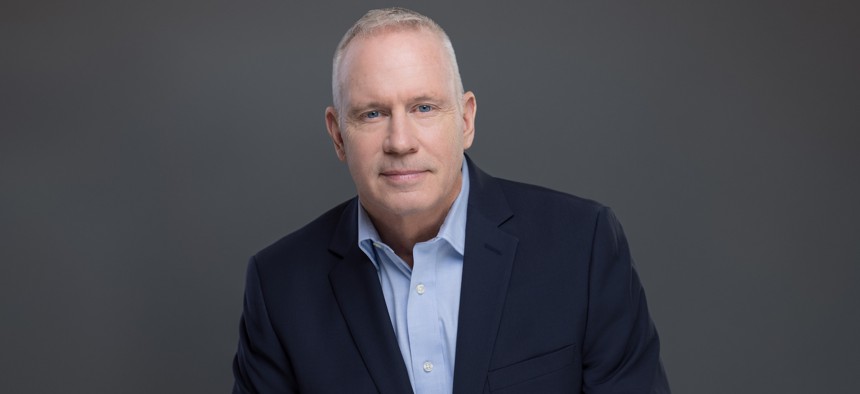
Family & Children’s Association President and CEO Jeffrey Reynolds spoke at New York Nonprofit Media’s BoardCon event on Jan. 20 Sara Miller Photo Studio


Experienced nonprofit leader Jeffrey Reynolds has been at the helm of Long Island’s Family & Children’s Association for over 11 years, leading the organization in providing a range of services for vulnerable residents. He was a speaker at New York Nonprofit Media’s BoardCon event on Jan. 20. Ahead of the conference, Reynolds spoke with NYN about the Family & Children’s Association, its board and how personal challenges changed his perspective on work. This interview has been edited for length and clarity.
What does FCA do for the Long Island community? What makes it unique from other social services nonprofits?
We’ve been around for 141 years, so I suppose that that makes us a little bit unique in terms of being one of the oldest and largest not-for-profits. Here on Long Island, we currently run 60-odd programs that run the lifespan. We serve about 36,000 people a year, and those include consumers that participate in everything from a nursery school in the village of Hempstead to senior programs to our addiction treatment and recovery programs and mental health services. A wide range of services available for multiple generations of folks living here on Long Island. I think that one-stop shopping aspect of what we do also makes it a little bit easier on consumers who might be looking for services, not only for themselves, but for family members. Our longevity, our size, the comprehensiveness of our services makes a difference.
What does your role entail, and how does that role play into the larger organization?
I’ve got a very confident and compassionate management team who reports directly to me, and then 360 staff that are doing the work day in and day out. I think the role of a CEO varies: sometimes it’s that of cheerleader, sometimes it’s that of fundraiser, sometimes it’s innovator, sometimes it’s shutting the lights on your way out the door at night. It’s a little bit of everything, which is one of the things that I love. Again, I am very fortunate and privileged to have an amazing board of directors on one end and then a great management team on the other.
The past few years brought a lot of change and challenges for you. Can you share a bit about your story?
Several years ago, I took up triathlon as a hobby, as a way of staying fit – emotionally and physically – and the pinnacle of that success was completing Ironman Florida in November of 2021. An Ironman race involves a 2.4-mile open water swim, a 112-mile bike ride and a 26.2-mile marathon within 17 hours. I was in the best shape of my life. Fast forward to April 1, 2022 – April Fools’ Day of all days – I’m driving down the road to a dental appointment. A notification pops up on my phone, and when I get to a stoplight, I log into my health care portal and scroll through pages of medical jargon that I don’t really understand too well. And then I get to the punch line, and it says “clinically significant prostate cancer likely.” I literally got the news that I had cancer like 2 million other Americans per year via a text message while driving on the highway. Certainly a shock, because I’m like, “I’m in great shape. I don’t know how this could happen to me.” I put one foot in front of the other and got treatment in July of that year, and I’m good. I’m back to swimming, biking and running. I ran the New York City Marathon that November.
By then, I’d become an evangelist for routine screenings. When I was diagnosed with prostate cancer, I had zero symptoms whatsoever. I was diagnosed during a routine physical. So, I went in for a colonoscopy that following August, because that’s what you’re supposed to do. I didn’t think anything was wrong. And I wake up from recovery, and I’m told that I have stage 3B colorectal cancer. The first thing that goes through my mind is two cancers in 14 months, how could that be? I went through 27 rounds of radiation, 35 rounds of chemo. I am now 21 months cancer free, and so my treatment was successful. I couldn’t be more grateful for making it through to the other side.
How did this impact your work with FCA and how you see your role?
I dove headfirst into the work. I didn’t take time off, because it provided me with a great distraction to everything that was going on. In the mornings when I got up and got here early, I didn’t think about nausea or discomfort or anything like that. The mornings that I took a little bit slower, I had time to dwell on it and think about it. Being able to remain steeped in the work gave me reassurance.
For 35 years, I was the guy who was the helper. I was used to being the helper, not the guy who needed the help, and so that was a pretty significant adjustment for me as a health and human services professional. There’s a lot of discomfort in being the vulnerable one. It’s not really about being replaceable. It’s about being responsible. And it’s difficult for CEOs and other leaders to acknowledge, “One day, I won’t be here.” We need to plan for that. That’s a strength, not a weakness.
How did having a strong board help you manage FCA at the same time as your diagnosis?
After my family knew about my diagnosis, my next call was to our board chair to say, “Here’s the story, I want to be upfront. I want us to work together even more closely, plan together.” We were able to do that. Maybe not everybody has that relationship with their board chair, but I do. One of the first things I said to the board is, “I think I’m going to be OK, I think that this is going to work out. But if I’m not, we don’t really have a plan, there’s not a natural successor to me.” FCA was around for 130 years before they ever met me and they’ll be around, God willing, for 130 more after I’m done in this seat. But there’s no succession plan in the event that you know whether cancer takes me out or an ice cream truck takes me out, there’s no plan in place for organizational succession. It was a rude awakening for the board and for me as a person.
What inspires you to do this work?
I went into the helping fields because I wanted to make a difference in my community. I feel like there’s a lot of underserved and overlooked populations, especially here on Long Island, where the perception is, “Everybody’s doing OK. Everybody lives in a million-dollar house. It’s a place where people come to play in the summer.” But there are some real, pressing public health, public safety issues that need to be addressed.
Look, in this day and age, these are challenging jobs, but I can’t think of a time in history where there was more importance to these jobs. This is the time for nonprofits to shine. This is the time where we fill gaps that are widening. This is the time when we try to make sure that there’s a safety net for folks who might not otherwise have it. This is the time when we stand up and speak out on behalf of populations who can’t do it.