

Personality
Book excerpt: Igniting a revolution in New York
How the Empire State received word of the Declaration of Independence.
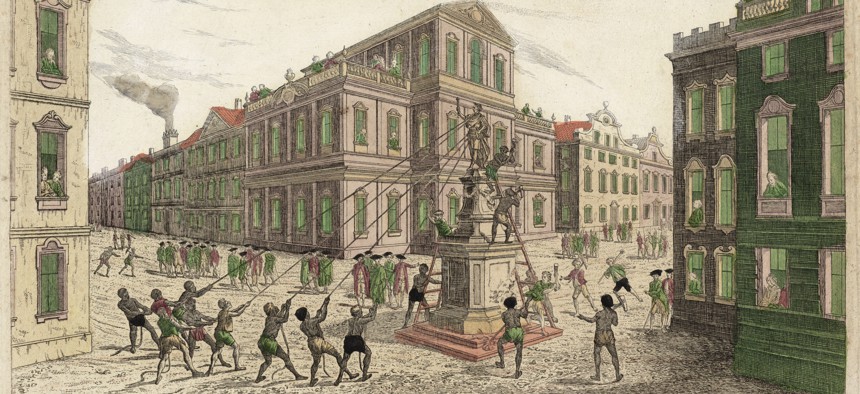
A crowd pulls down a statue of King George III in Bowling Green. Pierce Archive LLC/Buyenlarge via Getty Images


The summer of 1776 was a fraught time in New York. British ships massed in New York Harbor, preparing for an invasion. New York City Mayor David Mathews was arrested by British forces on June 22, 1776. And more so than the other colonies, not all New Yorkers were convinced that independence from Britain would be the best outcome. On July 1, New York abstained from a Continental Congress vote on secession, and it did the same on July 4, waiting for word from back home. This book excerpt from “Fire & Freedom: The American Revolution in New York” picks up with the dissemination of the Declaration of Independence in the days that followed July 4, 1776, and how New York was the last colony to approve the document. It also examines the role of newspaper publisher John Holt of The New-York Journal in stirring up patriotic fervor.
On July 4, after the Continental Congress – minus New York – approved the Declaration of Independence, they sent a manuscript copy of the text to John Dunlap, whose printing office was a few blocks from the Pennsylvania State House, now known as Independence Hall. Dunlap produced broadsides of the Declaration, poster-sized sheets with the text formatted in a single, wide column under the title: “In CONGRESS, July 4, 1776. A DECLARATION By the REPRESENTATIVES of the UNITED STATES OF AMERICA, In GENERAL CONGRESS assembled.” When these broadsides came off Dunlap’s press, the Declaration of Independence was still not unanimous.
John Hancock, the president of the Continental Congress, set to work sending out John Dunlap’s broadsides of the Declaration of Independence to each of the United States, as well as the divisions of the Continental Army. On July 6, he enclosed a Dunlap broadside in a letter to the New York Convention. Hancock wrote that, “although it is not possible to foresee the Consequences of Human Actions,” the Continental Congress had determined that it was “necessary to dissolve all Connection between Great Britain & the American Colonies, and to declare them free and independent States.” Hancock directed state officials to proclaim the Declaration “in the Way you shall think most proper,” and “in such a Manner, that the People may be universally informed of it.”
The New York Convention was therefore faced with two immediate, interconnected decisions that took priority over their mandate to establish a new government. They needed to determine whether to support the Continental Congress’s decision to declare independence, and if so, how to share the news with the people of New York. On Tuesday, July 9, in White Plains, the convention reached a quorum. As soon as the representatives presented their credentials, they turned to the question of independence. They had received a copy of the Declaration from the New York delegates in Philadelphia, and listened as the text was read aloud. Later that afternoon, the representatives resolved, “that the reasons assigned by the Continental Congress for declaring the United Colonies Free and Independent States, are cogent and conclusive.” It was “cruel necessity” that had rendered independence “unavoidable.” Still, “we approve the same,” the representatives agreed, “and will, at the risk of our lives and fortunes, join with the other Colonies in supporting it.” The vote was unanimous, and now, so was the Declaration of Independence.
The New York Convention decided that there should be public readings of the Declaration throughout the state, beginning at their meeting place, the Westchester County courthouse in White Plains, on Thursday, July 11. They resolved that 500 copies of the Declaration should be printed, and that these broadsides should include the convention’s resolution in support of independence and their instructions for publishing the Declaration. The New York Convention also wrote a lengthy letter to the Continental Congress, announcing their decision, and another shorter letter to John Hancock after they received his July 6 letter enclosing another copy of the Declaration. When the news of the New York Convention’s support of independence reached Philadelphia on July 15, one delegate, John Alsop was shocked. “As long as a door was left open for a reconciliation with Great Britain,” Alsop was “willing and ready” to serve New York in Congress. But the convention had “closed the door of reconciliation” with their approval of the Declaration. “I must beg leave to resign my seat,” Alsop wrote. He left Congress before he received a response from the convention, and, apparently, without telling his colleagues that he had resigned. The New York Convention was “surprised to learn” that independence – a “measure which they conceived necessary” to strengthen the United States – “should disgust any gentleman.” They “cheerfully” accepted Alsop’s resignation. The worries over New York’s abstention quickly faded in the face of unanimity.
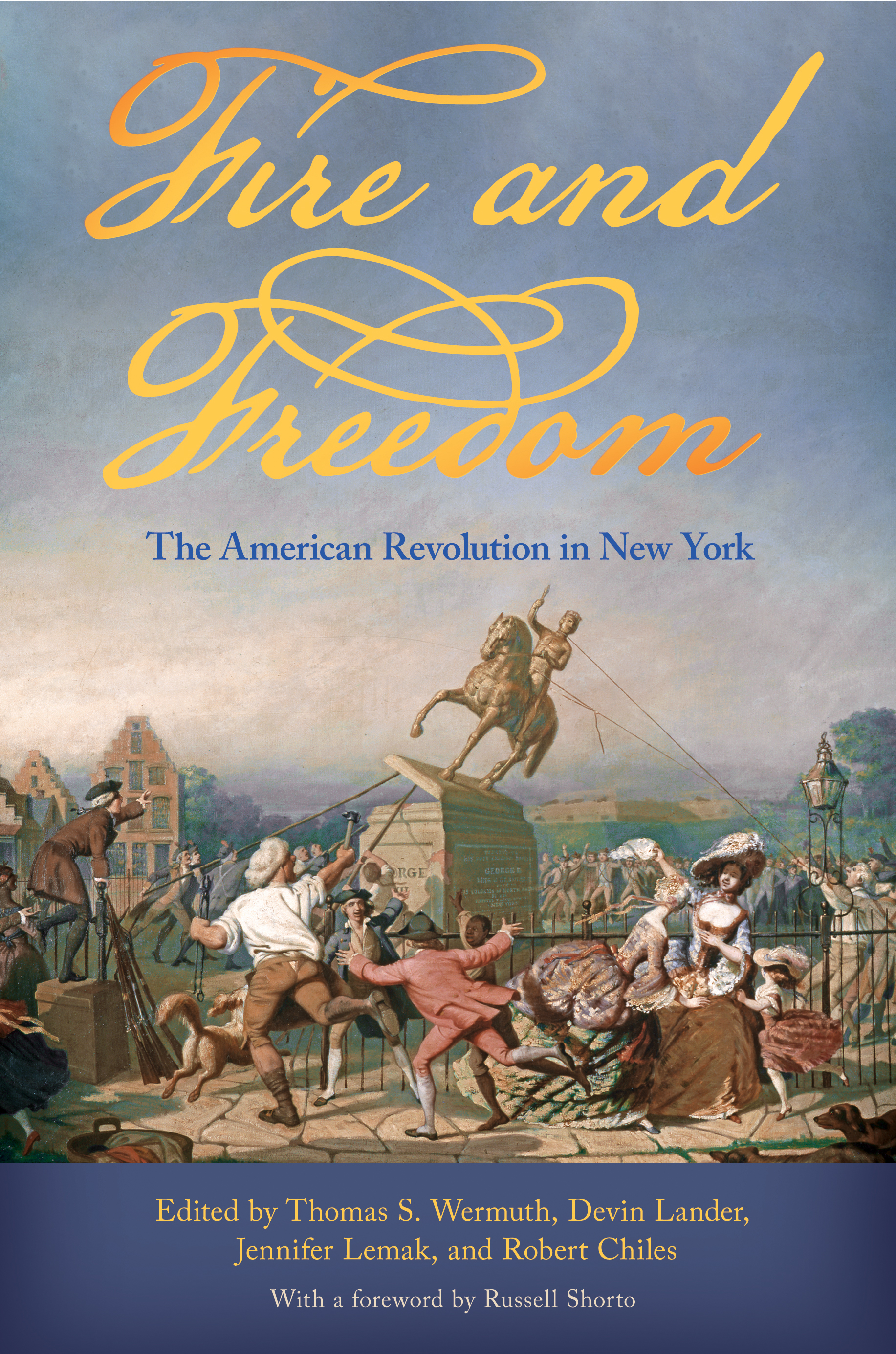
The representatives in the New York Convention in White Plains were the first people in the state to hear the Declaration of Independence, on the morning of July 9. Later that day, in Manhattan, the Continental Army listened as the Declaration was read aloud by order of General George Washington. That evening, a crowd of people – perhaps soldiers, perhaps civilians – tore down the gilded equestrian statue of King George III that had sat on the Bowling Green since 1770. Most of the lead from (the) statue was carted off to be melted down and cast into bullets that could be fired back at the British forces. Since the end of June, the number of British ships gathering in New York Harbor had grown exponentially, and an even larger fleet of reinforcements and hired German soldiers was still to come. New York’s belated support for independence was not widely reported in newspapers, but these other events – the reading of the Declaration to the American troops, the destruction of the king’s statue, and the increasing British presence in the harbor – were described in detail, alongside the Declaration of Independence and accounts of public readings. The newspaper printers in New York, and especially John Holt, played a significant part in the dissemination of this information.
John Holt’s delight at the news of independence emanated from the pages of his New-York Journal, making his newspaper stand out from his competitors. John Anderson was the first printer to feature the Declaration of Independence on the first two pages of his octavo-sized newspaper on Wednesday, July 10. Holt and Samuel Loudon printed the Declaration in their newspapers the next day, and Hugh Gaine included the Declaration in his July 15 issue. In his celebration, Holt got a few details wrong. He said that the “first instant,” July 1, was the “auspicious day” when the “Representatives of the Thirteen United Colonies, by the providence of God, unanimously agreed to, and voted a Proclamation declaring the said colonies FREE and INDEPENDENT STATES,” glossing over the fact that New York’s delegates had abstained from the vote. Holt expected that the day would “doubtless be celebrated through a long succession of future ages, by anniversary commemorations, and be considered as a grand Æra in the history of the American States” – which has proven true for the Fourth, rather than the First, of July.
John Holt then provided his customers with a thorough – and decidedly biased – account of what had happened in Manhattan on July 9. First, he explained that the Declaration of Independence was read at the head of each brigade of the Continental Army, and “received with loud huzzas, and the utmost demonstrations of joy.” Then, Holt described the destruction of the statue of the king that evening. The “equestrian statue of George III. which Tory pride and folly raised in the year 1770, was, by the Sons of Freedom, laid prostrate in the dirt, the just desert of an ungrateful Tyrant!” Holt reported that the lead from the statue would be turned into bullets, “to assimilate with the brain of our infatuated adversaries.” He quoted a gentleman who witnessed the destruction and, thinking back on the beginning of the king’s reign and John Milton’s epic poem, Paradise Lost, “exclaimed in the language of the Angel to Lucifer, ‘If thou be’st he; but ah! how fallen? how chang’d?’” Holt also scoffed at the members of the British Parliament who had thought that taxing the colonists would work in their favor. He believed that, to “gain a peppercorn,” Great Britain “lost an Empire.” His account was reprinted in other newspapers – including in London.
Below his vivid description of the destruction of the king’s statue, John Holt included his instructions to his customers, to separate out the Declaration of Independence on the opposite page and “fix it up.” The back of the page with the Declaration was filled with advertisements, and Holt’s typical “Poet’s Corner” at the top of the left column. The poem he selected for this issue began with a call for public patriotism:
FREEMEN, if you paint for glory,
if you sigh to live in story,
if you burn with patriot zeal;
Seize this bright auspicious hour,
Chase those venal tools of power,
Who subvert the public weal.
The first line of the chorus was a timely “Huzza! Huzza! Huzza!” – the same words that echoed from the crowds that listened as the Declaration of Independence was read aloud. But, nearby on the page, there is a reminder that “freemen” was understood to be an exclusive term. Holt advertised a reward of ten dollars for the recovery of Jack, a thirty-five-year-old enslaved man who had self-emancipated. His enslaver, Jacob Wilkins, described Jack as a “square well built fellow” who had been born in Guinea and spoke “broken English.” The advertisement suggested that Jack might be “sculking in the country, or among the troops.” He had supplied himself with an extensive wardrobe, and absconded with his enslaver’s gun and a broad sword, determined to fight for his own freedom.
After John Holt printed the Declaration of Independence in his newspaper, he used the type setting for another purpose: a broadside. Hugh Gaine also printed a broadside of the Declaration of Independence, and evidence suggests that Samuel Loudon did, as well. But it was John Holt who fulfilled the New York Convention’s order for 500 broadsides. This was a significant undertaking, given that just one week earlier, Holt had advised his customers that his laborers had abandoned him, and he could barely manage to print a single sheet. Holt’s wife, Elizabeth, almost surely assisted in the process of printing the New-York Journal and the broadsides for the New York Convention. Holt likely brought in any apprentices or journeymen that he could, given the circumstances of the war. But Holt was also efficient with his printing process. He adapted the typesetting from the newspaper, moving the title into the center of the page, and doubling up the border of ornamental type. And, most importantly, he included the convention’s resolutions, dated July 9 in White Plains. He emphasized the representatives’ unanimous decision to concur with the “Reasons assigned by the Continental Congress, for declaring the United Colonies FREE and INDEPENDENT STATES.” Holt’s extract from the convention’s minutes included the printed signature of Robert Benson, one of the convention’s secretaries. Presuming that Holt printed the full number of 500 copies requested by the New York Convention, only one percent of the broadsides that came off his press in mid-July 1776 survive today.
In both his broadside and his newspaper, John Holt made decisions that were unique among the printers of the Declaration of Independence in the summer of 1776. Holt chose to place the New York Convention’s resolutions, explaining their support of independence and their plans for spreading the news, at the top of his broadside, above the Declaration. When officials in Rhode Island and Massachusetts ordered batches of broadsides to be sent out across their respective states, the printers that fulfilled those orders put the relevant resolutions at the bottom of their broadsides, below the Declaration. As for newspapers, Holt was not the only printer who chose to format the Declaration on a single page. On July 16, in Exeter, New Hampshire, Robert Luist Fowle printed an extraordinary, single-sheet issue of his New Hampshire Gazette with the Declaration of Independence. He had some space at the bottom of the third column of text and included an advertisement of things for sale in his printing office, including copies of Common Sense and writing paper and quills, but otherwise, the Declaration filled the page. A few days later in nearby Portsmouth, New Hampshire, Benjamin Dearborn organized the Declaration in three skinny columns under a wide, bold title on the last page of his newspaper, the Freeman’s Journal. But neither of these printers gave any suggestion to their readers that their newspapers should be treated like broadsides and posted up.
Unfortunately, there is very little evidence of how people used John Holt’s newspaper printing of the Declaration of Independence. The note in his July 11 issue indicates that he designed his newspaper to “oblige” a number of customers who wanted, essentially, a broadside of the Declaration for the price of their regular newspaper. He appealed to people who wanted to celebrate the “INDEPENDENT SPIRIT” of New York’s representatives. But he did not specify which representatives: the delegates in the Continental Congress who had abstained from voting for the Declaration of Independence in obedience to their instructions, or the men who had been elected to form a new government for New York and made it their first matter of business to support the Continental Congress’s decision. From the scant number of surviving copies of the New-York Journal, it is difficult to tell how many of his customers actually posted the Declaration up. There are no notes scribbled in the margins of the page or remnants of adhesive on the back of the page to serve as testimony of what people did with John Holt’s newspaper in July 1776.
Meanwhile, John Holt’s broadsides were delivered to the New York Convention and sent out to different towns in New York and used for public readings. If his broadsides were ready before July 18, then perhaps one was used for the public reading at City Hall in New York. Holt described this reading in his newspaper a week later. A crowd of “true Friends to the Rights and Liberties of America” attended the reading and “signified their approbation by loud acclamations.” Then, the wooden coat of arms was taken down from the court house, “torn to pieces and burnt,” and the painted portrait of King George III was removed from the Council Chamber and similarly broken apart and burnt. Another coat of arms, in stone, “was thrown to the ground and broke to pieces.” Through all this destruction, “the people testified their approbation by repeated huzzas.” From Holt’s description, it is hard to know how many people gathered for this public reading and destruction of the king’s symbols. Three weeks earlier, an estimated 20,000 people had attended the public hanging of Thomas Hickey. But, as people left the city in droves and the ones who stayed behind prepared for a British invasion, it is difficult to imagine tens of thousands of people turning out for a public reading of the Declaration. The rhetoric of the essays and articles that appeared in Holt’s newspaper in these critical weeks in the summer of 1776 reflect fears that the “true Friends” of the newly United States were threatened by their neighbors who still supported reconciliation with Great Britain and would seize the opportunity to support the approaching British forces.
Everywhere the Declaration of Independence was printed in 1776, it was part of a context specific to that moment and place, and this is especially true in New York. The last colony to express support for independence was also the first to see a major battle after July 4. The columns of neatly-arranged type in John Holt’s newspaper and broadside belie the stresses on his printing office caused by the arrival of British ships from late June through July and into August. The New York printers who created newspapers and broadsides bearing the words of the Declaration of Independence, including Holt, fled the city just weeks later. Still, as the United States commemorates its 250th anniversary in 2026, it is worth thinking about Holt’s instructions to his readers, to post the Declaration of Independence “in open view, in their Houses” – in the face of a British invasion – “as a mark of their approbation of the INDEPENDENT SPIRIT of their Representatives.”
The Declaration of Independence was a galvanizing force in New York, despite the concurrent threat from British forces, as well as their supporters who had planned to sabotage the Continental Army. In the span of a month, the concern of the delegates in the Continental Congress and the New York Provincial Congress over whether their constituents supported independence was erased by the resolution, proudly presented at the top of Holt’s broadside. The people had not voted for independence directly, but they showed their approbation through iconoclastic acts and huzzahs at public readings. And, if they numbered among John Holt’s customers, then perhaps they displayed their unique issue of the New-York Journal in their homes – that is, until they needed to evacuate.