

Personality
How the 2003 murder at City Hall shaped politics today
A Q&A with “Rorschach: Murder at City Hall” Executive Producer Brent Katz on his podcast on the death of James E. Davis.

The podcast features interviews with state Attorney General Letitia James, journalist Errol Louis, Rep. Yvette Clarke and many more New York political figures. Best Case Studios

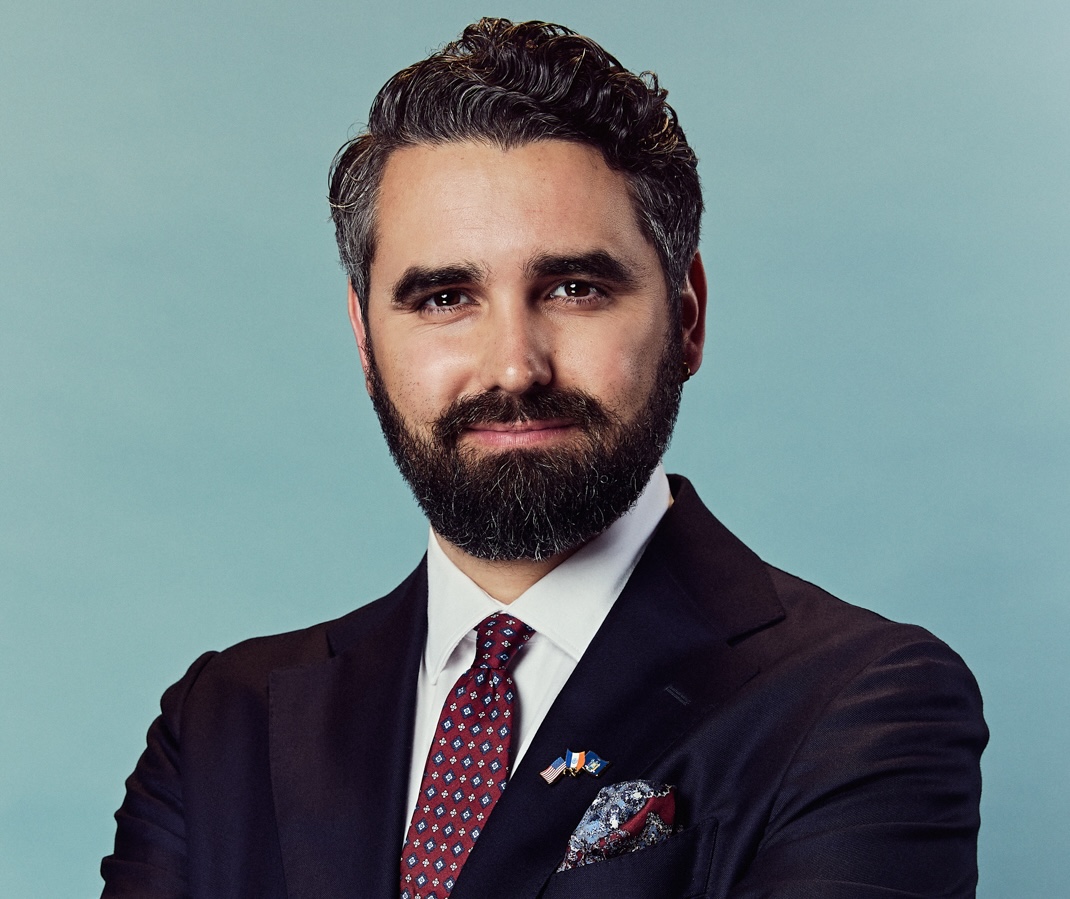

New York City Council members live with the murder of former Council Member James E. Davis every time they come into City Hall. Since the Brooklyn Democrat was shot and killed in the council chamber in 2003, every member and their guests have to walk through the metal detector to get in. No special privileges.
But Davis’ legacy is so much more than that – and his story is compelling, and dramatic. He was a Black police officer who worked his way into Central Brooklyn politics through sheer force of will and a heavy dose of charm. Whether people loved him or hated him, they wanted to be him – and that may have been his downfall, when a Manhattan club kid named Othniel Askew decided to remake himself as a City Council candidate.
That story is told in a new podcast, “Rorschach: Murder at City Hall,” which releases its tenth and final episode on Wednesday.
The show’s creator, writer and Executive Producer Brent Katz grew up in Manhattan and followed the news of Davis’ death, but could never get it out of his head. He went to the Columbia Journalism School with a plan to revisit the murder as his thesis, and the podcast came out of that.
“I knew that this story said something about crossed destinies in New York City, and it revealed a kind of glitch, a kind of what’s behind the curtain of New York City local politics,” Katz told City & State. This interview has been edited for length and clarity.

You created a podcast on the 2003 murder of New York City Council Member James Davis. Why should folks in New York politics listen?
This is a true crime story set in their world. It features characters and people they probably know. You see how things like petitions – it seems like this bureaucratic, maybe not-so-interesting element of running for office, but in this story it’s something that James Davis leverages. It gives you some insight into his character.
The final episode comes out May 27. Why did you choose to tackle this topic for a 10-part podcast?
I was a high school student in New York City when it happened. And it struck me as this dramatic thing that didn’t quite make total sense, where James Davis brought someone who was maybe his opponent, maybe they had struck a deal, into City Hall. Introduces him all around, the two of them are both armed, the guy shoots him in the balcony. Richie Burt, a cop on his first day guarding (City Council Speaker) Gifford Miller, steps forward, does this incredible shooting, and it’s all over instantly.
And so the official story is, here’s a crazy guy (Othniel Askew) who James Davis, for some reason, brings in. Why does James Davis bring him in? Why does he kill and die for a City Council seat? And is it as simple as “James Davis was this rising star and this guy was this monster,” and that’s it?
It was big news for a week or so, but then I watched it get forgotten.
I knew that his story said something about crossed destinies in New York City, and it revealed a kind of glitch, a kind of what’s behind the curtain of New York City local politics.
Davis had his own style, but it was not that different from the aggressive way that Brooklyn politics is. He just ran into a guy who does take it personally, and wasn’t mentally in the place where someone like (former Brooklyn Democratic leader) Clarence Norman or other people are, like, “We get in the boxing ring, we fight, and then we move on. We don’t obsess and need revenge.”
The podcast proposes various potential motives for the shooting by Othniel Askew, whether it’s professional jealousy or a lovers’ quarrel. Why do you think Askew did it? Do you have your own kind of theory?
We propose a bunch of theories, but you see that there’s overlap between a bunch of them.
In episode three, we talk about how Niel Askew, who was raised as a Jehovah’s Witness, and who was gay, and who, in the late ’90s, early 2000s would certainly be out in some situations – in the nightlife clubs and to his friends – and maybe not out at work or in the military when it was still don’t ask don’t tell. He claimed to the FBI the morning of the murder that James Davis was blackmailing him to out him as gay. We talk about why that theory doesn’t completely make sense, but then we reveal that he did have a secret, which is this domestic violence incident in the ’90s with a hammer that was very brutal. It’s very likely that James Davis would have, as an ex-cop, done a little search, found out about that. Niel thought it was sealed. James revealed to him that it’s not, and that he knows, and he’s got this leverage over him. So that’s one thing. Then there’s also the petitions where James Davis is maybe going to help him, but then it seems like he’s used the petitions to make sure that Niel can’t get on the ballot.
So that’s the James Davis side. And then on the Niel side, yes, it does seem pretty crazy to become so fixated on this job, but I think one of the most emotional things in it is that, the night before (the murder), he tells this guy who works in politics, David Miller, that he’s run out of money, he doesn’t have health insurance, his HIV has gotten to the level of AIDS – it’s a very American story, he’s fixated on health insurance and saving his own life – and he’s become obsessed with this job. When he’s put every egg in that basket, he’s got nothing left. So it’s not just total madness, not that it makes sense, but you start to feel this constellation of motives, and I do think it’s an overlap between a few of them. With, for instance, the gay love affair, you don’t have to believe that to believe that James Davis was a very seductive guy, and that he might have used that as another element in the way that he treated (Askew).
Does the podcast resolve the motive of the murder, or does it leave questions? I think you’re dealing with unreliable narrators, and of course it was 23 years ago.
The two people who know the truth most deeply are gone. So I don’t know that it’s possible to get resolution completely in a world like that, and to even know if we were right. But we can get closer than anyone ever has, which I do think we do.
How has the murder of Davis impacted politics in the present day?
James Davis was friends with Eric Adams, but there (are) parallels between them. They came up around the same time. They were both ambitious cops who had incidents with white police officers, and then used that as part of their campaign. They would say that I didn’t just join the police force, I joined it to reform it from within as part of a larger mission.
I started this project before Eric Adams became mayor, and people would be like, “James Davis, he always dreamt of being like the mayor of New York City, and we kind of believed he could do it.” And once Eric Adams became mayor with some very similar beliefs and experiences, it seemed even more likely. … They were similar, but James Davis was in the grade above him, you know? And James Davis would have taken that spot first.
Tish James, I’m sure, would have found a way to keep rising as an ambitious political person, but her entry into politics was blocked by James Davis. So, when he was killed, she had to run against his brother, who was grieving. That was her way in.
Hakeem Jeffries, maybe he would be where he is. Maybe the mentorship of James Davis and his support, since they were both kind of insurgents (helped him).
A lot of people still feel the trauma of this murder.
Yes, and his brother carries it with him every day. It’s very emotional talking to him. But a lot of people did try to warn James Davis. He’s sitting at a barbershop with (Askew), this guy I interviewed calls him, and he’s like, “James, like this guy, I just talked to him last night, he’s not all right, he’s dangerous, you got to get away from that guy.” He’s like, “Yeah, yeah.”
I talked to Matthew Daus, who didn’t end up in the show. His vote for Taxi and Limousine commissioner was that day, and he was so confident he was going to win that they decided to just take the bottle of Champagne and go to his office. But he was like, “I think sometimes, I would have had my security guy there, he would have had a gun, we would have been up in the balcony watching, maybe it wouldn’t have.” Lots of people feel like they could have done something, but I don’t think they could have.
You’re entering into the world of Brooklyn politics, of Black Brooklyn politics, of gay life in the ’90s and 2000s. Were people open with you, or was it a challenge to break into those worlds?
It was a challenge. I started off with people who were just witnesses to the shooting. Already that’s difficult. They have to revisit a traumatic moment. They’re sharing just their experience of a shooting. And I tried to show by the number of people I approached, and sticking with the project, that I was serious about it, and that I would be sensitive about it.
To tell James Davis’ story, I did lots of interviews where a lot of people who didn’t know him that well were like, “Oh, he was a charismatic guy, always brightened my day.” I had a zillion interviews like that. To get people to go into the humanity of a person, which is never just “great man,” open and shut case, which is “complicated man,” who had forces within himself that competed. To get people to say that about someone who died tragically, I think that’s the way to make him a compelling character to a listener, and to get him the sort of posthumous attention I think he deserves. I had to gain their trust that this wasn’t like, “Let’s insult James Davis’ memory.” This is, “Let’s give a real portrait.”
NEXT STORY: This week’s biggest Winners & Losers