

New York State
Book excerpt: Daniel Squadron makes the case for state legislatures
The former state senator writes that more substantive policy is done in state capitals.

With Congress often at a stalemate, Daniel Squadron writes about the importance of state legislatures. Will Waldron/Times Union


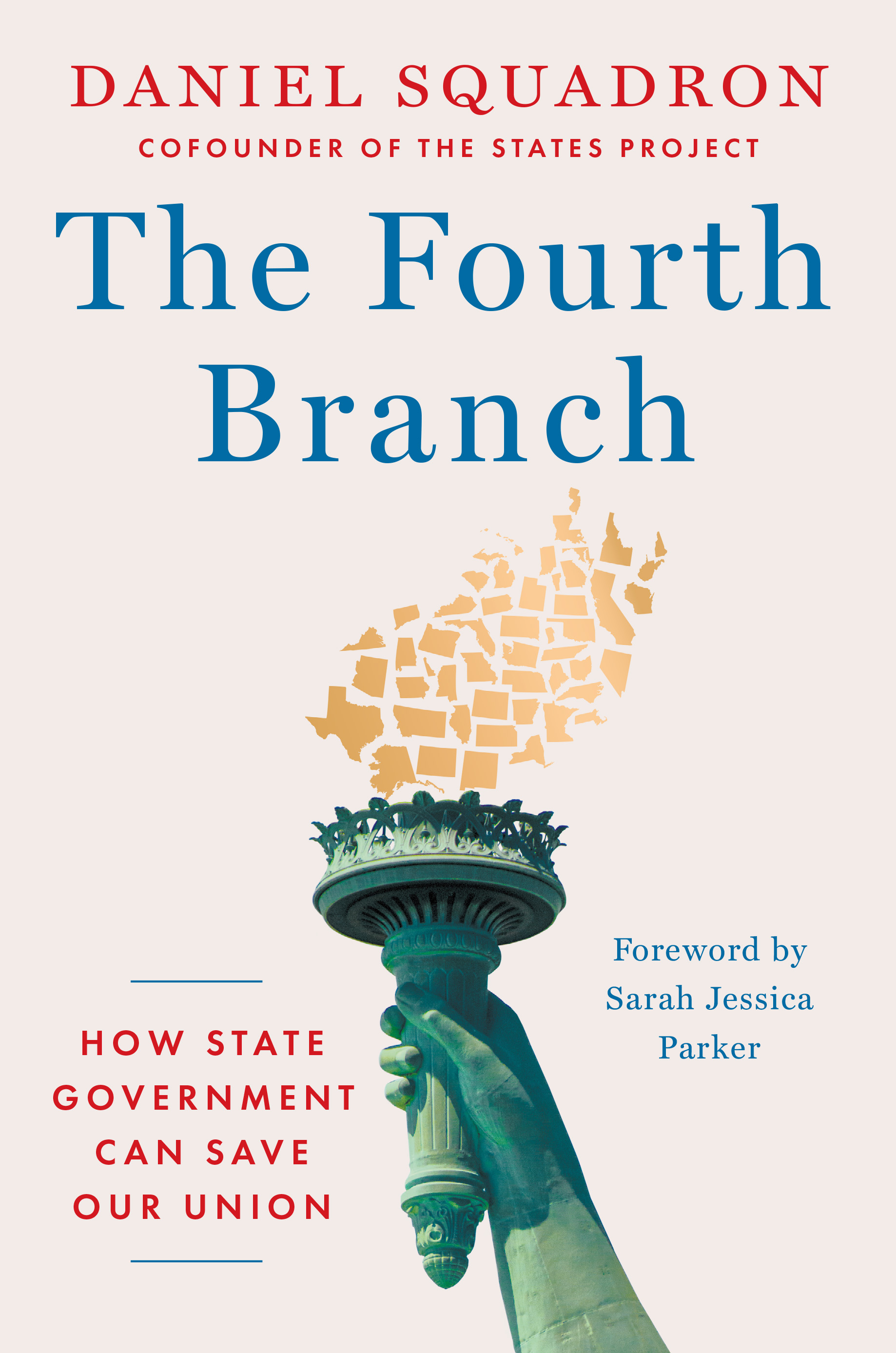
In “The Fourth Branch,” Daniel Squadron argues that state legislatures are the true heart of political power. He would know! A former state senator representing parts of Brooklyn and Manhattan from 2009 through August 2017, Squadron has since co-founded Future Now Action and its initiative The States Project, which works to elect Democratic candidates to state legislatures. Released on June 9 by independent publisher Zando, “The Fourth Branch” opens in the first chapter describing meaningful laws passed at the state level, and then in this excerpt, Squadron’s journey running for the state Senate for the first time.
Serving as a New York state senator taught me lessons that laid bare every myth about how politics and power works in this country. These lessons accumulated with each issue we considered (and the ones we didn’t), through legislative battles that were as dramatic as those reportedly taking place in the Supreme Court chambers – and as significant for our nation.
Back when I first ran for state legislature in 2008, I did not plan to spend nearly two decades digging ever deeper into this corner of our constitutional system. But as our country’s great experiment in democracy has teetered ever closer to the brink, I’ve come to believe that these lessons are not only for political junkies or students of federalism. They are critical for every citizen in our country, as important to understand as the shared creed in the Declaration of Independence and our constitutional separation of powers.
First, though, I should explain how I got to the state legislature in the first place. Actually, as Inigo Montoya would say, there is too much to explain … I’ll sum up.
The idea of running for state senate first flickered into my head as a daydream on a particularly soulless day at my new political consulting job. It probably would have continued to be an idle fantasy if Micah Lasher, the close friend I had replaced at the consulting firm, had not invited me to lunch at a fancy Mexican restaurant. He wanted to know how I was making out at the miserable job. I told him it was so bleak that I was having crazy thoughts – I’d downloaded state senate district maps and started imagining challenging my incumbent state senator.
If he had laughed and taken a bite of his tortilla chip, that probably would have been the end of it. But, to my shock, he clamped on to my idea like a shark.
Within six weeks, we had written a “political bio” for me. It seemed to describe a real politician, though one with whom I felt only vaguely acquainted. We used the bio and a litany of possible attacks on the incumbent as the basis of a telephone poll that we paid a call center to field for us directly.
That Sunday night, my girlfriend Liz and I were eating shrimp dumplings and sautéed string beans when our home phone rang. It was a woman complaining about the negative statements in a telephone poll she had received “from Mr. Squadron’s allies.” She had found my number in the white pages. Like a Zagat’s review, she said that though I “sounded very nice on the phone,” she found my poll “shameful.”
When I hung up, I was shaking. Liz was staring at me with a look I immediately understood: Why would you do this to yourself – and us?
It was the first time my gambit into politics interrupted our dinner and the first time I saw that look from Liz. On both counts, it would not be the last.
The next morning at work, my desk phone rang. A prominent blogger introduced herself. “I got a tip about your poll. Are you running for state senate?” she asked without pleasantries.
“No comment,” I croaked from a suddenly dry throat.
“If you say so.” She hung up. Her post that afternoon somehow took the absurd possibility of my run seriously.
I was a week shy of my twenty-eighth birthday, and I had no clue how this idea of becoming a state lawmaker had gotten so real so quickly.
My first job in politics had been the summer before I finished college, for Andrew Cuomo’s cursed 2002 gubernatorial campaign. I worked eighty hours a week and lived in an hourly-rate hotel in Buffalo. Most nights I got dinner at the Rite Aid next door, deciding whether I’d pick something that required my room’s mini-fridge or its microwave.
Early each morning, I would drive to the Ellicott Square Building in the center of the city, which housed the office of the local Democratic Party chair, whose nickname was “the Bird.” Despite his title, he was a close friend of Republican dirty trickster Roger Stone. After a late lunch from Charlie the Butcher’s Beef on Weck cart in the lobby, I would drive ten minutes to Buffalo’s west side, where I also had a desk in the campaign headquarters of the assemblyman from the area.
The only advice Cuomo’s campaign manager had given me before handing me my JetBlue tickets from JFK to Buffalo had been, “The Bird and the assemblyman hate each other, so Andrew wants them both to think their office is our western New York headquarters.”
When Cuomo suddenly dropped out a week before the primary, I was high above Buffalo flying back to New York City within the hour.
Andrew’s misfortune let me start my final semester at college on time. When it finished, I was hired to be Chuck Schumer’s travelling aide or, in the parlance of politics, “body guy.” The day of my official graduation from college was my first day traveling around the state with Chuck. For two years I was with him six days a week, visiting all of New York’s sixty-two counties, twice, as he worked toward his first U.S. Senate reelection. (He succeeded with the largest percentage in New York history at the time.)
In the three years since, I had worked as a consultant for the New York City school system and a couple of campaigns and then co-authored Chuck’s first book, “Positively American.”
On the one hand, the poll showed that with some strategic emphasis, my friends and I could turn this shallow experience into the makings of a surprisingly good state senate résumé. On the other hand, I had never been to a political clubhouse or to a meeting of a community board, New York City’s most local legislative body. In fact, I had never personally attended a legislative session at any level of government.
Liz and I had moved into an apartment in a converted church in the senate district less than two years earlier. The man I was considering challenging had lived in the district for forty years. In the mid-1970s, he had been involved in local community issues and was a member of the community board. He had been elected president of the local political club. When the incumbent state senator was elected citywide, he had won his seat in a party-dominated special election – in February 1978, almost two years before I was born. Over his thirty-year senate career, he had risen to become the state senate’s Democratic leader. Though he had been ousted from the position by David Paterson (part of the future governor’s unlikely political ascent), Martin Connor was planning to be a senator forever.
The reaction of my friend Micah at our Mexican lunch turned out to be the outlier. If I had first admitted my fantasy to anyone else, things would have gone very differently.
When I started telling others I was considering running for the state senate, I would get one of three responses. The first, from most people in my life, those whose lives did not revolve around government or politics: “Why?” They were mystified. As far as they could tell, I was relatively normal and nominally employable. Why would I choose to be a local elected official? As one nonpolitical friend said, it had all the downside of politics – nights and weekends, public attacks, low pay, constant fundraising – without any of the potential upside. (When I asked what the potential upside of politics was, he stared blankly, stumped. “Power?” he asked.)
The second response, from people who understood government best: “Why?” They tried to explain to me how unappealing the job was. Most state lawmakers had to commute three hours or more to the state capital in Albany, not just from New York City, but from the east end of Long Island, Buffalo on the western edge of the state, and New York’s southern tier. Once you got there, lobbyists, special interests, and the legislative leaders ran the place. Even more than in City Hall or Washington, D.C., they treated junior lawmakers like pawns on a board they controlled. For aspiring politicians from New York City, every facet of the job was worse than being on the city council. Those local elected officials got more coverage from local reporters, had more time to meet constituents in their districts, and were more likely to lead the legislative committees that had the power to get things done.1
The third response, from real political professionals: “Why?” More than normal people, they understood that running for office could be appealing. Most of them, if they were being honest, had at some point harbored a fantasy of running themselves. As Micah said to me when I admitted my own fantasy, “There are only three things people want when they get into New York politics: to be president, to be mayor, or – most rarely – to be chief of staff to one of them.” But it was exactly because people in politics had spent so much time thinking about running that most were sure it was a fool’s errand. Their expert analysis boiled down to I had no shot of winning. One political consultant who I considered a friend told me it was because I was “too much like Larry David to win any votes.”
Most politicos expressed less personal reasons – they told me it was basically impossible to win in a low-turnout state legislative primary against an incumbent. They had a point. Over 97 percent of legislators got re-elected every two years. In fact, members of the New York assembly and senate were more likely to lose the job because of death, indictment, or sex scandals than at the ballot box. And while I believed Connor had a lot of deficiencies as a public servant, indictment and sex scandal were not among them.
In sum, the advice from those who knew me best and had the most experience in politics was that Albany was a backwater, led by all-powerful entrenched leaders, where idealistic, ambitious politicians went to get a title and a lifetime annuity. State legislative incumbents were nearly impossible to beat and held enormous job security – in part because the job was so unappealing. The state legislature was the worst place in politics.
Perfect.
As an inexperienced and ambitious elected official, it would be easier to have a positive impact in a place that started out so crummy. And if I was universally expected to lose, there was no way to underperform expectations.
But if I was going to try to win an unwinnable primary for a job no one cared about from a base of approximately zero votes, my only chance was to chase voters unrelentingly wherever I could find them. The best place to start was at their own doors.
Meeting thousands of voters knocking on doors taught me more than the people I had consulted before running ever could have. If a voter was willing to engage with me, it was almost always because there was something affecting their life. Their housing wasn’t affordable or their landlord wasn’t responsive. Their health care was expensive and mediocre. Their area lacked parks and schools. Their public assistance or bus line had been cut. They saw fewer cops on their block or overnight commute. They were being screwed by their boss or the government. When they would tell the story of how they were personally impacted, they didn’t want to hear about what level of government was responsible; they certainly weren’t asking for a civics lesson in exchange for their vote. And it would have been insane to tell them they were wrong – it was their lived experience!
What they wanted was a sympathetic ear and a credible idea. That’s something they rarely got from politicians.
So, my campaign manager or I would always follow up with the best answer we could. It turned out that for just about every issue raised on the doors, there was a state government response. By election day, I had twenty-five great bill ideas I’d gotten from voters’ doors. And I had begun to understand something about the system: State government was controlled by incredibly powerful interests because state government was incredibly powerful.
New York had the fourth largest domestic budget in the nation, smaller only than that of the federal government, California, and Walmart.
In New York, city council members were able to get local news stations and tabloids to cover their press conferences for hyper-local accomplishments like rezonings and street renamings. But for anything more important – the city’s buses, subways, and police; economic development and jobs; health care; criminal justice; the foundations of our democracy – those same city officials, and even the mayor, had to come knocking in Albany.
It was a fact they used as a political tactic. Whenever a city elected official did not have a good answer, they had a stock response: “That’s the state.” But state elected officials would not knee-jerk to the equivalent: “That’s the federal government.”
Because, it turned out, it almost never was.
1 At the time, I thought this was a symptom of the simple facts that New York’s state capital is far from the state’s commercial and media center and too full of people comfortable with a back-scratching status quo. Over the years, I learned that the interplay of elected officials in statehouses and the organized interests that try to move them around like pawns on a chessboard is the core power dynamic, well beyond geography or personality. Paradoxically, the dynamic simultaneously amplifies the power of narrow, arcane interests and broad, radical ideologies. But that came later, after I won.
NEXT STORY: Dr. James McDonald is Hochul’s first line of defense