

Personality
Robert Duffy on no second term with Cuomo and how upstate has changed
An interview with the former lieutenant governor and longtime upstate economic development leader.
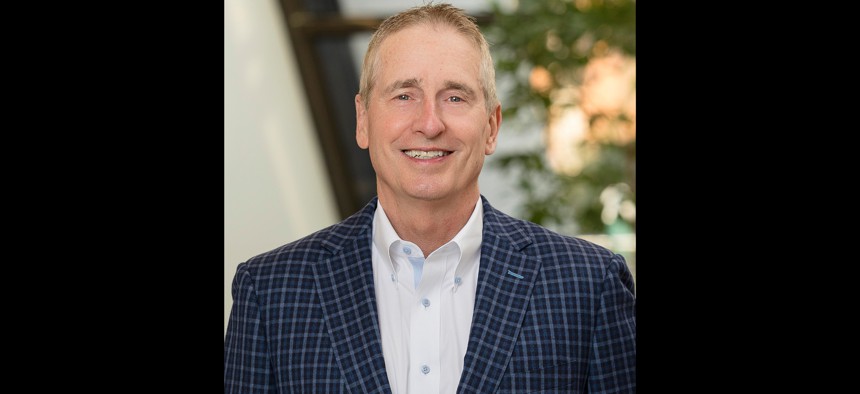
Former Lt. Gov. Robert Duffy has upstate on the economic upswing. John Schlia Photography


Twenty years ago, the only statewide elected official from upstate was Lt. Gov. Mary Donohue, a Rensselaer County Republican not known to be a power player in the Pataki administration. Now, Gov. Kathy Hochul, a Buffalo Democrat, sits atop New York’s political pyramid. Former Lt. Gov. Robert Duffy has had a ringside seat to massive changes in upstate New York, from a new economic renaissance to how Hochul has transformed upstate/downstate relations. Duffy was the Rochester police chief before he was elected mayor in 2005. In 2010, he was elected lieutenant governor on a ticket with Andrew Cuomo. While in office, Duffy focused on the creation of the state’s network of regional economic development councils. Duffy did not seek a second term in 2014, and he’s now president and CEO of the Greater Rochester Chamber of Commerce and a member of the SUNY board. This interview has been edited for length and clarity.
How has upstate New York changed over the past 20 years?
Well, I’ll speak for our region, the Finger Lakes region. First, economically, we have seen the transition from the big three – Kodak, Xerox and Bausch & Lomb, which really drove our economy and many social aspects of our region for decades – into an economy really led by, I would say, the eds and vets transition. The University of Rochester during that time became our No. 1 employer, which includes the university and the health center. No. 2 in our region is Rochester Regional Health. The shift from what was traditional manufacturing and production into an economy driven by, first of all, higher education, healthcare and then these smaller innovative companies, sometimes startups or spin-offs, and then into optics, photonics, some of the high-tech manufacturing, and it continues to grow. And it’s been, I would say, not an easy transition, but we are seeing it happening before our very eyes, and it is happening.
There have definitely been political shifts, partywise. The city has been traditionally Democrat for probably most of my life. The county was traditionally Republican in Monroe County. That has now changed, where the city and county are both led by Democrats. Buffalo is the same, and I think Syracuse is still a Democratic mayor and a Republican county executive, but here, while there’s always been relationships across party lines, often political divisiveness leads to competition, and in the end, political fights sometimes in the past, suppressed what is best for the region and regional economy. One change now is we have a mayor and county executive who are friends and who collaborate.
If I just jump into something and go back 20, 25 years ago, Rochester, Syracuse, Buffalo – we all competed against each other. We’ve gone from more of a city- or county-centric focus to a regionalization, where the three regions – Syracuse, Rochester, Buffalo – we collaborate tremendously more now. The federal tech hub is one example of that.
How has that regional approach across upstate impacted economic development?
I would say the precursor was the regional council concept that started in 2011. That started because, well, as it was 10 individual regions, the regions began to collaborate a little bit, and we would have meetings, and we would do more work with Syracuse and Rob Simpson, the CenterState CEO, has always been a friend and a colleague for the last 15-plus years. Dottie Gallagher, same thing in Buffalo. So there was a lot of friendship and partnership that started it, and then the regional tech hub. It goes back to the Biden administration, and credit has to go to the Biden administration, and great credit to Gov. (Kathy) Hochul and U.S. Sen. (Chuck) Schumer specifically for their efficacy to bring technology up, where Syracuse, Rochester, Buffalo are all one tech region along the I-90 corridor, and I give the current administration in Washington credit too for not stopping it. Sometimes politics can lead to some bad policy decisions, and I think the mere fact that the current administration has been respectful and supportive of that has been inspirational to all of us up here. I do feel that in the end, everybody realizes if you’re in your own little echo chamber, focusing on just your one city or county or region and forgetting the rest, you’re going to fail.
As lieutenant governor you started up and chaired the Regional Economic Development Councils. How did that help grow upstate’s economic ecosystem?
I was heavily involved in that process, and Gov. (Andrew) Cuomo just asked me to be in charge of it. He also asked that the co-chairs, there should be two, one from business, one from higher ed, and then go out and try and pick the best people in every region. Great people were put on those committees across the state, all 10 regions. I attended, in my tenure, every single meeting. Maybe the last year, we didn’t make every single one, but it started off in the first two years, two meetings a month. So 20 meetings across the state every month, and I would kick them off. I didn’t speak very much, which some people might say is shocking, but I got very quiet and I listened. I took notes, and they would raise issues. I could text the governor or call commissioners and say we got a problem here, a problem there, and we did that around the state. I learned so much.
How important is it for the region to have the first governor from upstate in a century?
It matters a lot. Gov. Hochul knows upstate is different from downstate. We have much greater challenges. When a business leaves New York City, it’s like a tree falling in a forest. When a business leaves in our area upstate, it’s like a tree falling on your house, because the impact is so much greater. Having a governor who can kind of straddle the entire state and both the metro area and upstate is hugely important.
We need to treat upstate differently. We do. We’re not the financial or economic center for the state, but we need help. But we have so much going for us up here and I do think a lot of people downstate might not realize what we have up here. Just like we might not always be intimately familiar with what’s going on in Manhattan. Gov. Hochul has been great to us. It’s not like you come up and do a road show and spend a day and listen and go back home. She gets it.
You’ve had a front row seat to see Cuomo and Hochul in action. How would you compare and contrast their styles in running the state?
I think both are different, but in their own ways, both are very effective. And, I would say that in my time as lieutenant governor, Gov. Cuomo treated me superbly well. I was exposed to a lot, learned a lot. He had a way of doing business. He grew up in a very strong political environment centered in the metro area. He knew statewide politics.
Gov. Hochul has come in with a much more of a people approach. Yes, she’s been in politics, and she’s been in elected office. I just think Gov. Hochul has been much more connected to people on the ground, and maybe not with the same background as Gov. Cuomo did with the political structure in the city and state, but she learned it. If you know Gov. Hochul, she does not lack brain power or energy. I mean, she is on the go all the time, and I like her. She is very competitive, and she’s very smart, and she’s very energetic. But, I think both have done positive things in their own way.
But I'll say this: As a mayor, every mayor takes what the mayor did before and kind of builds on it. And so you have to go back, I mean, Gov. (George) Pataki did good things. We had Gov. (David) Paterson; he did good things. Gov. Cuomo came in; he did a lot of good things. He really did. Sometimes people think of bad things or pointing to things that they didn’t like. Gov. Hochul has come in and taken it to a different level, and I think she’s had much more of a statewide impact because she does a lot more of the retail politics, much more time with people on the ground and talking to people – and that matters.
You’ve been chairing the corporation in charge of building the new Highmark Stadium for the Buffalo Bills. How will that stadium impact the Buffalo region?
If you are a Western New Yorker up here, it’s a huge impact, and I would say for the detractors that question it, if it weren't for the strategic decision-making of Gov. Hochul on this, securing the money to build that stadium, the Bills might not be in Buffalo in two, three or four years. So she deserves a huge amount of credit for that.
Hindsight is always twenty-twenty, but do you have any regrets about not running again for lieutenant governor in 2014, knowing that Cuomo resigned seven years later?
I guess I’m asked this question once a week by somebody and it’s a no. When Gov. Cuomo asked me to run for lieutenant governor, the first 20 minutes I said “no.” I named every mayor in upstate New York and people that would be better than me. The next 40 minutes, the pressure was on, in a nice way, and so it was probably the beginning of my second year in office, and I let him know that I would not be running a second term. And he’s like, “Oh no, you’ll change your mind.” I said, “I want to let you know I probably will not be running a second term.” So I really was going to be a one-termer.
I do believe one of the reasons that I had a very good relationship with Gov. Cuomo is that he knew I had no statewide aspirations at all. He knew that I was not going to be running for office or running against him. It was so sad what Gov. Hochul has gone through with her previous, or I guess the current lieutenant governor. I thought it was deplorable that you would go campaign against your boss who brought you there.
But I was going to be a one-term person. I am a homebody. I like being home, not being on the road, and I enjoyed every minute of it. But I did not want a political career.
I loved being mayor. I loved being a police chief. The mayor was a phenomenal job. But I’ll say about the governor, I was treated like gold in my time there. I met so many great people, but you know what? Lieutenant governors don’t make decisions. I like making decisions. I like to have an impact on something, and while I had influence and the governor gave me great connectivity, I like making decisions.
So I did not do a second term. I was not going to be there a second term, and I have to say this: I never left for any reason. There was no negativity, no bad relationships, nothing. People say you must have seen something. No, you know the governor, the things that came up later that came up, I will tell you consistently that never happened, and when I was there in the first term, never saw, heard, did not happen, not even inkling of it, nothing. So when I decided to leave, it was clearly a personal reason to come back. And you know what? If it wasn’t this job, I would find something else. I just love Rochester to Finger Lakes, and I have no regrets.
NEXT STORY: This week’s biggest Winners & Losers