

Zohran Mamdani
Why Mamdani won’t take off that damn suit
For Zohran Mamdani, almost no mayoral pursuit will be done sans suit.

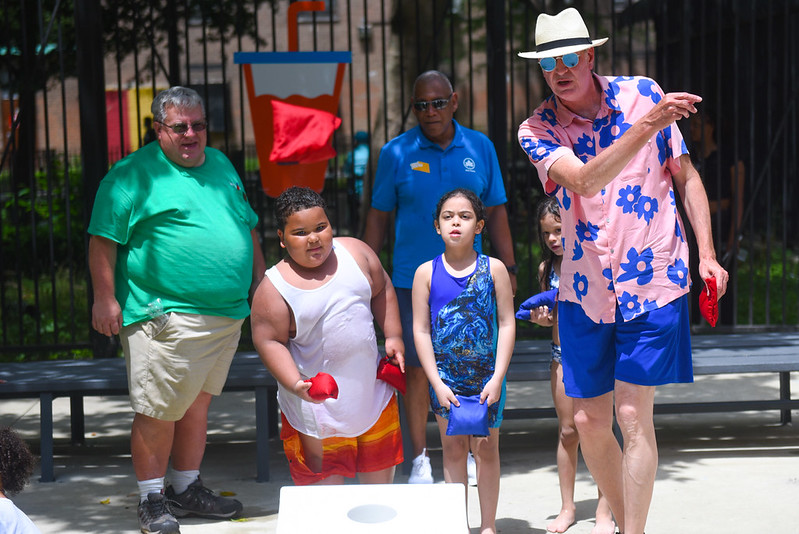
Then-Mayor Michael Bloomberg would kick off pool season in a t-shirt. Mayor Zohran Mamdani did not. Ed Reed/Mayoral Photography Office

White button down. Suit jacket in dark colors only – never flashy, or god forbid, tan. Sharp, sometimes colorful tie.
Whether on a boat in triple-digit temperatures or playing pickup soccer, New York City Mayor Zohran Mamdani has gotten a reputation for adhering to his uniform. That uniform, well-noticed during his mayoral campaign and his early days in office, has grown more remarkable in the summer heat. Last month, he jumped into a pool fully suited up, down to the dress socks, prompting CNN’s Sara Sidner to present him with a pair of swim trunks on top of the Empire State Building during their 4th of July broadcast.
It’s typical for a government official to wear a suit, but some of his recent predecessors seemed to relish going business casual when given the opportunity. Eric Adams sported his mayoral-branded polos at parades. Bill de Blasio knew his way around pool wear.
But Mamdani has set himself apart from former mayors by making it clear: the suit stays on.
As a 33-year-old Assembly member running for mayor against established Democratic politicians – most notably, former Gov. Andrew Cuomo – Mamdani was doubted as an unserious candidate with relatively paltry government experience. The basic suit-and-tie uniform seemed aimed at dressing for the job he wanted – or, at least, what New Yorkers were used to seeing from their mayor.
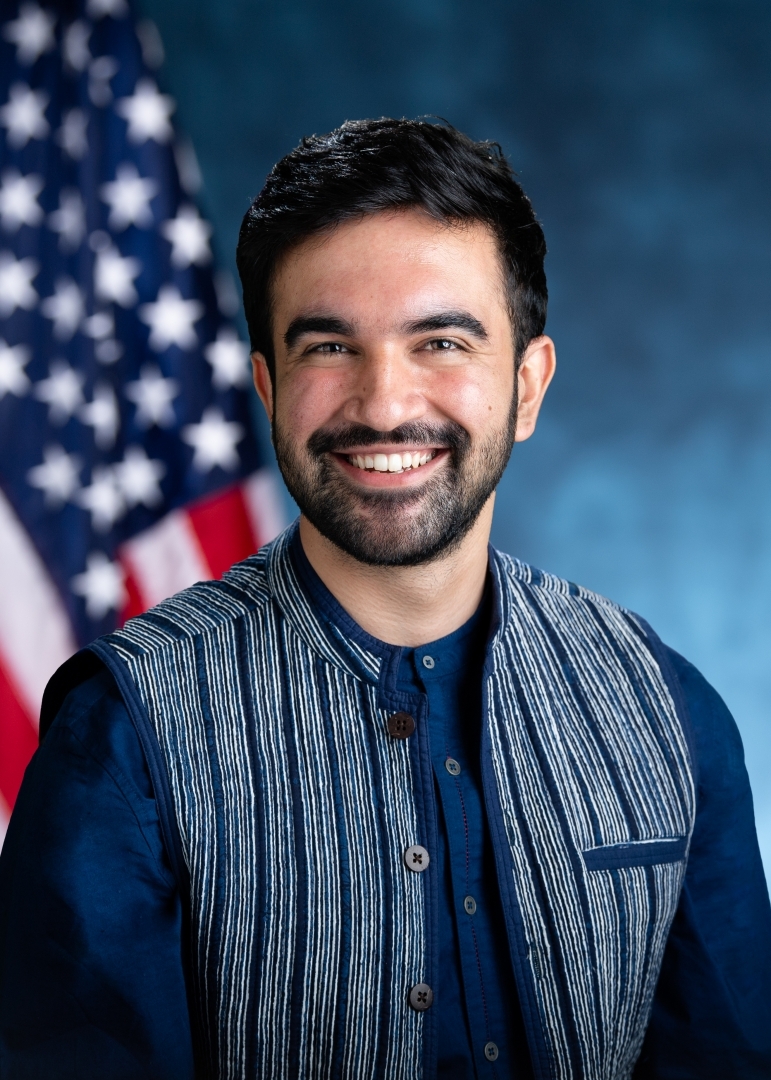
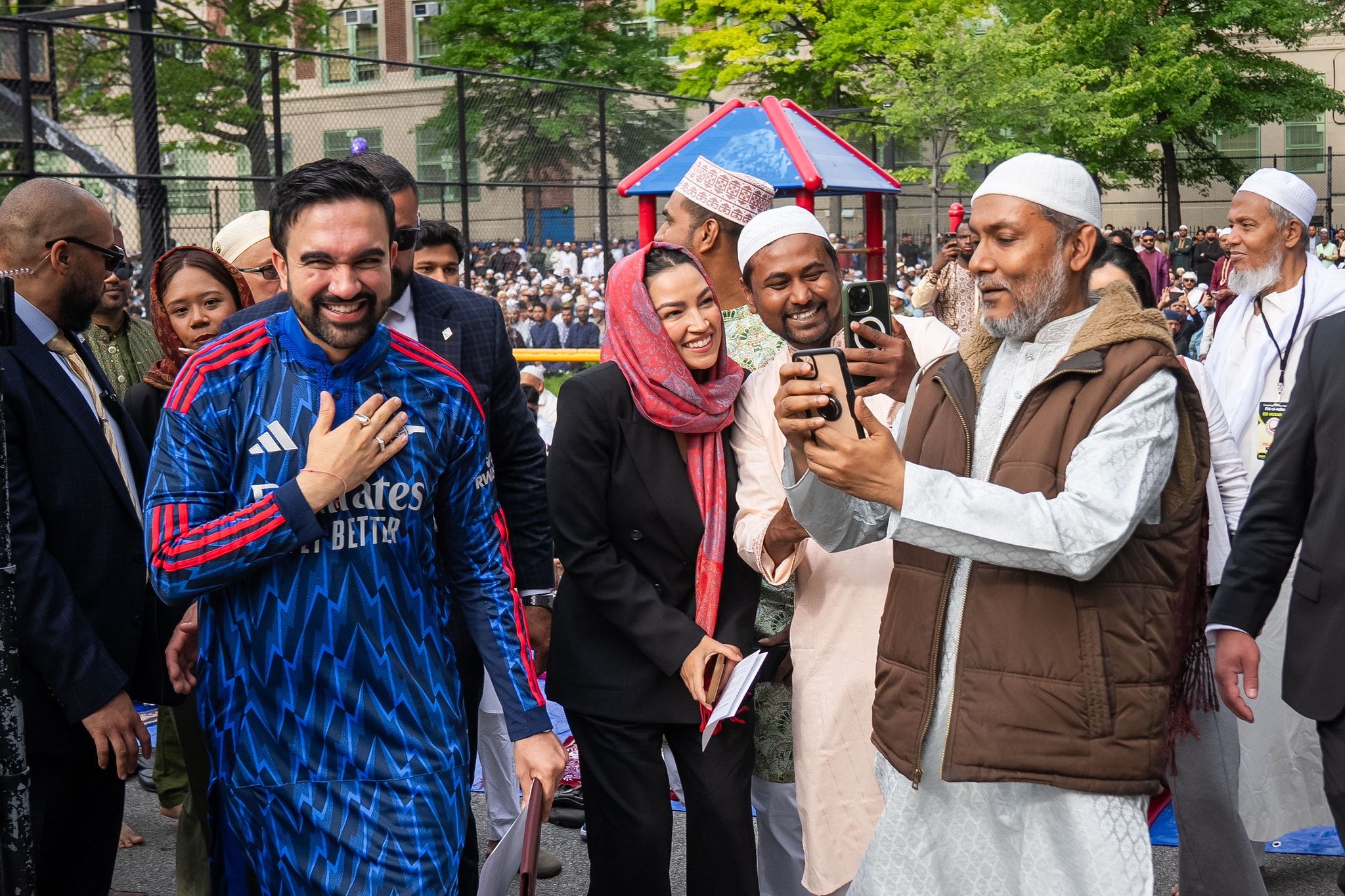
But in his previous role in the Assembly, his uniform looked a bit different. As an Assembly candidate, Mamdani introduced himself in 2020 wearing a kurta. The collarless tunic represented his own Indian heritage, and the diversity of the western Queens district he was running to represent, which includes significant Muslim, Middle Eastern and North African populations. He wore the kurta in campaign literature and after he became the first South Asian man elected to the Assembly, he even donned a blue kurta in his official Assembly headshot, standing out in a seat of suits and ties.
It wasn’t a stunt, said Amit Singh Bagga, a Democratic consultant and former aide to Gov. Kathy Hochul. “He was being representational. It was serious, but so people were paying attention to him.”
But the culturally expressive way he dressed as a state representative for Astoria didn’t follow him to the mayoral race.
On the night before his mayoral campaign launch, Mamdani turned to his team and asked them if they thought he should wear a suit. They all agreed he should, recalled Andrew Epstein, who went on to serve as his communications director during the campaign. “And then he basically never took it off,” said Epstein.
In one of his earlier viral moments on the campaign trail, he did the polar bear plunge at Coney Island in a full suit. That video gained hundreds of thousands of views, and was likely some New Yorkers’ first introduction to him.
Several people close to Mamdani – and those who have closely watched his evolution – offered a handful of theories on the switch, no single one necessarily in opposition to another.
One argument for the jacket and tie is that it helps to counter arguments that Mamdani’s socialist politics are unserious. “He’s somebody who thinks that the left should be organized and professional in their presentation at all times, and I think he’s shown a lot of success with that,” Epstein said.
Another is that the suit and tie is legible to the whole city. “He wants to convey a universalism with the suit in a city known for its incredible diversity, that is read by everyone in the same way,” said Brooklyn borough historian Asad Dandia, who is close with Mamdani. His swap to the suit aligned with his switch from being a representative for just Astoria, to a representative for all of New York City. “I think part of that is he wants something that’s more universally recognized. Kurtas are universally recognized mostly by Desis (South Asians), and maybe some who are cultured enough to understand, but I think part of it has to do with the universalism of a suit anywhere in the world. You wear a suit, people know you’re serious.”
To create the new identity, then-Assembly Member Mamdani had to start to do away with his old brand. “If there’s a single mayor in the last 25 years who is conscious of branding? It’s Zohran Mamdani,” Dandia added.
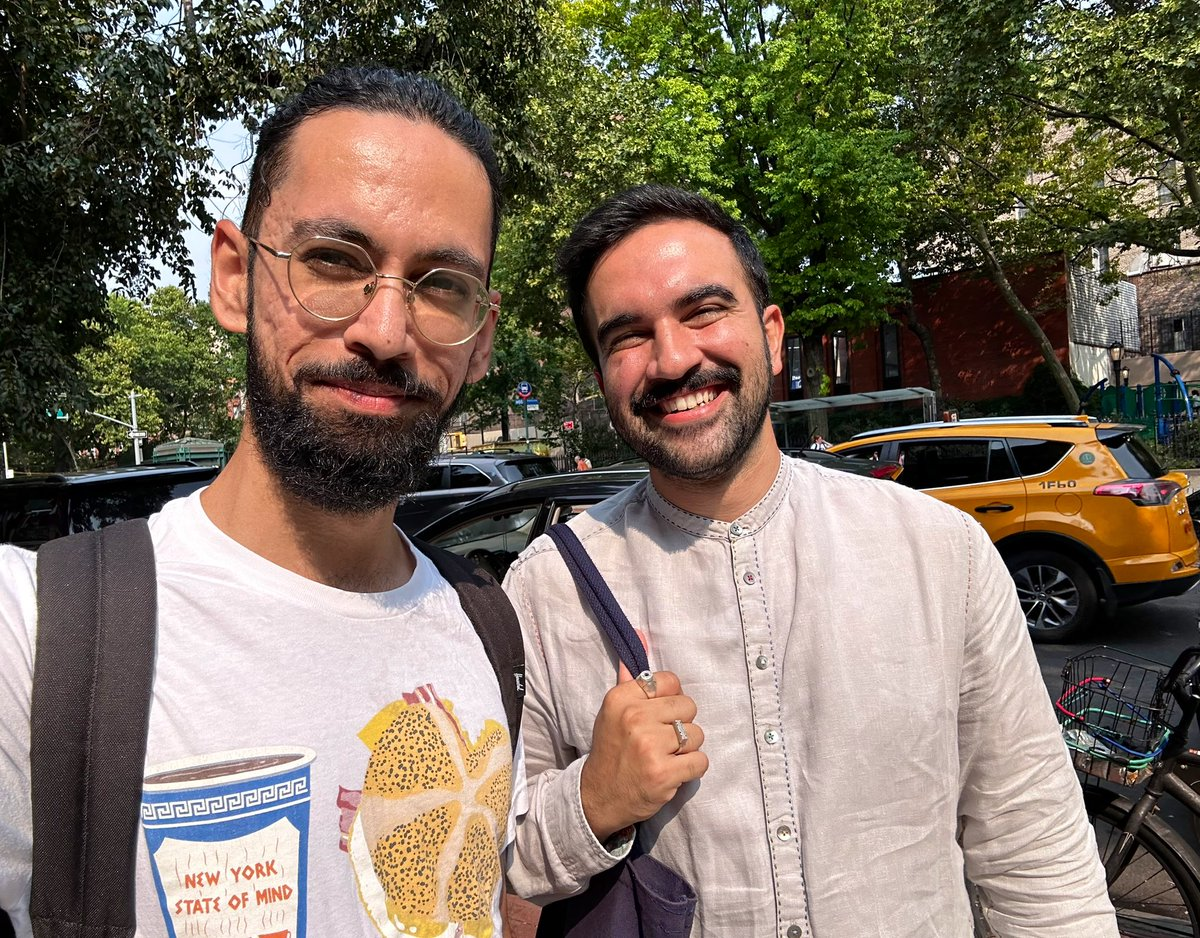
As the mayor of firsts – first Asian, first born in Africa and first Muslim mayor – Mamdani has faced harsh racism and Islamophobia both on the campaign trail and since taking office. Paired together, Mamdani’s well-dressed manner and consistent positive demeanor appear to some as a defense mechanism.
The suit and the smile can have another impact, consciously or unconsciously, to undermine those same kind of Islamophobic or racist ideas about Muslim or immigrant men,” Epstein said. They may have a “disarming effect.” Or, he ventured, the mayor just have “a resting smiling face.”
Wearing a suit and tie didn’t stop those attacks, Epstein noted, highlighting the Islamophobic mailer created for the pro-Cuomo super PAC Fix the City that featured a digitally altered beard on Zohran Mamdani. (The Cuomo campaign called the proposed mailer “disrespectful.”) But, Epstein said, “I suppose one could safely speculate they would have been even worse or more intense if he was wearing a kurta on the trail.”
Even as his wardrobe changed, Mamdani said he hasn’t. In an April 2025 interview, he told GQ, “I am the same person who’s wearing a Kitenge suit that was tailored in Kansaga, Kampala, Uganda, and East Africa, and I am the same guy who’s wearing a Bandhgala that was tailored in Delhi. And I am the same guy who’s wearing the suit from 30th Avenue that I bought from Morgan.”
Since winning the mayoral election and taking office in City Hall, Mamdani has only rarely veered away from his suits – his “‘bat costume’ if you will,” said Dandia. Now the few times he has gone more casual, it’s made the news and started a discourse.
“It’s the image that he has to present as the face of socialism in New York City and beyond, that he's wearing a full suit in 105 degrees weather,” said Ella Devi Weerackody, a Parsons student, DSA member and Mamdani fan who has made viral videos about the intersection of politics and fashion. “He knows his responsibility and he also knows that he is trapped within this suit – that if he wears shorts to work, that’s all the New York Post is going to talk about for the next two weeks.”
Another mayor of firsts could also be inspiring his outfit choices: David Dinkins, the first Black mayor, and a democratic socialist.
“I think it’s ironic because the perception we have of leftists is a perception that they don’t necessarily dress formally,” said Dandia. “In fact, in some leftist circles, formal dress is even frowned upon. It’s viewed as a symbol of colonialism, the establishment, all of these things. And then you have these two left-wing mayors, David Dinkins and Zohran Mamdani, who portray the exact opposite. These are left-wing men of color who wore suits everywhere they went.”
Dandia suggested Mamdani is reclaiming the suit. “He’s saying that this is not just something for the Anglo-Saxon class but that an African born, Asian, Shia Muslim socialist can embody all of these things just as well as anyone else,” said Dandia.
The suit also has the ease of a uniform. “He is the mayor, which is like Mickey Mouse in Disney World,” said Skye Ostreicher, founder of In the Room Media and creator of the political fashion show Style Across the Aisle. “Any of these costume characters, you see them, you recognize them, because they look the same all the time. Their hair is the same, their outfits are the same … There he is in the same outfit, he looks how he looks on TV, like that's him,” she said. “Undoubtedly that’s the mayor.”
Will it last? “He’s committed himself to the suit, he can’t escape the suit now,” Weerackody said. “The suit has to go with him for the rest of his mayoral days.”
NEXT STORY: How Jordan Wright held off the DSA