

Personality
Celebrating the 40th anniversary of Somos
A Q&A with Karines Reyes on the future of the conference and the difficult circumstances facing Puerto Rico.
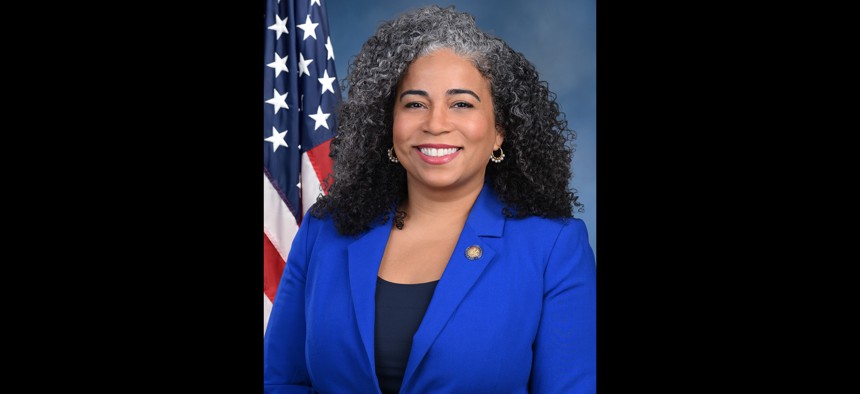
Assembly Member Karines Reyes, who leads the Assembly and Senate Puerto Rican/Hispanic Task Force, is celebrating Latino trailblazers at this year’s conference. Assembly



Now that the election is over, many elected officials in New York are turning their attention to Somos, where top politicos, consultants and advocates gather in San Juan, Puerto Rico, for one of the biggest political conferences of the year.
Thousands of people will attend the 40th annual Somos Puerto Rico Conference from Nov. 4-7. The annual public policy forum, famous for its opportunities for networking, receptions, political outreach on the island and litany of workshops, keeps growing.
This year’s theme, “Abriendo Caminos,” or “Blazing Trails.” The organization also holds an annual spring conference in Albany.
Assembly Member Karines Reyes, who chairs the Somos conference and the Assembly and Senate Puerto Rican/Hispanic Task Force, spoke with City & State about the upcoming conference, its milestone anniversary and concerns about the impact on Puerto Rico’s water crisis. This interview has been edited for length and clarity.
Tell me about this year’s Somos conference theme and what you want people to know. What should people coming for the first time expect?
The theme for this year is “Abriendo Caminos,” and it really translates into trailblazing. And I think it’s important for us to not just look at and recognize the people that came before us and how we got here, but then I think also kind of set a course for what the future needs to be for the Latino community, particularly in New York. It’s really about recognizing the legacy of Somos and the task force, because I think a lot of people conflate the two things, right? I think there is the legislative body of Latino legislators who are trailblazers themselves. Many are the first of, you name it – the first person of this ethnicity or this ethnic background or this country elected, or the first in their community to be the first Latino to represent. We do have a lot of firsts in our group, but also I think it’s (about) the legacy of what the organization has been able to help us build.
“Abriendo Caminos” or “Trailblazing” – a lot of things fit under that umbrella.
It’s vague for a reason and helps us capture just how broad and diverse the Latino reach is. It’s not just about the trailblazers in government and elected office, but education, industry – in so many aspects. Because it is 40 years and we’re talking about the legacy of the conference, we wanted to focus on a lot of the firsts and a lot of the people who have paved the way. It gives us the opportunity to make a comprehensive case of highlighting all of the trailblazers. (Rep.) Nydia Velásquez, who’s the first Puerto Rican woman elected to the Congress, who’s retiring. … The conference has grown from just a one-day kind of reception event to a multiday event where now we have a day of service. We’re highlighting the people who had the vision to make the conference so much more than just parties and receptions, but the ability for us to give back to the island and the people of the island, make meaningful impact and provide experiences that I think allow for the attendees to leave feeling better connected to the people of the island, better connected to the mission of Latino electeds and Latino legislators, and (with a) better understanding what their role can be in supporting Latino communities.
Is there anything specifically new this year?
This year particularly, we have made sure that we broadened our day of service activities (more) than ever before – and that’s also a response to the fact that we have the highest number of attendees that we’ve ever had. And we have workshops cut across two days as opposed to one day. … It was my goal to make sure that we weren’t just the receptions, just the parties, right? And it’s why during my tenure I have made sure that we’ve expanded and broadened the amount of workshops and conversations that we’re having – that every event has an educational element, so it gives people the opportunity to learn something new, to make new connections, to connect the dots and (learn) what some of the challenges are for Latino communities.
How many people are you expecting this year?
Nearly 3,000 people have registered so far, but there are people who register when they get there, so it will be closer to 4,000. It has definitely increased every year. We are being very mindful of ensuring that we are checking credentials so that we can do crowd control, so that’s definitely going to be a change this year, because of the size and magnitude of this conference. I guess we’re victims of our own success.
There’s previously been talk about expanding Somos to the Dominican Republic or somewhere besides Puerto Rico. What’s the latest conversation there?
The organization has a group of individuals who have different ideas of how we should move forward, and that has proven to be a challenge. I still stand behind the idea that the conference should be rotated, and that we should bring the Somos experience to other Latino countries. It’s still the vision that I hold that we haven’t been able to get there in the past couple of years, but I hope that we can in the future.
People always ask me. A lot of people who are excited by the idea and who continue to ask and are anticipating what that can bring and the opportunities that it would provide for different connections in different places, and people are always curious as to when, if and when it will happen. So I’m optimistic that we’ll get there.
Somos has received criticism for exacerbating the stress on water or power shortages in Puerto Rico. What do you think the impact will be this year? How have you discussed mitigating that, and is it ethical to be holding the conference there at this time?
It isn’t a Somos conference if you don’t receive criticism – that is to be expected and it’s par for the course. Puerto Rico is not the only place that is suffering this drought. The drought has extended to all of the islands in the Caribbean. Because we are in an El Niño pattern, we are experiencing record heat from global warming.
This is really an environmental issue, and we are seeing the impacts of the climate crisis, and that’s why when we talk about climate policy in New York and what we do in New York, (it) impacts other parts of the globe. This is a key example of how decisions that we make locally in terms of the environment have this lasting impact in other parts of the world.
We’ve been in constant contact with some local organizations on the ground to hear what they need from us and how we can use the platform of Somos to uplift their voice, their struggles and some of the advocacy work that they’re doing. We have been communicating with the mayor’s office and the governor’s team, as well as the Hispanic Federation, and we anticipate we’re going to be making a resiliency announcement while we’re there.
But the reality is is that we start planning and sign contracts years in advance, and because it’s not a natural disaster per se, we are still held liable for the contracts and the cost of it, and it would just be untenable for us to not have the conference and to decide to cancel it altogether. The good thing is that, as I check water levels every morning – it’s literally my morning routine with my coffee – the water rationing has stopped, and it’s no longer happening, so there is water. It doesn’t mean that we’re in the clear, and people (still) need to be responsible tourists. Generally, when you go somewhere, you have to be mindful of the environment, your consumption, your carbon footprint, the impact that you have. So people should be careful and be conscientious and be good stewards of the natural resources.
Anything else people should know about that?
One of the points that people were bringing up when I was talking about rotating the conference was the fact that the conference brings a huge economic impact to the island of Puerto Rico, and that still remains the same. The very people, the workers who benefit from us being there, the small businesses, the restaurants, the Uber drivers – they are still looking forward to us coming there. They look forward to that extra money that they can make during that week, especially in a time where I think their budgets are being stretched because of this water crisis, because of rising energy costs, because it’s so hot on the island. All of these conditions are putting financial stresses on everyday people and an opportunity to make some extra money while we’re there, I think, is welcomed by them.
What will be the talk of this year’s conference?
I think that people are going to be trying to figure out what the direction of the Democratic Party is going to be, and we saw this last year with the election of the mayor. I anticipate there will be a blue wave and we’re going to have a lot of changes on a federal level, and I think we’re also anticipating a lot of changes in the state Legislature as we have so many new incoming members. I think everybody’s trying to figure out what that looks like and what those dynamics are going to be. I think that’s going to be a lot of the buzz around the conference.
Rep. Nydia Velázquez is retiring. Rep. Adriano Espaillat lost his reelection, and you have a lot of younger Latinos who’ve been elected and are gaining power. What do you think about the current state of Latino political power and what this conference will mean for the future?
There are natural transitions that happen and sometimes they’re not what people expect. But I’m optimistic about new, young energetic leadership. I think it is what our democracy needs and has been yearning for, and particularly for Latino communities, sometimes we need representation that’s much closer to the issue. And the reality is that one of the struggles that Latinos face in terms of job growth and economic power is that young people are are having a difficult time finding work, growing their careers, building families, getting access to the middle class, and those are issues that are felt very deeply, and I think, more so by younger people. And I think it’s important that we have representation that’s going to help steer policy on the state level that’s very close to that issue. I see that in a lot of the new incoming leadership that we have.
Do you have a favorite event, or dress planned this year? What is it?
I always go to Johan Hernandez – he’s like the guayabera atelier of New York. I try to design my own, and then I hand it over to them and they make it. I got something different coming this year, so we’ll see. I always look forward to seeing his work because so many people in the conference wear his stuff. I haven’t decided what day of the week I’m going to wear it yet.