

New York City
Darcel Clark is focused on preventing youth crime before prosecuting it
The Bronx district attorney talks about the Mamdani administration, NYPD presence in the borough and the push to close Rikers.
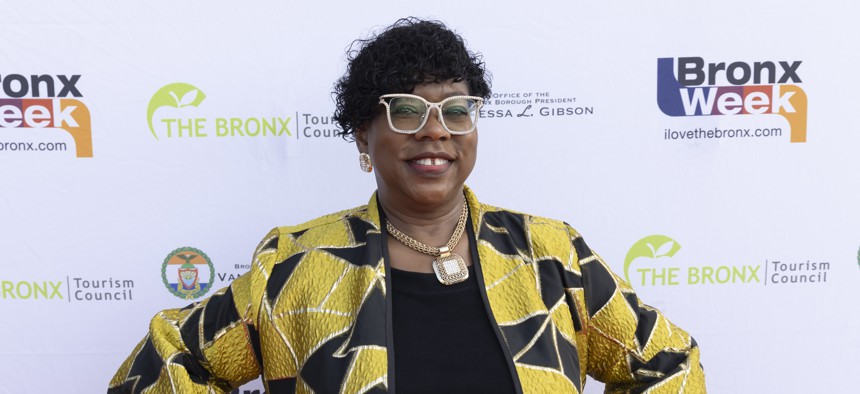
Bronx District Attorney Darcel Clark, 10 years into the job, doesn’t plan on going anywhere. Joy Malone/Getty Images


A decade into her work as Bronx district attorney, Darcel Clark is on a mission to reduce youth violence in the Bronx. She says she just needs the support and funding to get it done.
The borough, newly split into Bronx North and Bronx South patrol boroughs by the New York City Police Department, has experienced an 12.5% decrease in major crime, compared to the first seven months of last year. Clark attributes that to the deployment of 200 more officers to the borough at the beginning of the summer. The state, meanwhile, has dedicated funding for community safety-led initiatives, including a $3 million grant for at-risk young people in the South Bronx, she said.
But despite the fact that violence intervention is up and shootings are down, Clark still has a long to-do list. Among those items: reforming the Raise the Age law and having her first meeting with New York City Deputy Mayor for Community Safety Renita Francois – a meeting Clark said is set for next Monday.
City & State spoke with Clark about the Bronx’s crime trends, the push to close Rikers Island and her vision for crime “prevention, intervention, prosecution and reentry.”
This interview has been edited for length and clarity.
There has been a reduction in crime in New York City and the Bronx overall, what do you think has contributed to that this year?
I think that there’s just really been a greater concentration on looking at the crime in the Bronx and making sure that we’re getting the resources that we need to bring us to the point where we are. First, more policing. You know that there has been a split between north and south (patrol boroughs) of the Bronx now, so we receive more police officers. I think the police department has been helpful with us in really concentrating on the key areas where we are seeing the highest incidence of crime, and putting more police presence there. And more police presence didn’t necessarily equate to more arrests, but it was a situation where now less crime will happen because the police are there and people will think twice about doing a crime in front of the police.
(There’s) also more resources from the police and my office – and investment in the community because we need that as well. Because it’s not all about arrests. The DA and the police should be the last resort, not the first resort. But because of the failures of so many areas and agencies and the disinvestment, everybody looks to me and the police to solve all the problems.
What prevention have you been able to do in the last decade in the Bronx to lower recidivism rates?
Well, the first thing is that you have to know who the crime drivers are. It’s a small group of individuals that are causing the crime. So we now concentrate on looking at those crime drivers, and dealing with them in the cases that we present, or the diversion that we may offer in order to keep them from offending in the first place. And if they do offend and reoffend, what we can do to stop them from being recidivists. So we have a Crime Strategies Bureau now, which we started 10 years ago, and they really help us with the data to look at who the people are, where they’re committing the crimes, what crimes there are, and really how to best navigate how to lower the crime rate in those areas by removing those individuals from the community because they’re the ones that are causing the most harm.
New York City Mayor Zohran Mamdani did not end up increasing the NYPD officer headcount. Do you think decisions like that end up hurting the Bronx in the future?
It could. But look, as long as they have police, the NYPD could deploy them wherever they want. I know that there has been a focus on deploying more police here in this county. So if they have to take them from somewhere else, they will, in order to pay attention to the crime that is happening in the Bronx. I mean, I can’t stand up or talk about the NYPD’s budget because it’s way more than mine. That’s between the mayor and the police department. I just know that when I need the help, that I can rely on the NYPD to help me get the resources that I need.
Has Police Commissioner Jessica Tisch been helpful when you’ve requested more resources?
Yeah, she’s taken the lead in making sure that the Bronx North and South (patrol boroughs) happen. She has a particular focus on looking at the Bronx because she sees the high numbers and incidents of crimes happening here. She’s also a data person, laser focused on putting the resources where they’re needed most in order to bring the crime down.
You’ve previously spoken about reforming the Raise the Age law, which sets the minimum age a child can be prosecuted as an adult to 18. What do you think about that now?
The way the law is written, the one issue I have a problem with is the gun one because that’s where I’m having the biggest problem. (Editor’s note: That part of the law allows people as young as 16 to be tried in criminal court if they’re charged with displaying a gun.) For them to say the only way that I can retain the case is once they display the gun, that’s too late. Adults, if they possess (a gun), and we have probable cause to arrest them, then they’re charged with possession. I think that possession of a gun by a young person should be held to the same standard. As long as I have probable cause, I should be able to maintain those cases because what is happening is that if we wait until they pull it out, that means they’re going to shoot it, or somebody sees them pulling out and they’re going to get shot. Then it becomes more than just a gun case.
The other part is that millions of dollars were supposed to be allocated to communities and courts and otherwise in order to fund the Raise the Age law, but New York City was exempt from that. So therefore, we have never seen any of that money. So the resources never came here. So that’s why we're going to keep having an uptick in crime. Now, of course, this was raised last year in last year’s budget, and I think the state has changed that and allocated some funds. So I hope that those funds will now be used to bring the resource coordinators, the programs, all the things that we need to finance what will helpfully help us to keep these kids from getting in trouble in the first place.
What difference do you think it’ll make in the community to have Rikers Island possibly closed and the Bronx have its own jail?
This administration seems very clear that they want to continue with the closure of Rikers. Of course, it was supposed to happen in 2027, and we know that’s next year, so it’s not going to happen. A community-based jail makes sense, but the numbers that we have in Rikers right now, if all the community-based jails were built, they wouldn’t have room for the people that we have in Rikers right now. … You know, families could be closer to them. The lawyers could get to them. The only problem that I have is that the other community-based jails are at the courthouse, and it’s only in the Bronx that it’s not at the courthouse. So to me, they might as well stay on Rikers Island because it’s going to be the same thing. They’re not as connected.
You are up for reelection in 2027. Are you going to go for a fourth round?
Yeah. I have unfinished business and I think my reputation and the work that I’ve achieved, for the people in the Bronx, they seem to be happy with the way that I’m handling things. Again, my focus is prevention, intervention, prosecution and reentry. We have to do more to prevent the crimes from happening. That means investment in community. I use my voice for that each and every day … That’s why I believe in building these intervention programs.