

New York City
Julie Menin’s surveillance pricing ban passes the council
The City Council speaker, who sponsored the legislation, pushed back on arguments against it from companies like Uber.
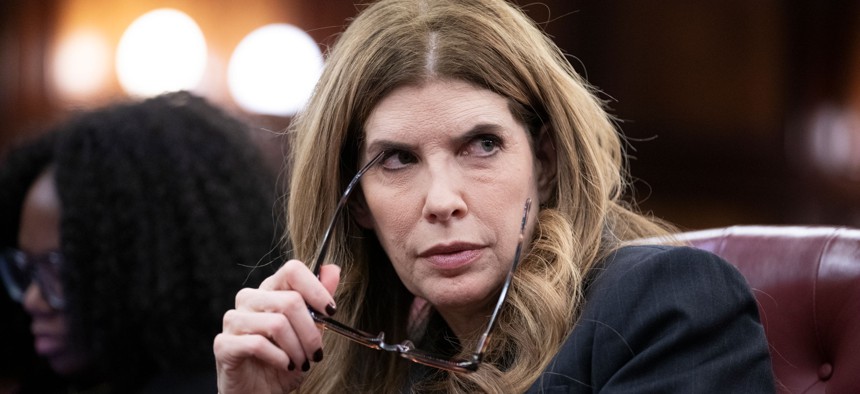
Different prices for different peeps? Not on Speaker Julie Menin’s watch. John McCarten/NYC Council Media Unit


The New York City Council is taking aim at surveillance pricing, passing a bill Thursday to restrict businesses’ use of the algorithm-based practice that can set different prices for different customers.
The council voted 44 to five to pass a piece of legislation sponsored by Speaker Julie Menin that bans retailers from engaging in surveillance pricing practices in the city. It’s backed by Mayor Zohran Mamdani, who has led a very active Department of Consumer and Worker Protection on related consumer issues like restricting hidden junk fees.
The bill, Introduction 891-A, prohibits businesses from using algorithms that utilize New Yorkers’ personal data to set individualized prices for different customers buying the same exact goods and services.
“It’s a practice that erodes privacy. It’s a practice that erodes fairness. It’s a practice that worsens the affordability crisis, and today, it’s a practice that we are going to ban,” Menin said at a press conference in advance of the council’s stated meeting. “Council Member [Harvey] Epstein should not have to pay more than his constituents for pet food. Even if a retailer knows from his search history that he’d do anything for his dog Homer.”
Mamdani joined the speaker and much of the council in voicing his support for the surveillance pricing bill. “When corporations use your personal data to decide what you pay, you only stand to lose,” Mamdani said in a statement. “We support the City Council legislation to ban this practice. …Our administration will continue working with the council to protect workers, tenants and consumers, and put an end to the scam economy.”
Menin did not detail any collaboration between the Mamdani administration and her office on the bill when asked by City & State. But she expressed appreciation for the mayor’s support for the bill and testimony from Department of Consumer and Worker Protection Commissioner Sam Levine in support of it during an oversight hearing in June.
The surveillance price ban will take effect one year after becoming law, and will make New York City the fifth jurisdiction to ban surveillance pricing in the country. The state Legislature also passed similar legislation, called the One Fair Price Act, which bars companies from using surveillance pricing and now awaits a signature from Gov. Kathy Hochul.
Much like the state’s version of the bill, Menin’s surveillance price legislation has faced pushback from industry, including corporations such as Uber, whose services fall under the bill. Menin refuted the argument that the bill will prevent companies like Uber from providing certain discounts to customers.
“Any suggestion that companies cannot do discounts is simply flatly incorrect,” Menin said. “They can’t mine people’s personal data to charge them a different price for the exact same good, and that honestly is just common sense. We should all want to stop that predatory practice.”