

sponsor content What's this?
Sponsored Content
Alternative Delivery May Provide a Missing Link in New York’s Climate Resilience Push
New York is a national climate leader – but moving from plans to real projects is the next challenge.
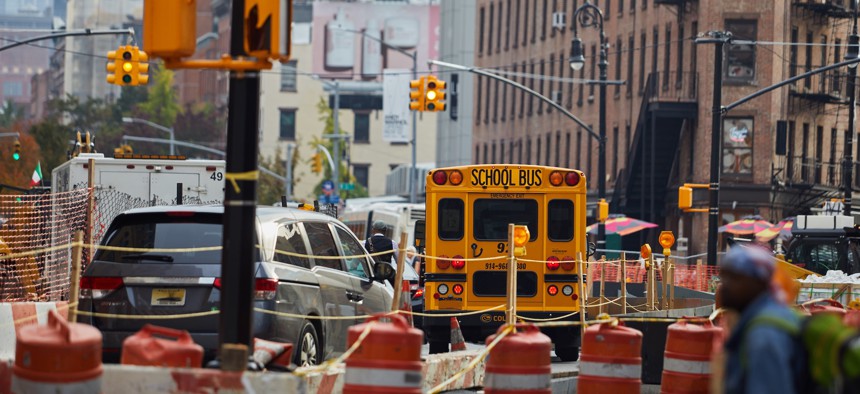
Manhattan Road Adobe Images

New York has positioned itself as a national climate leader through the Climate Leadership and Community Protection Act, setting ambitious, and necessary, targets. But the challenge ahead is shifting: The focus is moving from planning to delivering results.
To meet the challenges of climate change, New York is looking for ways to translate climate strategies into viable projects – quickly.
To move from planning efforts to measurable climate mitigation and adaptation projects, we need to confront a fundamental question: How will these projects actually get designed and built? Alternative Delivery can provide the flexibility to harness the industry’s creativity and experience, leading to best value solutions that integrate climate mitigation and adaptation from the start.
The Intersection of Best Value and Sustainability
Alternative Delivery is often discussed in the context of cost, schedule and risk. But at its core, it is a tool for delivering best value, and sustainability is increasingly part of the value proposition.
New York’s public agencies are under pressure to upgrade infrastructure, meet emissions targets and harden systems against extreme weather – all while budgets tighten and workforces are stretched thin. Achieving all of this requires solutions that are not only technically sound but also forward-looking and adaptable.
In traditional design-bid-build, public owners must define every aspect of a project in detailed plans and specifications that explicitly address climate-resilient measures through the design process. True innovation in this procurement method assumes agencies have time and budget to evaluate emerging technologies, understand evolving regulatory requirements and integrate the latest resilience standards into project requirements.
However, teams are already under pressure to maintain a current level of service while proactive steps towards climate resilience hang in the balance. The next storm, compliance deadline and round of capital planning are always around the corner.
Alternative delivery departs from the traditional model, giving proposers the opportunity to leverage their industry knowledge and supply chain relationships to provide innovative solutions that increase “best value” of their proposed solutions.
By allowing owners to shift to providing performance criteria – such as decarbonization goals, flood-resilience requirements or long-term energy savings – and assigning qualified design-build teams the responsibility to meet these requirements, the state taps into a marketplace of innovation.
Designing for Climate Resilience
The challenge ahead isn’t just replacing aging assets; it’s rethinking them for a climate that looks dramatically different. Whether it’s transit facilities exposed to heavy rainfall, energy systems facing peak-load volatility or waterfront assets vulnerable to storm surges, the scale of change demands flexible and integrated solutions that address the potential for cascading failures.
Alternative Delivery offers that flexibility. Instead of prescribing how climate resilience must be incorporated, agencies can define what a resilient design must achieve.
Design-build teams then bring forward design elements that include more durable materials, smart technologies, efficient energy systems, modular components and digital tools that optimize lifecycle performance. This procurement method also encourages early collaboration among planners, engineers, contractors and operations staff – confirming decisions are grounded in practicality, not theory.
In practice, this approach accelerates delivery and reduces risk. When climate resilience requirements are built into the procurement process, bidders understand the goals from day one and are incentivized to produce strategies that are baked into the design.
Alternative Delivery is one of the tools that can compress timelines, improve consistency across portfolios and scale innovation to the broader industry with proven cases and successful examples of implementation.
As we move toward implementation, public agencies are considering expanding their use of design-build and other Alternative Delivery models across the capital program. These approaches will allow resilience and decarbonization goals to be built directly into projects, rewarding proposers who can solve complex challenges through collaboration and lifecycle thinking.
That means aligning procurement with climate goals, strengthening owner readiness and giving multidisciplinary teams the space to propose ideas that go beyond the status quo.
The stakes are high – and the window for action is narrowing. But with smart, performance-driven procurement, New York can turn years of planning into real progress and build the resilient future its communities deserve.
Ryan Prime is the Alternative & Sustainable Delivery Lead at VHB.
NEXT STORY: Food Security Is Health Infrastructure