

sponsor content What's this?
Sponsored Content
Putting primary care investments at the center of health care
A Q&A with Louise Cohen of the Primary Care Development Corp. on the importance of prioritizing this critical preventive care.
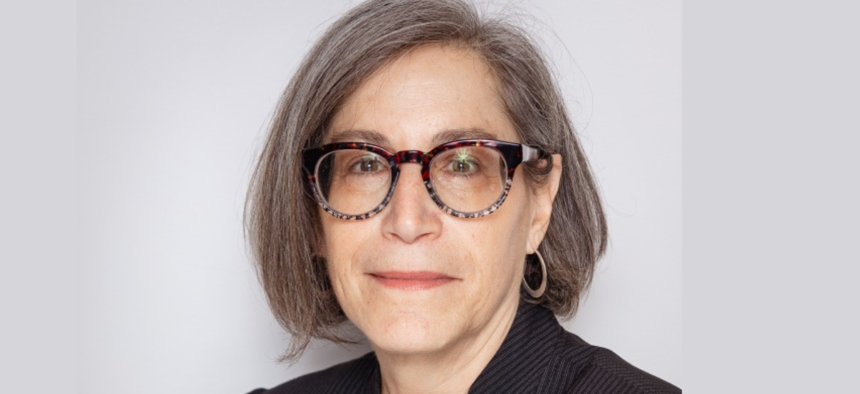
Louise Cohen is the CEO of the Primary Care Development Corp. Cohen has led the organization for a decade. Primary Care Development Corp./Provided


Louise Cohen is the CEO of the Primary Care Development Corp., a not-for-profit community development financial institution with the mission to expand and strengthen the nation’s primary care safety net. It is a U.S. Treasury-certified Community Development Financial Institution that provides expertise, advocacy and capital financing to advance health equity and grow primary care access where it is most needed.
Cohen has led the organization for more than a decade. She was formerly vice president for public health programs at Public Health Solutions in New York City and held multiple leadership roles at the New York City Department of Health and Mental Hygiene.
As she prepares to retire from leading the Primary Care Development Corp. at the end of January – and Aparna Mekala starts as the new CEO on Feb. 1 – Cohen spoke with City & State about her past, future and the importance of primary care today. This interview has been edited for length and clarity.
What does a typical day look like leading the Primary Care Development Corp.?
I check my calendar, I’m going to see what’s on the agenda, what are the issues out there? I do all the typical things that everyone else does: I grab my coffee, I check my emails, all that stuff. But I think the main thing that I’m trying to do is figure out the current problems that we need to solve.
I think I do a lot of work across the day trying to help our organization be more effective, efficient, strategic; working with teams of folks in the organization to accomplish various activities and goals and telling our story in a bunch of different places, which is really one of the main ways that we can get out there, find more find more clients, build more support in communities.
It looks different every day, but that’s what it looks like.
What has been one of the most rewarding parts about working with PCDC?
I think, ultimately, the impact that we’ve had in communities is really the main thing that I’m interested in.
I think the combined commitment to providing primary care in communities that haven’t historically had it – whether they were low-income communities of color, communities that have been redlined – and then actually seeing the economic activity that can be generated from that, I think, is really important.
Seeing some of those ideas come to fruition in the community and the impact that they have on the community is, I think, the most rewarding thing.
You’ve spent a large chunk of your life dedicated to primary care. Why do you think it’s so important?
Primary care is prevention, early diagnosis and treatment. It’s coordination with other levels of the health care system. It’s looking at the person from a whole perspective, not just their physical health, but their mental health, their emotional health and thinking about them throughout the life cycle. It’s a critically important part of the health care system. It’s really the only part of the health care system that improves health outcomes.
Primary care can really promote equity at the community level and reduce health disparities. It certainly can lower costs if you can prevent hospitalizations and emergency room visits. It really is the basis of individuals’ trust in the health care system.
I think primary care is essential in communities and for individuals and families.
What do we need to do better to support communities in the wake of some of the recent changes and cuts to health care?
First of all, we have to step back and say we actually want primary care to be the center of the health care system. That’s the most essential thing. If we do that, then we can think about financing it in a way that makes sense.
We can increase the number of access points. Community health centers in particular are a really important model; they’re not the only one, but they’re a critically important one and we should have one in every community.
We need to reduce barriers to primary care, stop making people have co-pays for primary care, or for basic medications that are provided through primary care.
I think that we want to be cognizant of the workforce, really thinking about lots of different ways in which we could develop a stronger workforce.
How can readers get involved to support primary care in their communities?
I think the most important thing that readers can do is to ensure that their policymakers at the state, local and federal levels know that they care about primary care, that they want primary care to be sufficiently resourced. They want primary care in their communities and they want reduced barriers to primary care. We know that policymakers want to hear from their communities.
We think it’s important for primary care to be one of those things that people tell their legislators and their policymakers in their communities that they want.
If you go to any room in any place and you ask, “how many people are having trouble finding a primary care provider?” at least half of the people, if not more, will raise their hand. Those are the people who need to be activated to do something about it.
What are you looking forward to most in your retirement?
I’m leaving PCDC in great shape. It is primed and ready to meet the challenges in collaboration with many other people around the state and the country. I think that 10 years is a good run for any CEO. I think it’s time to get fresh ideas and a new perspective. We’re looking forward to seeing the new CEO of PCDC very soon.
For me personally, I plan to start working on my bucket list. I want to do more hiking, I want to visit national parks in the U.S., I want to enjoy friends and family and my new grandbaby. I want to go to more Broadway shows in the middle of the week and not have to worry about getting up and going to work. And I think, perhaps in the future, contributing to the work of expanding primary care in some way or another.
But really, I’m leaving because I’ve been working for my whole life and I just think it’s a great opportunity for someone else to come in and take PCDC to the next level. It’s been a great run. I’m looking forward to seeing all the great things PCDC is going to do in the future.