

NYN Media
Opinion: Draconian federal SNAP cuts require long-term solutions
Thanksgiving food giveaways are welcome, but food insecurity needs to be seen as an ongoing healthcare issue.
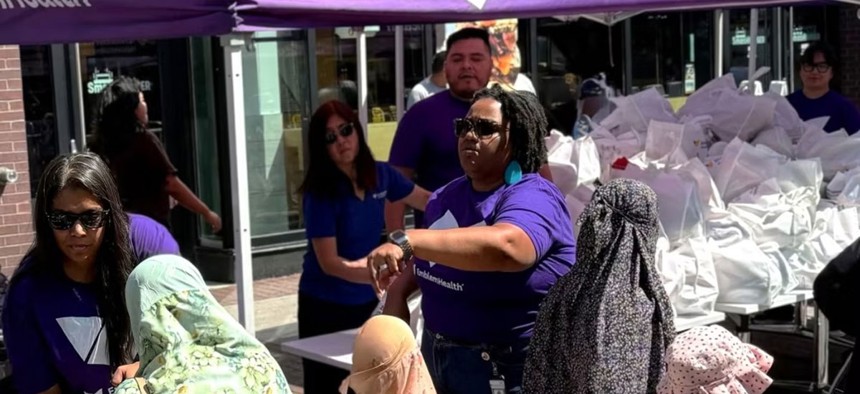
EmblemHealth staff assist New Yorkers at a Neighborhood Care event offering food distribution and backpacks. EmblemHealth

Right now, there is a growing number of New Yorkers for whom eating is uncertain and their children are continuously hungry.
Every day in the communities we serve, we meet individuals with food insecurity and witness how the lack of healthy, affordable food shapes health status. It’s unreasonable to expect someone to manage their diabetes or focus on taking their medication when they’re hungry. This reality needs to inform the policy conversation around healthcare, given the size of federal cutbacks to programs providing food to working families.
According to the Mayor’s Office of Food Policy, 17% of New York City residents are food insecure. This percentage has been increasing in all boroughs since 2019 and is as high as 23% in the Bronx. An estimated 30% of New Yorkers earn too much to qualify for Supplemental Nutrition Assistance Program benefits but still struggle to afford food for their families. Since June, in the first months after new federal rules went into effect from H.R. 1’s imposition of more stringent work requirements, the city reported that 26,500 New Yorkers lost their SNAP benefits.
The double whammy is that food insecurity exacerbates existing health disparities. Nationwide each year, poor nutrition is estimated to cause over 600,000 deaths and $1.1 trillion in preventable healthcare spending and lost productivity. Food insecurity can worsen chronic health conditions, such as diabetes and hypertension, deepening health disparities among low-income populations. Latino and Black individuals are far more likely to experience food insecurity than their white counterparts.
We are committed to the fight against food insecurity in our communities and one year ago created EmblemHealth’s Community Food Security Initiative to help New Yorkers in need. That's particularly important, since some 1.8 million New York City residents are enrolled in SNAP, and are vulnerable to federal cuts. As government support is reduced, providing healthy food is more important than ever for the health and well-being of the people we serve. Our efforts, working alongside City Harvest, New York Common Food Pantry, and The Campaign Against Hunger, have distributed more than 62,000 bags of food to individuals and families across New York City, Westchester and Long Island.
As Thanksgiving and the holidays approach, we are continuing to host food events and collaborate with community partners on food giveaways to help families put meals on the table during the holiday season, while recognizing that addressing food insecurity requires year-round support and long-term solutions.
Our Neighborhood Care centers, located in the most underserved areas of NYC, are now key food distribution points. Our relationships within these communities have helped us identify needs as they emerge and lower barriers to seeking food assistance. Someone who may otherwise forgo food assistance may come to Neighborhood Care for weekly chair fitness classes and stay to pick up free healthy produce at a farmer’s market or speak privately to a social worker about SNAP eligibility and renewal. Food insecurity may not be what first brings someone through our doors. But our staff’s reputation as trusted teams and their relationships with community-based organizations enable us to connect people to the services they need.
Demand for food assistance is growing, and the resources available to meet it are under pressure. This is the tension felt by the organizations providing support on the ground and the communities relying on it. As more data become available, awareness of the scale of food insecurity continues to grow, and the personal stories behind the statistics become more visible. We are urging Congress to act and restore full access to critical benefit programs, such as SNAP. Ensuring New Yorkers do not go hungry requires collaboration among public and private stakeholders who recognize that food security is fundamental to a thriving community, and that now is the time to restore the draconian cuts made to these programs.
Karen Ignagni is CEO of EmblemHealth, one of the nation’s largest nonprofit health insurers.
NEXT STORY: Opinion: Data must lead the way toward universal childcare