

Opinion
Opinion: A $64 million wake-up call for ethnic and community media
Outlets that can demonstrate their value with concrete metrics will be well-positioned to succeed, but those that appear analog in a digital governance era risk being bypassed.
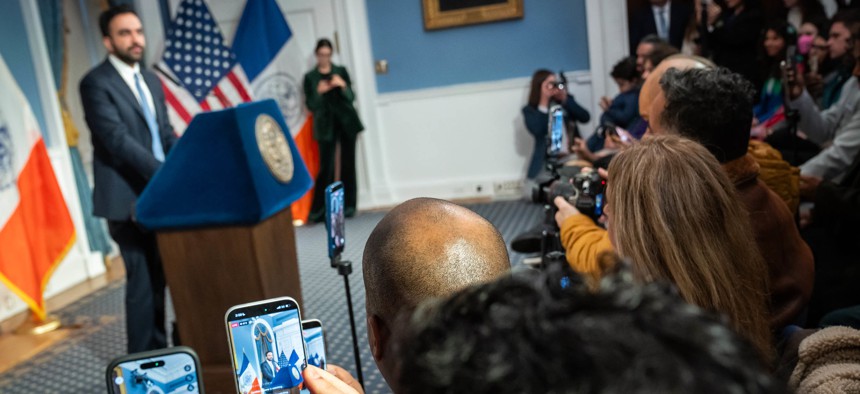
New York City Mayor Zohran Mamdani holds a press conference of sorts with “new media” influencers and content creators in the Blue Room in City Hall on Jan. 7, 2026. Ed Reed/Mayoral Photography Office


As we settle into 2026 and a new mayor in office, the landscape for ethnic and community media is shifting beneath our feet. For hundreds of these media outlets serving New York City's diverse neighborhoods, this is a Darwinian moment: adapt now or face obsolescence.
This reality is in sharp focus with the election of Zohran Mamdani as New York City mayor. He ran a savvy digital-first campaign that bypassed traditional media gatekeepers, and his administration is already operating the same way – prioritizing digital engagement, content creators, and data-driven strategies.
The Mamdani administration signed Executive Order 2 on Jan. 1, placing the Mayor's Office of Ethnic and Community Media under the portfolio of the chief of staff – not the communications department, as was the case during the Adams administration. Executive Order 7, signed the following day, went further: MOECM is now part of the structure of the newly created Office of Mass Engagement, alongside the Public Engagement Unit, Faith-Based and Community Partnerships and NYC Service.
By aligning MOECM with community outreach rather than with communications and media relations, the new administration appears to recognize that ethnic and community media serve as organizing infrastructure – not just as vehicles for press releases and op-eds.
For New York City's more than 300 ethnic and community media outlets, this represents more than a political transition. It signals an operational shift. Outlets that can demonstrate their value with concrete metrics will be well-positioned to compete for community outreach and advertising budgets. Those that appear analog in a digital governance era risk being bypassed.
I say this as someone who worked as a community reporter and later served in government for a decade in the trenches. I helped implement Local Law 83 under Mayor Eric Adams and Executive Order 47 under Mayor Bill de Blasio, creating the framework for equitable city advertising in ethnic and community media.
The reality is that despite legislative wins, a significant disconnect persists. During the recent mayoral primaries and general election, PACs spent over $64 million on political ads, but despite representing the majority of the city's diverse demographics, ethnic and community media outlets accounted for less than 3% of that spend.
Why? Because good intentions don't buy ads – data does. Ethnic and community enterprises aiming to continue working with the City of New York, businesses and political campaigns will be more competitive if they shift their business models to turn their undeniable community influence into measurable metrics.
When a Bengali outlet covers Jackson Heights or a Caribbean radio host discusses a local race, they are speaking to communities that depend on them as primary sources of information. That trust should transform into advertising revenue, business and government contracts. It often doesn't, because trust alone isn't enough anymore.
Some key strategies can set outlets up for success in this new era:
- Digital presence and social media must be the core. For too long, many ethnic and community media outlets have prioritized print while treating digital platforms as an afterthought. Today, digital is the priority, including newsletters. Print is the premium supplement. If these outlets are not relentlessly building their online audiences, they risk becoming invisible. This isn't about abandoning print, just being honest about where audiences engage and where measurable returns live. These outlets will find greater value in integrating the “influencer” economy into their operations, as they are the original influencers in their communities. Imagine the power of combining their established credibility with the reach of multiethnic digital content creators. Advertisers are desperate for authentic voices. When these outlets offer a client their trusted legacy platform plus the viral reach of local digital creators, that is a winning proposal.
- 2026 is a pivotal year, and endorsements matter. With critical races for governor, the state Legislature, and Congress approaching, the voices of ethnic and community media matter more than ever. Endorsing candidates and active editorial coverage are not just civic duties; they are demonstrations of relevance. They show the political class that these outlets pave the path to the community. If ethnic and community media want a seat at the table, they need to prove they can move the needle – or watch that $64 million be spent somewhere else, again.
- “Local news” means actual local news. Some ethnic and community media outlets still dedicate a bulk of their pages and airtime to news from the “old country,” relying on nostalgia as their primary hook. That strategy belongs to the past. Today, local audiences are connected to their homelands 24/7 through WhatsApp and global news sites. What they need is local news coverage: what is happening on their block, in their school districts and in their local police precincts. Nobody will cover it better than the ethnic and community media journalists walking their communities. If these outlets are no longer the primary sources of neighborhood information, they are no longer indispensable to those trying to understand the fabric of New York City.
- Investment returns and tracking are non-negotiable. The days of handing out stacks of newspapers from street corners and calling it “circulation” are over. For digital outlets, they must be proficient in Google Analytics and able to share those metrics. Clicks and impressions are the currency of choice. For ethnic TV and radio, it's time to utilize online platforms that offer concrete audience measurement. For print, a better option is to move toward a controlled circulation strategy. I see it every Monday when I receive City & State magazine and AM New York Law in the mail and read them. A postal receipt is data – it proves who received the paper and where they live.
The new mayoral administration will respect the influence of ethnic and community media, but it will operate on digital data. Ethnic and community media outlets already have the framework needed for success. The trust they have built within their communities over decades is their most valuable asset, and by transforming how they measure and present their work, they can ensure that the budget finally reflects their impact.
José Bayona was the founding executive director of the New York City Mayor's Office of Ethnic and Community Media. He is now the founder and CEO of Grassroots Strategies and a member of the City & State advisory board.
NEXT STORY: Opinion: Mamdani should focus on diversity and enrichment over ‘gifted and talented’