

Opinion
Opinion: I helped run NYC’s largest and oldest horse-carriage stable. It’s time to shut this dangerous relic down.
In all my years of driving a horse carriage, I never saw this many accidents happen so often.
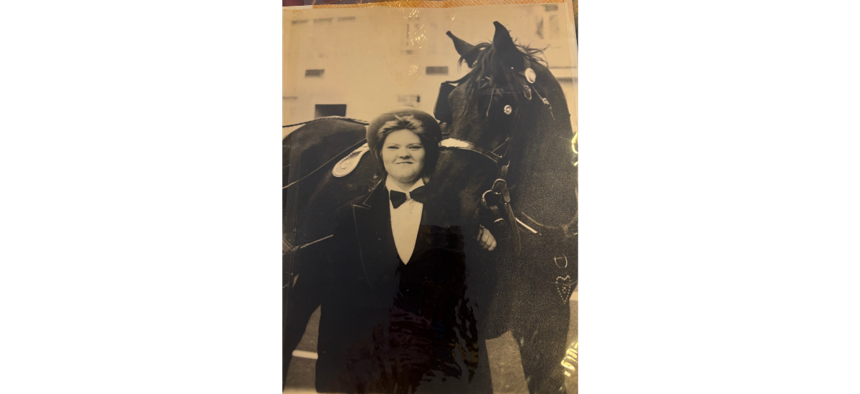
Anita McGill with her horse Spike near 59th Street and 7th Avenue in 1987. Courtesy of McGill family


For almost 40 years, I was at the center of New York City’s horse-carriage industry. It was something I was born into; my family owned and operated Chateau Stables, which for many years had the largest and oldest fleet of horse-drawn carriages in Manhattan, and I grew up working the horses and driving the carriages myself.
We were proud to invest our lives and livelihoods in these animals and work that we loved. Our horses were fixtures in Central Park and on city streets; you may have recognized them in movies such as Ben-Hur, Moonstruck and Wall Street, or in famous TV shows such as Sex and the City. Everyone from The Beatles to Grace Kelly, Yogi Berra and Robert De Niro has enjoyed our horses, not to mention millions of tourists and New Yorkers.
That is why, as someone who has spent a lifetime inside this industry, I know better than anyone that horse-drawn carriages in New York City have reached their breaking point. It’s time to pass Romanch’s Law and to phase them out.
When my parents bought the business in the 1960s, and when I was driving carriages myself, the city and the park were very different places. Central Park could be busy, but on many weekends, the carriage roads were relatively quiet and safe: you had walkers, some bikes, manageable traffic and far fewer people competing for space.
Over the last two decades, that has changed significantly. Today, the park is packed with Citibikes, pedicabs, delivery bikes, runners, roller skaters, strollers and millions more visitors. The environment around the horses has shifted from lively to chaotic and dangerous.
The owners and drivers I still speak to are not blinded by nostalgia. They tell me flatly: “It’s not like it used to be. It’s not safe.” They are contending with noise, congestion and an unpredictable environment. The results are not surprising and speak for themselves. There has been a clear and disturbing rise in spooking incidents and serious accidents – including, most recently in June, the death of a young 18-year-old boy named Romanch Mahajan. Until the practice is phased out, these accidents are only going to happen more frequently.
In all my years driving, I never saw this many accidents happen so often. At some point, you must accept that the conditions have changed so much, the practice itself is no longer safe or sustainable. That’s why major cities across the United States have phased out this practice, including Philadelphia, Chicago and others, and it’s why the vast majority of New Yorkers agree that it’s time for it to go too.
I know that a few lawmakers and union voices have floated hitching posts and other “safety fixes” as if they are magic solutions. As a former carriage driver, I can tell you they are not. Hitching posts encourage drivers to leave horses unattended for longer stretches, which only adds to the risk in an already chaotic environment. Many horses pull back when they are spooked; when they feel tension on the line, they panic, rear or back up, smashing whatever is behind them or ripping posts out of the ground and dragging them. In crowded park conditions, inviting more unattended horses and more hardware into the mix is asking for another set of accidents. And no amount of hitching posts in an 843-acre park or new training requirements can fix the basic problem that the park is overrun with fast-moving traffic, crowds, and 21st-century technology that can and will spook horses.
There is also a hard economic reality here. Business is down sharply. Some carriages are doing one ride a day. Owners are leasing out carriages to others who don’t reliably pay board or fees, leaving stables with horses whose upkeep is not covered. When you are barely scraping by, you cannot afford recruiting and training the most experienced drivers, maintaining gold-standard care, or putting skilled handlers on every carriage.
Supporting Romanch’s Law is not about hating carriage owners or wanting to “take away” their horses. I understand exactly what it means to build a business around these animals, and I feel for the owners who are ready to get out and don’t see a path. This legislation should give them a gracious, compensated way to exit, recognizing the years of investment they have put into their fleets and stables.
I am proud of what my family built. Our horses appeared in films and television, worked therapeutic programs, and helped define a romantic image of New York and Central Park that still endures. But times have changed: the park is overwhelmed, the accidents are mounting, and we cannot keep pretending that nostalgia is worth more than human life or animal safety.
Let’s bring this tradition to a dignified close and phase this practice out. As a former owner and driver, I believe that’s the right thing to do. 21st-century New York City is no place for carriage horses.
Anita McGill is a former carriage driver in New York City’s horse-carriage industry who helped run her family’s business, Chateau Stables.
NEXT STORY: Opinion: NYU must provide paid family leave for all