

Opinion
Opinion: New York can stop filling its parks with doomed 'pet' birds
The City Council must outlaw the sale of live birds in New York City pet stores.
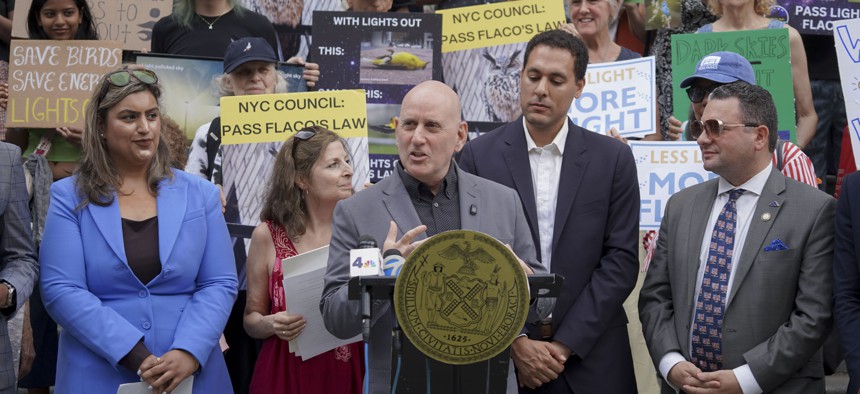
New York City Council Member Harvey Epstein speaks at a press conference in support of legislation protecting wild birds. Gerardo Romo / NYC Council Media Unit

Every month, New Yorkers report dozens of escaped or abandoned parrots and parakeets, from a pineapple conure in Murray Hill to a budgie in the dirt on Fordham Road in the Bronx. To state the obvious, no parrot is native to New York City, and few are equipped for our winters.
That’s why we are championing Intro 912.
This bill, which has significant and growing support in the City Council, would end the sale of birds in pet stores while leaving New Yorkers free to adopt from shelters, rescues and sanctuaries.
This commonsense legislation is both humane and good for humans who want to care for animals. It cuts off the retail demand that keeps abusive breeding mills in business, and it is also good for guardians because a bird from a rescue comes with screening, honest counsel about the decades of care these animals require and support long after adoption day.
Birds sold in city pet stores come from out-of-state breeding operations called mills, concentrated in Oklahoma, Texas and Florida. The picture is bleak: thousands of birds live in cramped, dirty cages inside barns and disgusting warehouses. In fact, federal inspectors walked into a parakeet mill in 2024 as the heat index in the barn hit 110 degrees. What they found was terrible: dead birds and others panting, unable to stand. Sadly – but not unexpectedly – the mill kept operating.
Federal law does not adequately address this crisis. The Animal Welfare Act puts in place minimal requirements, is underenforced and exempts breeders who supply up to 200 small and medium-sized birds a year. Facilities with long records of neglect stay in business on warnings and token fines. New York, with no licensed bird mills of its own, can't regulate a warehouse in Oklahoma or Texas.
That leaves ending retail sales in New York as our strongest tool to combat these mills. Every bird purchased in a city pet store sends money back to those warehouses and puts another breeding pair to work. Adoption breaks the cycle. A rescued bird already exists and already needs a home, so choosing one adds nothing to the mills’ order books and eases the load on the volunteers keeping these animals alive.
Most pet stores in the five boroughs don’t sell birds. Live animal sales are only a sliver of the pet industry's business. Most pet stores thrive on supplies, grooming, training and boarding. Other parts of our country have already taken action on broader retail bans, including Washington, D.C., and Cambridge, Massachusetts, and pet stores still continue to thrive in those cities.
On the ground, rescue workers see how these sales affect birds and how often people disregard them. Bird rescues and sanctuaries are overwhelmed and close to crisis. Last year, volunteer-run rescues across the region fielded more requests than they could meet. Parrots are intelligent, social animals who need to fly and flock, and some live up to 80 years, outliving the people who bring them home.
A city that honors and respects pet birds should stop treating them as bulk inventory, bought and sold in unsanitary mills. New York has led on bird protection before, banning the trafficking of wild birds and requiring bird-safe glass on new construction. These smart rules have benefited our city. The Council can lead again by passing Intro 912.
Harvey Epstein represents District 2 in the New York City Council. Liz Cabrera Holtz is the senior campaign manager for World Animal Protection US.
NEXT STORY: Opinion: Don’t let the Hunts Point Market deal die in transition