

Opinion
Opinion: The Sodium Warning Bill will protect New Yorkers’ health
American Diabetes Month is almost over, but there’s still time for Gov. Kathy Hochul to protect Long Islanders’ health and sign the Sodium Warning Bill.
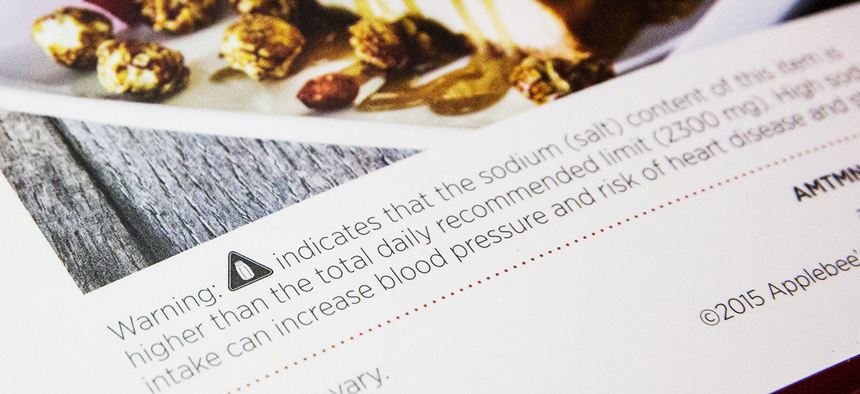
New York City already requires chain restaurants like Applebee’s to display high sodium warnings on menus, and Gov. Kathy Hochul’s signature would expand this policy statewide. Andrew Burton/Getty Images

Long Island has some of the best food around. Sunday-dinner plates piled high, golden Jamaican patties, pizza by the slice and countless family-run spots where the owner knows your order before you reach the counter. For many of us, these meals are about love, culture and community. But do you know how much sodium is in that meal? Most of us don’t, and no one is required to tell us.
This American Diabetes Month, there’s no better time to act. That’s why I’m urging Gov. Kathy Hochul to sign the Sodium Warning Bill (A5207A/S428A) and give every New Yorker the information they need to protect their health when they dine out.
According to the U.S. Food and Drug Administration, Americans consume about 3,400 mg of sodium per day – well above the recommended daily limit of 2,200 mg for adults. Diets high in sodium are associated with increased risks of high blood pressure, diabetes, stroke and heart disease. As chair of the New York State Black, Puerto Rican, Hispanic, and Asian Legislative Caucus, I see how this issue affects our communities firsthand.
Data from the state Department of Health reveals that these health burdens fall disproportionately on Black, Latino and American Indian/Alaska Native New Yorkers, who face significantly higher rates of diabetes, heart disease, stroke hospitalization and mortality. These health disparities are driven by longstanding systemic inequities, including lack of proper nutrition education, limited access to healthy food, lower socioeconomic status and rising healthcare costs. To address these gaps as a state, we must implement measures that help communities take charge of their health.
That’s exactly what this piece of legislation does.
The Sodium Warning Bill doesn’t restrict what restaurants can sell or what consumers may purchase. By requiring chain restaurants with 15 or more locations statewide to display a sodium warning on menu items that exceed the recommended daily limit, it tackles excessive sodium intake head on. Most importantly, it empowers consumers, especially those in at-risk communities, to make informed decisions about their food, and ultimately, their health.
We already know this approach is workable. Thanks to New York City’s 2016 Sodium Warning Rule, families in the five boroughs have seen sodium warning icons on their menus for a decade. Data shows that warning icons help increase consumer awareness and even spur modest reductions in sodium levels for newly introduced menu items. So why should Long Islanders be excluded from these important protections? Why should a family in Elmont or Hempstead have less information about what’s on their plate than a family on the Upper West Side?
In the state that has led the nation in public health policy time and time again, health equity can’t just stop at the city line.
I commend my colleagues in Albany for taking the first, vital step of passing this legislation. Now, the ball is in the governor’s court to turn a policy that has protected NYC diners for a decade into statewide reform. All it takes is a signature. But without urgent action, the window of opportunity to sign the Sodium Warning Bill into law closes next month.
I urge Hochul to deepen New York’s leadership in nutrition policy and sign this bill without delay. There’s no better time than now.
Michaelle Solages is an Assembly member who represents Assembly District 22 on Long Island and the chair of the New York State Black, Puerto Rican, Hispanic, and Asian Legislative Caucus.
NEXT STORY: Opinion: Cutting out the middleman