

Personality
3 NY nurse lawmakers have joined the picket line as strike approaches one month
Assembly Members Phara Souffrant Forrest and Karines Reyes and City Council Member Mercedes Narcisse are current or former nurses. Reyes is on strike herself.
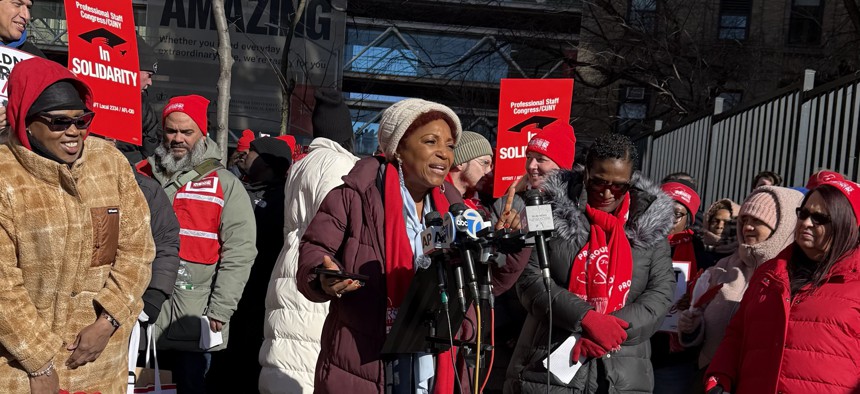
Council Member Mercedes Narcisse, a former nurse herself, joined striking nurses. Courtesy of Mercedes Narcisse


What began as the largest nurses’ strike in city history has become a standoff as some 15,000 nurses hold the line for enforceable staffing ratios, higher pay, better benefits and stronger protections from workplace violence. The strike, which involves nurses from three hospital systems, approaches four weeks. The hospitals argue that the nurses’ union proposals are too expensive – especially in light of federal funding cuts. Starting pay for staff nurses on strike is currently at least $117,000, and nurses on average make between $150,000 to $160,000 after pay bumps due to experience, overtime and certifications, according to The New York Times.
City & State spoke with three New York lawmakers who are current or former nurses, all of whom have joined the picket line since the strike began. Assembly Member Karines Reyes, who is an oncology nurse at Montefiore Einstein, is on strike herself. Reyes, a member of the New York State Nurses Association who has sat at past union bargaining tables, says staffing has always been the issue.
“Nurses want enforcement mechanisms,” Reyes said. “Hospitals kind of saw the writing on the wall. They have made concessions with staffing. I can say staffing is better than it was when I first started practicing as a nurse, but it’s absolutely, definitely not where we need it to be.”
While the hospitals and the union agreed to maintain health care benefits early last week, there has been little progress beyond that. Mandatory, binding staffing standards, which nurses and researchers have said for years are essential for patient safety, are still being discussed. Lower nurse-to-patient ratios are shown to reduce mortality, readmissions and medical errors, yet even New York laws still stop short of guaranteeing those ratios in hospitals. While safe staffing legislation was passed in 2021, nurses on the ground are still overrun by patient caseload.
New York legislation requires hospitals to submit staffing plans to the Department of Health, and in theory, hospitals that fail to follow plans that were agreed upon could face civil penalties and heightened oversight. In practice, while hospitals have been fined millions in recent years over staffing, the DOH does not routinely publish transparent listings about staffing noncompliance.
City Council Member Mercedes Narcisse is a former nurse who says supporting nurses is urgent. “Safe staffing is not a luxury. Patient safety is an issue for all of us, because we may end up in a hospital. It’s not only about the nurses.” She worries that broader budget decisions work against patients and nurses alike.
“A big question mark right now: Is health care a priority for the federal (government)? Because all the cuts that we see are not fair to the hospital structure,” Narcisse said. Funding cuts that stem from the One Big Beautiful Bill Act are estimated to reduce New York hospital revenue by $1.4 billion annually, putting more pressure on hospitals that say they cannot afford nurses’ demands.
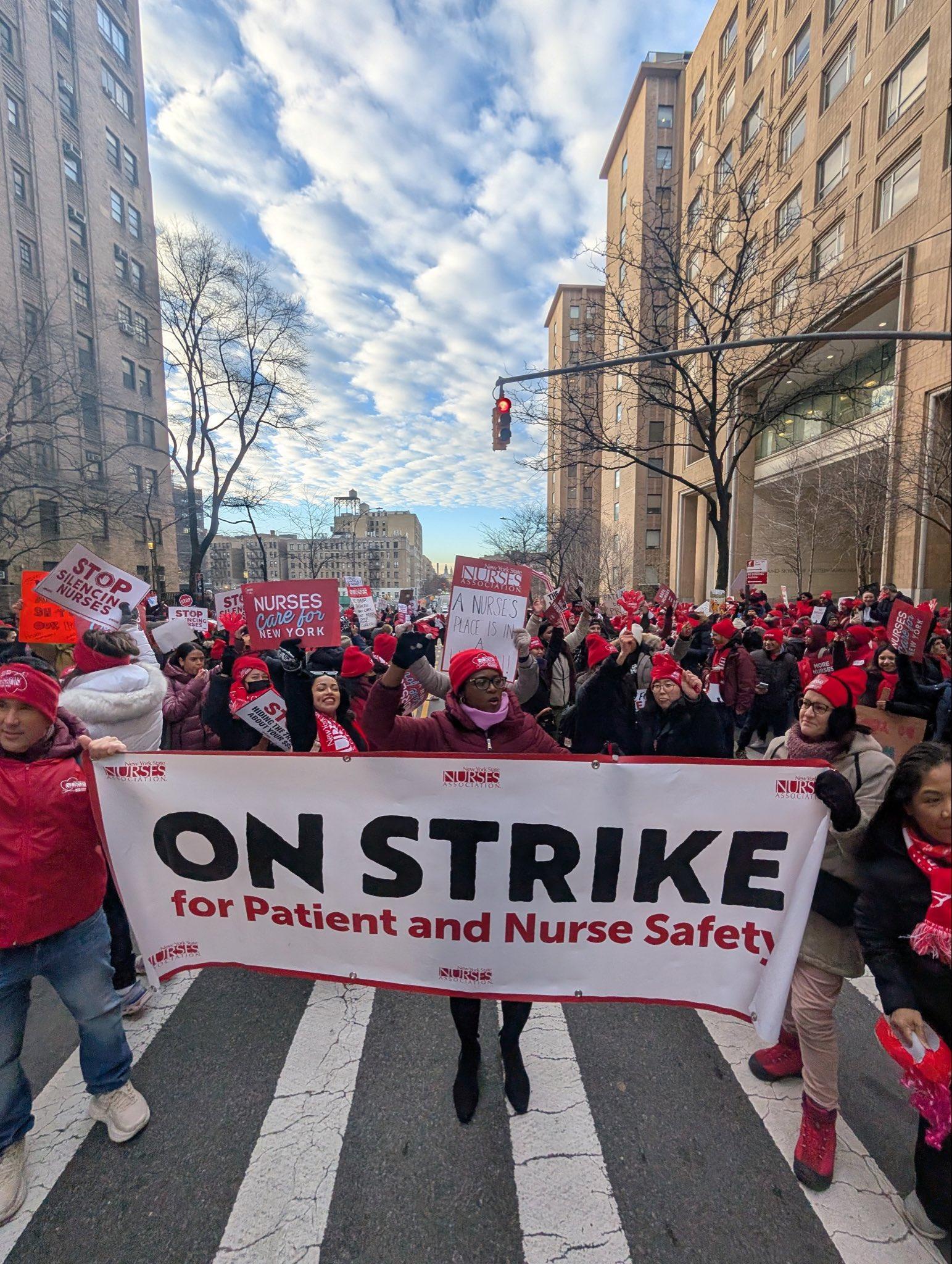
Assembly Member Phara Souffrant Forrest worked as an ICU nurse before being elected to the Legislature and sees the strike as a direct outgrowth of conditions she experienced at bedside. “I did not feel safe as a nurse,” she said. Legally, she was supposed to have two patients at a time, given the critical condition of her patients. She usually had double, if not triple, that amount. Without laws that have teeth, hospitals spread nurses thinner, accelerating burnout. “The donkey must move. The hospitals must do their part. This cannot be run as a corporation,” she said.
In the meantime, NewYork-Presbyterian, Mount Sinai, and Montefiore have leaned on contingency plans to keep services running, spending over $100 million in strike preparation alone.
Since early January, Gov. Kathy Hochul has repeatedly renewed emergency declarations that allow hospitals to employ health care workers who are not licensed in New York. Her latest renewal expires on Wednesday.
NEXT STORY: Dorcey Applyrs is ready to treat Albany’s ills