

Personality
Can the new OCM head get NY’s cannabis market back on track?
An interview with John Kagia on the fifth anniversary of cannabis legalization.
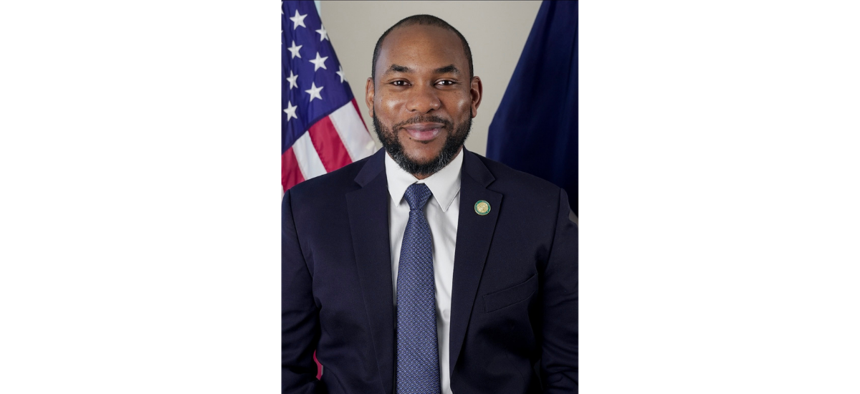
John Kagia is the acting executive director of the state Office of Cannabis Management. Office of Cannabis Management


New York’s cannabis industry has experienced a tumult of budding highs and burning low points since it became legal in the state five years ago, but that didn’t dissuade the new acting head of the state’s regulation agency from taking the job.
John Kagia is settling in as the Office of Cannabis Management’s new acting executive director – a role Gov. Kathy Hochul tapped him for last month following a troubled two years of leadership woes for the agency. Kagia replaces the agency’s last acting head Felicia A.B. Reid, whom the governor fired last December after the state was forced to drop charges against a company accused of inversion, or the trafficking of illegal cannabis products into licensed stores.
The state’s cannabis market has continued to grow amid the office’s trials. The state’s 600th dispensary is set to open next week, which also marks the five-year anniversary of the signing of the Marihuana Regulation & Taxation Act.
Kagia, who served as OCM’s policy director beginning in 2022, has had a front-row seat to the hard-fought lessons and legal battles that have burdened New York’s cannabis leaders.
He sat down with City & State to discuss what’s next for the maturing industry as new challenges threaten the market, and as state senators weigh his formal confirmation. This interview has been edited for length and clarity.
Congratulations. What was your conversation like with Hochul before she appointed you acting executive director? Did she have to convince you to take this job?
I'm not going to discuss my conversations with the governor's team, but it is a big job. As I reflected on both my service as the policy director for three-and-a-half years, and reflected on where the market is right now, I certainly did not expect to be presented this opportunity. I love the line from Kennedy that “We don't do this work because it's easy, we do it because it's hard.” Having spent nearly a decade in cannabis, I had no illusions about the scale and the complexity of what New York was trying to do.
Have you talked to the Senate leaders at all about when your confirmation hearing might happen?
This is early days. I've only been in the seat for a month. We're still drinking from the firehose. No details yet on potential confirmation, and that I'll leave to the Legislature to coordinate. I'm not a politician, but I've always said I'm here to serve, and I will be of service. So if the members of the Legislature would like to proceed with the nomination, I would be receptive to that. If they choose to go in a different direction, I certainly respect that. That's not going to implicate at all how I approach my role as acting and my commitments to doing the work.
Does OCM have the funding it needs for staffing? What are you asking for in the state budget to meet enforcement goals?
We're just about just under 270 staff now, on pace to get to 274, but 270 people gets spread fairly thin quite quickly. Do we have all of the resources we need? No, and I don't think that should come as a surprise to everyone. This market has grown dramatically. We did $1.7 billion in sales last year, we are on pace to do $2.6 billion this year. We have over 2,000 licenses issued. We're opening our 600th store next week. This market has grown tremendously. So we can always take more people. There are certain areas where we would certainly welcome more capacity, particularly in areas like enforcement against the unregulated illicit operators.
OCM’s failed attempt to go after a licensed company for inversion led to the firing of both your predecessor and the head of the department's Trade Practices Bureau last year. Have you hired a new bureau head and how will you ensure this kind of situation won't happen again?
We're expecting to have one in the next couple of months, but all of the attorneys that practice under the Trade Practices Bureau are continuing to do the work. The Trade Practices Bureau is now housed under the Office of the General Counsel, and so the general counsel is serving as the head of that unit while we work together to get a specific chief.
We’ve been very clear to licensees that we take this kind of issue of market integrity, and particularly the issue of inversion, incredibly seriously, and we'll continue to investigate and pursue those cases as we hear them. I think one of the big changes from the past few months about how we think about market governance has been the implementation of the Seed to Sale system. This is a critical tool that would enable us to track every single plant from the moment it's put into the ground till the point at which the products made from that plant end up in the consumer's shopping basket.
There are concerns about the cost of the Seed to Sale program. Do you think the state needs to step in to help with that cost?
We've been, certainly, very open to the state assuming the costs of Seed to Sale. We are very conscious of the financial implication that implementation of Seed to Sale is having on our licensees, and we want to be considerate of that. We certainly defer to the Legislature and the governor as to the negotiating of what that could look like. We have over 90% of our licensees now credentialed in the system. Every product that is now moving through the supply chain is going through the Seed to Sale system.
Stakeholders are concerned about corporate sell-offs and backdoor consolidation, and there's a narrative brewing that there's an intent to dismantle operations so their financial backers can buy their adult-use recreational licenses. Has OCM considered the unintended consequences of corporate sell offs and what's the strategy to prevent that?
One of the real challenges we're facing, both in New York and nationally, across regulated markets, is lack of access to capital. This was already a very capital-constrained market because it's federally illegal, so you don't have access to conventional banking resources, to the sorts of loans and other capital programs that every other business in the economy has access to. In this industry, there aren't really many great options for fallback plans if you run into a real capital crunch. I don't think that's a conspiracy theory. I think that's just a reflection and illustration of one of the tensions that's created by the fact that cannabis continues to remain illegal under federal law. We don't have interstate commerce. Capital flow between jurisdictions is limited.
How can New York avoid the market crashes that we've seen in California, Colorado and Michigan?
There are a few steps we're taking to try and mitigate some of the negative outcomes we've seen in other jurisdictions. One is taking a very measured and data-driven approach to building capacity in the market. At the last board meeting in March, we got approval from our board to issue more cultivation capacity based on our anticipated need, but once we get to the number of licenses that we're anticipating to meet the need for the for the next two to three years, then they've given us the authority to stop issuing licenses. One of the major issues we've seen in many other jurisdictions is they've basically issued cultivation licenses to anyone who wants one, and they've ended up getting far more capacities, far more production than they need.
Some stakeholders have said the market is still only halfway to maturity. What does it need to get the full way there?
We have a lot of headroom left. Half of the state has opted out of legal cannabis, or of having retail sales happening in their jurisdictions. And so those consumers are likely either being served by the unregulated market, engaging in home growth or deliveries from businesses in opt-in areas delivering to those jurisdictions. We're only three years into the implementation, with even 600 stores in a state of this size, with 20 million residents, we're still well below what we believe full capacity could look like.
When will on-site consumption be allowed?
The consumption rules are already written into the law, so our mandate now is to do this as the regulator to build all of the governing regulations. We are still working through all of the considerations that would need to be addressed as you think about on-site consumption. There's questions we need to resolve around combustion, air quality, worker safety protections, making sure that these are being done in areas that are safe and not disruptive to the local communities. If you're talking about things like edibles and establishments where you can go in and eat and or drink cannabis, there's real questions around what dosing and serving preparation could look like. I certainly don't anticipate that we're going to be opening any consumption licenses in 2026, but we are cracking the whip to try and at least build the framework.
Many convenience stores have started illegally selling cannabis beverages. Do you think sales of cannabis beverages in liquor stores should be legalized?
I understand that there's legislation being proposed in the Legislature right now on this, so I don't want to comment too much, but I would say that while we recognize that there's a large national market that has been built around beverages, we are also very sensitive to the need to ensure that whatever the framework is, that it is one that keeps public health and public safety central to the way these rules are governed. At a minimum, we would want to ensure that there's robust testing standards for product quality, that there's age-gating to ensure that our youth who shouldn't have access to these products do not give access to them and that we don't end up creating artificial tension between the adult use and medical markets.
NEXT STORY: This week’s biggest Winners & Losers