

New York State
Fighting the feds dominates first day vibes in Albany
Lawmakers made their way back to the state Capitol to officially kick off the 2026 session, which promises to be eventful.
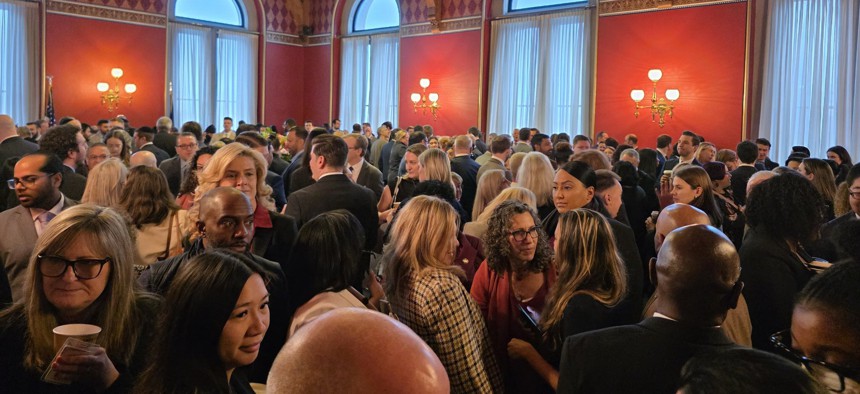
State lawmakers attend Assembly Speaker Carl Heastie’s morning reception in the Capitol on the first day of the legislative session. Rebecca C. Lewis


It's the first day of school in the state Capitol, and lawmakers have returned to Albany for the ceremonial start of what promises to be a jam-packed legislative session. This year, Hochul and legislative leaders previewed big fights against the Trump administration, with state Senate Majority Leader Andrea Stewart-Cousins throwing her support behind a bill to expand protections for undocumented immigrants.
Every year, legislators make the journey to the capital for a single day at the start of January to show face and set the tone for the upcoming year. Both chambers gavel in for a short time in order to formally close out last year’s business and get started on the new stuff before most members head back home by mid-afternoon. But the real events happen before and after – breakfast at Assembly Speaker Carl Heastie’s reception and lunch at the one hosted by Stewart-Cousins. Lawmakers, officials, lobbyists and staffers all rub shoulders over plates of eggs and deli sandwiches as they begin reacclimating themselves to the Albany slog and greet friends and colleagues after the summer and fall break.
The jovial tone pervading the kickoff events belied the difficulties that will likely emerge over the next six months. With a polarizing new mayor in New York City fighting for his expansive agenda, federal actions targeting blue states like New York and the election cycle already starting to hit full swing, 2026 will certainly hold plenty of challenges for state officials.
Speaking to reporters following the announcement of her second State of the State proposal, Gov. Kathy Hochul said she is feeling “excellent,” despite the countless curveballs thrown New York’s way in recent months. “We've been through a lot,” she said. “And I would say we’ve been battle-tested to deal with any trials and tribulations that come our way.” Hochul said there’s “a lot of energy around the state,” and added she’s “very excited” about how the state will deal with “very unusual circumstances.” Just on Monday, the federal government said it would cut $3 billion in child care funding, just the latest in a number of actions and decisions that have put New York in a tough spot. Hochul said she, along with state Attorney General Letitia James and the attorneys general of other states, are exploring litigation strategy in response to the latest cut.
Stewart-Cousins also expressed defiance in her opening remarks on the state Senate floor. “These are not times for complacency,” she said. “These are times that demand clarity, responsibility, and focus.” Like Hochul, Stewart-Cousins said the Legislature proved its ability to rise to the challenges presented by President Donald Trump during his first term. ”When Washington chose chaos, we delivered stability,” she said, adding that state lawmakers need to be the “adults in the room” amid chaos sown from higher up. “The landscape ahead is complicated,” Stewart-Cousins said. “The stakes are high. Navigating what comes next will require discipline, collaboration and resolve.”
Heastie, in longer remarks before the Assembly, offered more details about his chamber’s past accomplishments before similarly pivoting to a federal lens. “While we’ve been working hard to take care of our families, the federal government has been chipping away at the foundation that has made our nation so special,” he said. Heastie contrasted commitments from the Assembly and New York officials more broadly with criticisms of decisions made by the Trump administration. “My friends, the stakes have never been higher,” he said.
Both legislative leaders were relatively light on policy specifics during their opening speeches, but areas of disagreement with the governor may already be emerging, despite a unified message against the Trump administration. Stewart-Cousins, for example, mentioned “advancing the goals of New York for All,” referencing legislation that would codify and expand protections for undocumented immigrants statewide. Her signal of support is significant as the measure has not yet managed to pass either legislative chamber and Hochul has so far declined to offer her support for it.
Differences between Hochul and New York City Mayor Mamdani, while entirely expected, are also becoming more apparent. The latest example came this week, when the governor endorsed Rep. Dan Goldman for reelection in the 10th Congressional District, after Mamdani had endorsed former New York City Comptroller Brad Lander’s primary challenge against him. But Hochul brushed off the idea that appearing on opposite sides of an intraparty battle could project weakness or otherwise hinder a working relationship. “I don't know who expected us to agree on everything, so it's not exactly earth-shaking,” she said. But with a record number of left-wing and leftist candidates jumping into races at a time when Democrats struggle to gain control of even one part of the federal government, any disagreement will surely make the already difficult road ahead for state leaders even more so.