

Arts & Culture
‘It’s a crisis’: New York leaders on affordability for artists
Over paint-and-sip (minus the sip), three government leaders talked about how artists can still make it in New York.
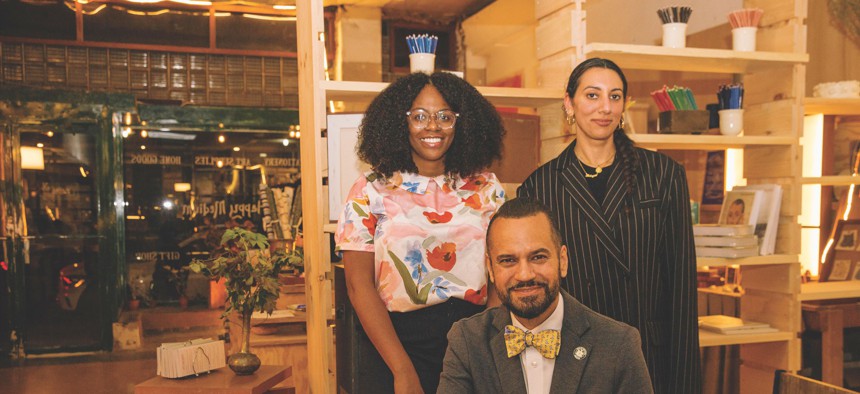
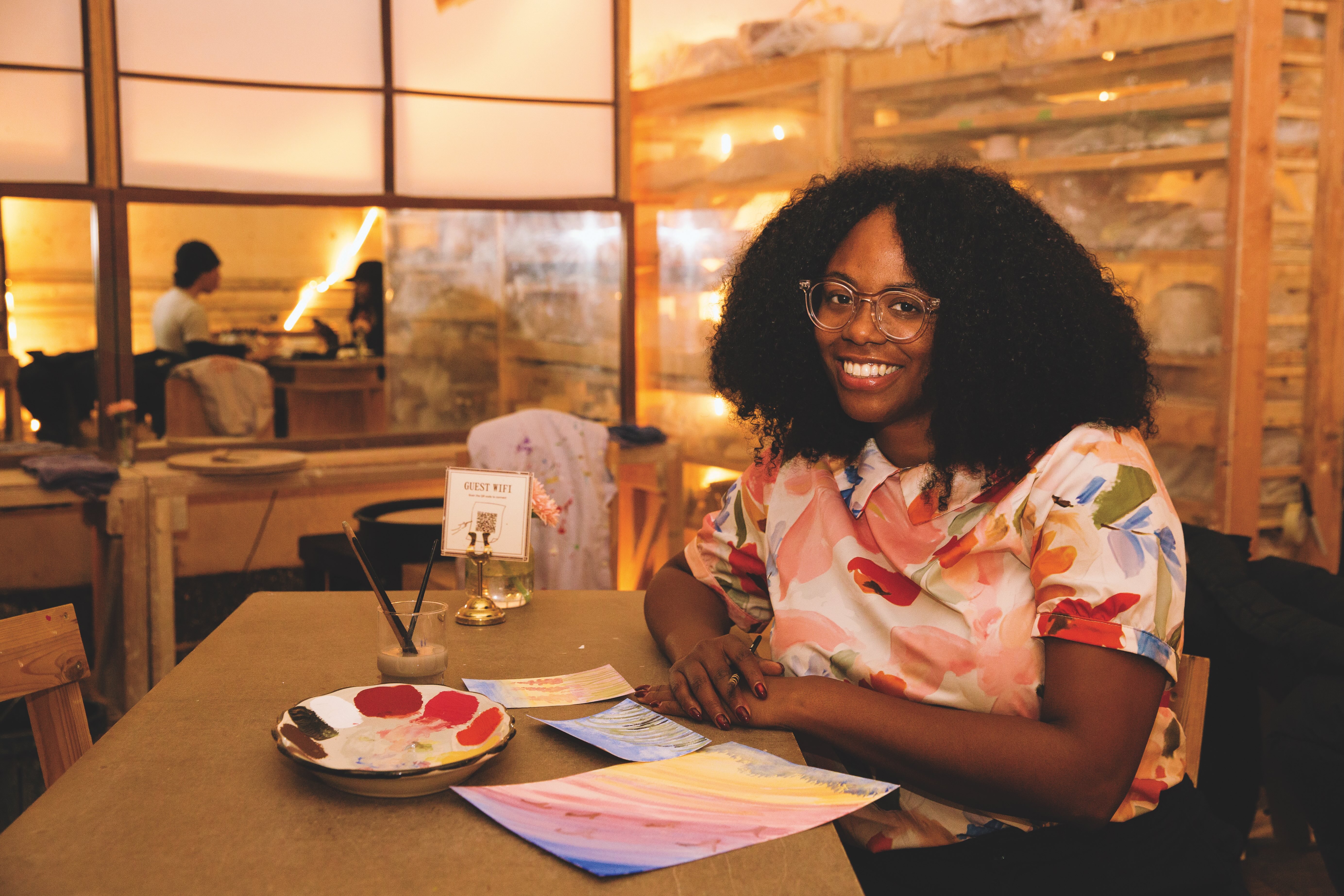
New York City Department of Cultural Affairs Commissioner Diya Vij, state Sen. José M. Serrano and New York City Council Deputy Speaker Nantasha Williams discussed the state of the arts at a Chinatown art café. Mengwen Cao


Between the soaring cost of living, federal defunding of the arts and the proliferation of artificial intelligence, the artists and cultural workers who have helped define New York’s image and bolster its economy are being battered.
New York City’s artist population has been declining for several years after many years of growth. Dozens of galleries and small arts organizations have shuttered their doors. An influx of luxury housing and boutiques have swept across neighborhoods with vibrant cultural histories, squeezing out creatives and spurring fears that something priceless is being lost along the way.
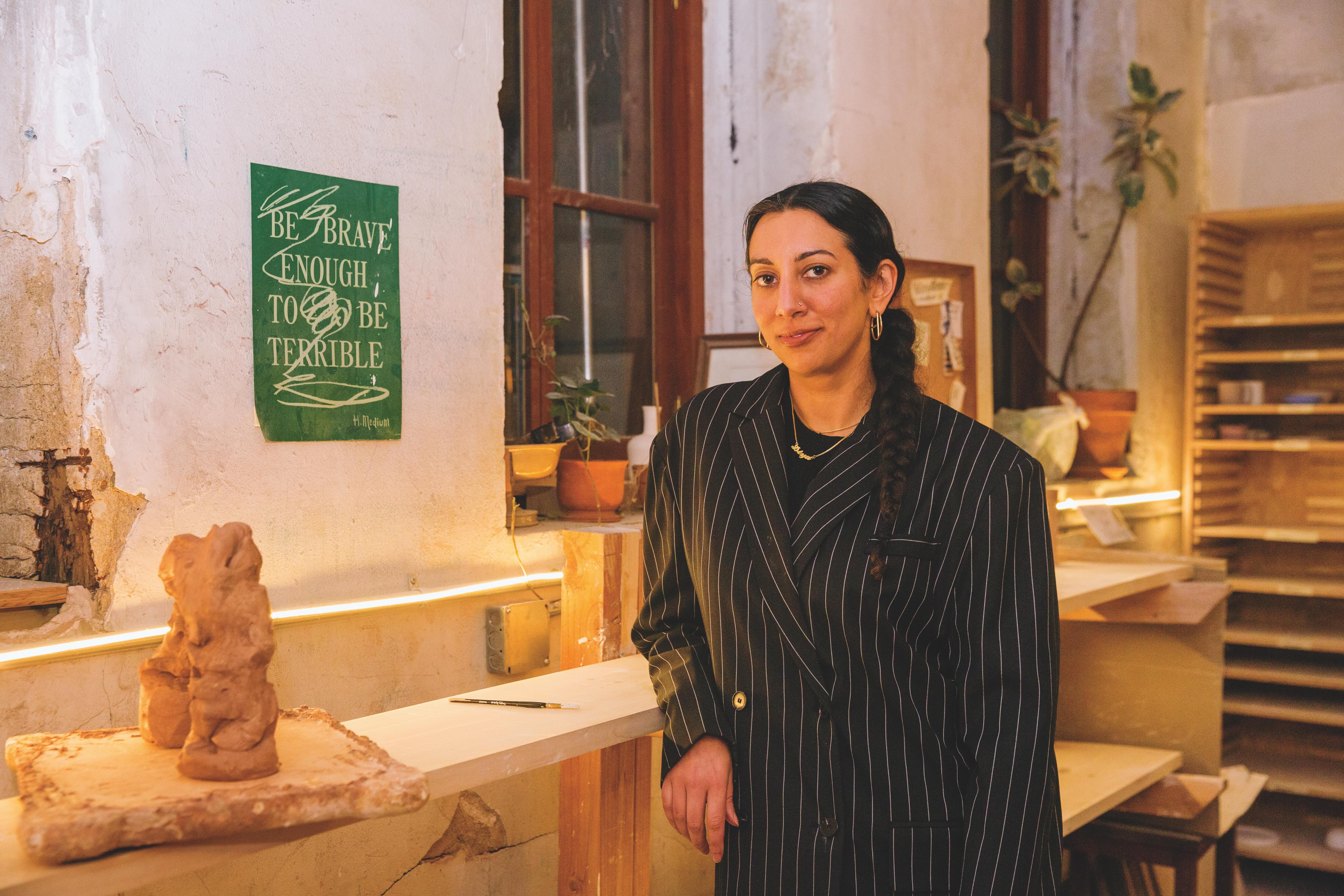
It’s a tenuous time for the arts and culture scene in New York. So City & State convened three of its biggest stewards in government at Happy Medium art cafe in Manhattan’s Chinatown one blustery evening in early November. There, over paint-and-sip (minus the sip) therapy, time felt temporarily suspended as Department of Cultural Affairs Commissioner Diya Vij, state Sen. José M. Serrano and City Council Deputy Speaker Nantasha Williams discussed the gravity of what artists and cultural workers are contending with. And more importantly, what Mayor Zohran Mamdani’s administration, the City Council and state Legislature can do to combat this.
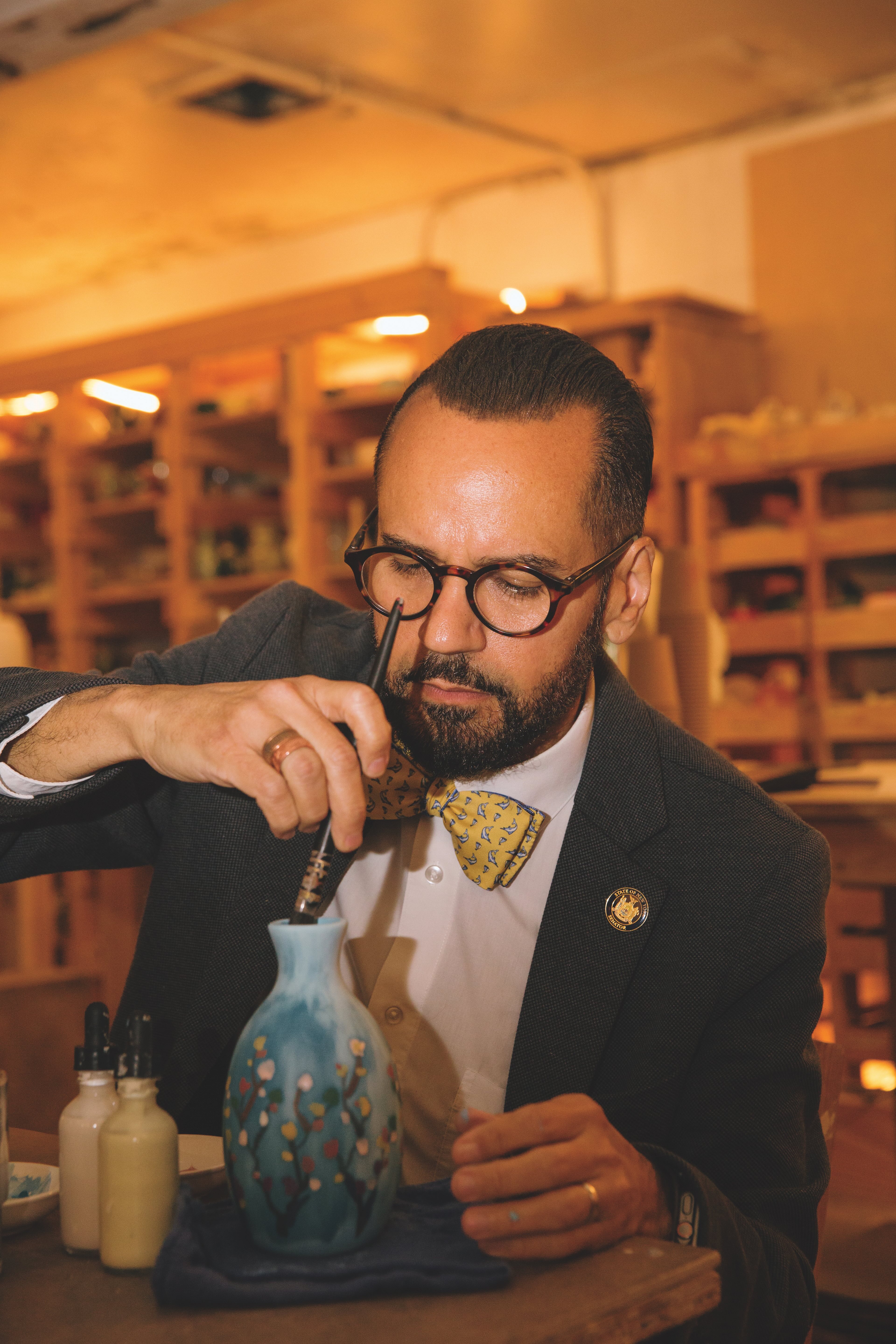
Each worked away at their own art project as they conversed. Vij, no doubt the most artistic of the group, cut pictures out of magazines and effortlessly glued them into a face – a photograph of a lion formed the nose, an array of jewels were the hair, a blow drier, the eye. Though he’d been initially uncertain about painting pottery for the first time, Serrano – the longtime chair of the Senate Committee on Cultural Affairs, Tourism, Parks and Recreation – fully embraced the project, encircling the vase he selected with a grove of pastel-leaved trees. And Williams, newest to legislating arts and culture as the council’s new chair of the Committee of Cultural Affairs, Libraries and International Relations, painted a series of watercolor landscapes, dutifully referencing YouTube tutorials she’d pulled up on her phone. This interview has been edited for length and clarity.
What was the first piece of art, exhibit or live performance you remember seeing in New York City that made a big impression on you?
José M. Serrano: Growing up in the ’70s in New York, it was a movement of public art and public performances. I remember the (New York) Philharmonic when I was very young, and just being enthralled with how an orchestra makes it all come together. After that I just started listening for the orchestra in rap music and sort of teasing it apart. It really opened up something in me to be excited about hearing music for the instruments. But also when you live in New York City, you have no shortage of museums and cultural destinations, so we were always at the American Museum of Natural History and The Met museum. Frankly, I don’t remember much of my elementary school, but I remember the music appreciation, the music classes, the singing classes, the paintings I saw in museums – I remember that more than anything.
Nantasha Williams: My mom has always been really consistent at exposure, so for many years, every year we would go see the “Nutcracker” at Radio City Music Hall around Christmas time. As a childhood dancer, seeing the Rockettes is always just a really cool thing to see, because they always look so perfect and in sync.
Diya Vij: I also went to Broadway shows here and there as a kid, but for me, part of my finding art spaces that resonated with me was being kind of rebellious. I grew up in Connecticut and I remember sneaking out this one time. I’d said I was going to a friend’s house, but we actually took the train into the city and went to a Mustafa concert. We were walking around the East Village, I was just feeling this vibe of doing something kind of defiant.
And the first art experience that I had where I was like “oh this is for me” was when I was in college. I came into the city with a professor, Barbara Ess, to see one of her shows and I got to meet all these different artists and be in spaces I never would have found on my own. I was really taken by the work and also the community. It was totally infectious. And once the door is open, it’s open. It’s like where else can I go?
If a loved one came to the city for 24 hours and asked you to lay out the perfect day for them to experience the city’s arts and cultural scene, where would you send them?
Vij: I would send them on the No. 7 train from (MoMA) Public School 1 to the Queens Museum, because they could also eat along the way, which is like an excellent day.
Williams: Shout out to Queens. I think of Brooklyn Museum a lot because they do a decent job of swapping and having new exhibits. I also like the food in that area. I was also thinking about the fact that the (Brooklyn Botanic Garden is) right there. Same with the main Brooklyn library, which isn’t necessarily a cultural institution, but libraries produce culture. That’s so not Queens of me, so I need to steal the commissioner’s answer going forward.
Serrano: I live in the South Bronx and I’ve seen the transformation of that area because of the arts. Pregones Theater was always there, but when it joined with the Puerto Rican Traveling Theater the area got more into that cultural corridor. We have Hostos (Community) College, which has an arts center, you’ve got The Hip Hop Museum, you’ve got the Bronx Children’s Museum.
Even though, of course, when people think of the arts, they think of Museum Mile, I also have El Museo del Barrio in my district. So I would definitely say start Museum Mile from the top, work your way down, make sure you understand the cultural legacy of East Harlem and learn about that. But in the Bronx, as quiet as it’s kept, there’s always been a strong historical cultural presence. We also have Wave Hill where you could lose yourself in the nexus of nature and art, so I think I would put Wave Hill there too.
Williams: They don’t always get the credit, but a lot of culture gets made and has gotten made out of the Bronx.
Serrano: And it came up through tough times.
Williams: Tough times and on blocks, the streets – not necessarily institutions.
Vij: That also makes me think of the Louis Armstrong House (Museum), which I just toured recently. I love that he and his wife moved to Corona, Queens. They could have had an estate anywhere, but they moved to Corona, Queens, and made sure more art was happening in the neighborhood. There’s just an energy of being able to make culture here that matters so much.
Senator, you’ve been chairing the Committee on Cultural Affairs, Tourism, Parks and Recreation since 2019. What’s kept you there so long?
Serrano: Considering I’ve been in office now 25 years, I’m sure some people have wondered with my seniority why I haven’t thought of other committees. But honestly, I think there’s no better committee to chair than arts and culture. Not to mention the committee as it stands on the state level, is arts and culture and parks. I see so many opportunities with that. As I mentioned about Wave Hill, that nexus is a commonality between the arts and green spaces. I like finding ways to create programming in green spaces that helps it further.
Before running for office, I spent six years in theater and saw both how difficult it was to run a cultural institution, but also how fulfilling and worthwhile it was. I wanted to be a voice for those in that space that felt like there wasn’t enough in government – especially on the state level. On the city level, you guys have always done an amazing job in the City Council. I would know. I was in the council for three years, and I chaired arts and culture. I was one of your predecessors. So I knew that the council did a much better job than the state Legislature did at that time. I’ve really tried to elevate the discussion on the state level and now we are seeing it expanding in places like Syracuse, Buffalo, where more and more people are focusing on the arts in places outside of New York City.
To pivot slightly, I want to talk about affordability. That’s the No. 1 thing on most artists’ minds in New York City. After decades of growth, the city’s creative sector is shrinking. Artists are being forced out of the city. Galleries and arts organizations are shutting down. How are you approaching affordability through your respective roles?
Vij: It’s not just a problem; it’s a crisis and it requires an all-of-government approach to intervene. Artists are workers. They’re also low-income workers. And it takes a lot more than the Department of Cultural Affairs to be able to do those interventions, but we’re very grateful that this is an administration where artists are at the table all the time.
Most recently, we doubled the awards for artist grants from $5,000 to $10,000, which are given every single year through the Brooklyn Arts Council. That’s the first time that’s happened in over 20 years. We also introduced a Cultural Stability Fund – $10 million in emergency grants for cultural organizations to help with those stopgaps, those unexpected costs that have emerged at this particular moment like federal funding cuts, increased energy costs, tariffs and rising rents.
I think historically, our agency has really focused on cultural nonprofits and I’m very interested in putting just as much attention – or at least a significant amount of attention – on individual artists and cultural workers. We keep funding culture, which is amazing and we need more of that, but artists are still struggling to live here. So we need to change that math. We have to figure out what other interventions we need to do.
Serrano: The life of the artist is usually not of wealth, but to a point where they can no longer afford to keep doing what they love if they can’t pay their rent? That’s not OK.
I believe it’s the responsibility of the government to help fortify the arts in a way that the artist can make a living. But then how do you get all of those things to fall into place if you fund cultural institutions and organizations at a higher level? How do you ensure that that gets to the artists? That’s No. 1. No. 2, do you create affordability baked in through things like artist housing so that artists can actually find a place in New York? I think it’s worth a deeper discussion on different ideas and ways that we do it.
Vij: I was just at IndieSpace and they’re about to open a space in Midtown next year, which is all affordable work spaces for artists. That’s the other big thing: creating spaces where artists can make work and collaborate together and do those performances and those projects that might fail, that might not be the thing that goes to the big stages.
Serrano: But there was a time and a place where there was so much empty space in New York – the abandoned lofts, places in the South Bronx. Now everyone’s building. There’s growth, but there were cheap artist spaces at a time when I was working in the arts. They were all over. They’ve all been replaced by very expensive, unaffordable things. I don’t think there’s any way of putting the system back together, but maybe we can set aside whenever there’s a new development that there’s artist rehearsal space or performance space baked into a lot of these new developments.
Should the city pursue more subsidized programs for artists, like housing, then?
Vij: When it comes to housing, I really do believe in the human rights law we have in the city. I think that as we increase housing stock, we increase the opportunity for artists to be part of those communities by getting affordable lottery housing. I’m really interested in affordable workspaces for artists. That is unique to the way that artists work. Take the Gowanus model – every new development has a requirement of a certain amount of artist space. It really makes the neighborhood a great place to live and matters to neighbors building arts and culture.
Serrano: Think of it as an economic development tool. That word, subsidize – it’s really more invest in, because we’re not just giving it away, we’re getting back more. If we were to create an environment where the artists could afford to do what they were doing, we’re actually getting a bigger return on that investment.
What is the role of the arts and cultural institutions in the “what comes next” for democracy – not just traditional issue advocacy, but really creating and pushing a narrative about rebuilding democracy?
Williams: “Artists are the gatekeepers of truth.” That’s what Paul Robeson said. “We are civilization’s radical voice.” I really do believe that. When we think about what’s cool, it’s usually artists that make things that way. Politics and democracy hasn’t always been a cool concept, but I think artists play a role in making democracy cool and educating and informing people who typically wouldn’t be plugged into democracy and civic engagement.
Vij: We’re absolutely in a different part of a culture war right now. Censorship is at an ultimate high across the country and across the city in various topics and disciplines. I mean we are seeing the highest rate of book banning we’ve ever seen in this country. When you really start to think about that, it’s because everybody knows that art can be dangerous. Dangerous (because of its ability to spur) new ideas, critical thinking, community organizing and being able to empower people on all scales and get them to start asking bigger questions around why, what else and what’s next.
For me, part of the reason I’m interested in resourcing artists directly is to make sure that we have the infrastructure where their voice can carry power and that we can continue to use it. The consolidation of wealth doesn’t always mean the consolidation of ideas – we can also create infrastructure where artists can always create, even when or especially when it’s in opposition to what the norm of the day might be.
Williams: That’s such a good point. Who was that artist that got kicked off of tour because they were advocating for Palestine?
Vij: Macklemore.
Williams: Right, Macklemore. I think that’s a good example of what the commissioner is talking about. When Ed Sheeran’s (promoter) removed him from his tour, it only magnified his message. They made Macklemore’s message for him, no one was really paying attention before – I didn’t even know he was doing that shit, I wouldn’t have gone to that concert. If anything, removing him probably helped spread his message.
But going back to the point about banning and censoring, that was one of the more recent examples of censorship of an artist. This has been happening around Palestine for many artists to be honest. It’s like, “Oh, you are really trying to censor an artist who is speaking about a very serious atrocity that is happening.”
Everything about artificial intelligence feels so inevitable right now. It’s a really scary time for everyone, but perhaps especially artists. What can the city and state government actually do to protect the arts from the encroachment of AI?
Serrano: There needs to be real legislation. What happened on Election Day was the public saying we’re concerned about workers and affordability and AI. The latter’s potential to upend the artist community is real – everything from music to art to poetry. Everything. We need to make sure there are ways to authenticate the work of the artist and maintain and empower that. I don’t consider AI art, art. It’s an image. I do think we have to put in guardrails everywhere.
Williams: I actually asked that question during the City Council's recent oversight hearing on AI – specifically about its impact on arts and culture. I don’t really remember their response. It honestly was probably bullshit. Legislation is probably the only way, because right now it is not a regulated industry in any way. And as we continue to have those conversations, arts and culture need to be part of that.
Vij: I’ve done almost 20 different town halls with cultural workers, artists and folks from all over the field, but the only people that ever bring AI up are teens. So I actually recently held a town hall specifically for young people at the Museum of the Moving Image on AI anxiety, and it was fascinating. These were young filmmakers who are like 1,000% disinterested in using AI. They think it immediately nulls and voids their creative practice. But what was really interesting was hearing them recount how their relationships have changed with adults because of AI, because the adults in their lives started using it, and they can’t really change that.
How can city and state government collaborate with artists?
Vij: Last time I worked with the Department of Cultural Affairs, we started the Public Artists in Residence program. It’s where we put artists in residency in different city agencies to think collaboratively, or to just think about how their art practice might interact with public systems, not just public spaces. That’s been really interesting. The program is over 10 years old now and we have over 30 artists that have gone through it. We are about to announce a very exciting next artist.
We have an artist in residence right now working in a shelter for asylum-seekers, and he’s been holding a weekly art club. In doing so, they’ve been able to have all types of conversations, some touching on policy, and then to have that kind of conduit that can speak that back to the agency itself is a really unique way of working with artists.
Serrano: On the state level, it’s always a bit of a challenge because we’re dealing with all 62 counties throughout New York. Still, I find that the arts is sort of a common thread amongst all of us. So if we’re looking for commonality in places that we don’t think we have anymore, what does the Bronx have in common with Buffalo? Well, arts and culture are revered and loved and underappreciated in all these places, right?
My question is then how do we create budgets that are a reflection of that? We’re about to get started with the executive budget in December/January. My job and my colleagues’ job is to fight not just for funding, but policy that promotes the arts in education. I have a bill to do an audit of arts education instruction in the classroom because I don’t think we’re hitting the mandate on a state level. It’s difficult to quantify. But I think there is a way to think proactively about future artists by ensuring that we have proper arts education.