

New York State
Lawmakers seek solutions to high concession prices at hearing
The Assembly Consumer Affairs and Protection Committee is zeroing on affordability, one costly stadium snack at a time.
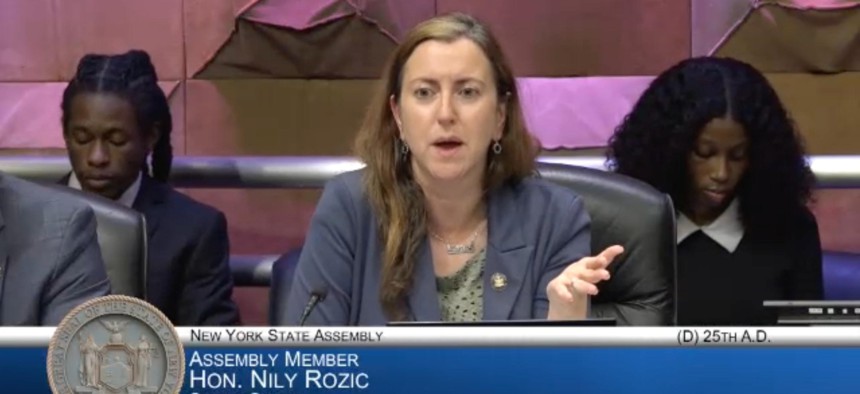
Assembly Member Nily Rozic, chair of the Consumer Affairs and Protection Committee, presided over Tuesday's hearing. NYS Assembly / Screenshot

“When you need a law to stop someone from charging $18 for a beer, that is not a pricing problem, that is a monopoly wearing a jersey,” said Brian Hess, executive director of the Sports Fans Coalition.
That was pretty representative of the tenor of the entirety of the Assembly’s Tuesday morning hearing on concession pricing, which emphasized the high costs of products at publicly funded facilities, such as parks, beaches and event venues, and explored possible solutions.
One potential remedy raised was implementing street pricing models, which entail selling everyday goods at prices close to what consumers would pay outside the venue, explained Assembly Member Nily Rozic, chair of the Consumer Affairs and Protection Committee.
Christopher D’Angelo, chief deputy attorney general for economic justice, recommended a policy allowing consumers to bring in outside items, as well as state law setting street prices while also outlawing loophole surcharges. Meanwhile,the Fair Concession Pricing Act was before the Senate Consumer Affairs and Protection Committee, but will need to be reintroduced when the new session begins in January. The policy would limit food and nonalcoholic beverage prices to “no more than 20%” above their average price at nearby stores. Hess listed prices of drinks and hot dogs at some of New York’s major sporting venues, claiming nearly each one would “fail the standard” set by the bill.
“Highmark Stadium sells the most expensive hot dog in the NFL for $11.63, even though taxpayers put $850 million towards the Bills’ new home. Madison Square Garden receives an annual property tax break of about $42 million, and still charges Rangers fans $16 for a beer, which is 75% more than the median pint in Manhattan,” Hess said.
Rozic questioned why high stadium prices don’t constitute price gouging – which laws already address – but D’Angelo explained that certain sales are only considered price gouging during unusual events rather than day-to-day business.
Both Hess and Emily DiVito, senior adviser for economic policy at the Groundwork Collaborative, used Mercedes-Benz Stadium, home of the Atlanta Falcons, as an example of favorable concession pricing. The stadium unveiled a “FanFirst” pricing model upon opening in 2017, offering $2 and $3 items, and saw a 30% increase in overall transactions, according to DiVito.
“It has not taken off across stadiums nationwide. But many more teams and large sports venues have adopted mini-versions of what the Falcons are doing,” Divito said, noting low-cost fan menus offered for select nights or games, or marking down select numbers of concessions. “I think you do see some areas moving in the right direction, but we would argue that as long as this is voluntary, it's not going to capture the full range of the problem.”
Absent from the hearing were the stadiums themselves at the center of the conversation. While she didn’t name specific venues, Rozic said some venues declined to comment or to attend the hearing.