

New York City
Who is Rafael Rubio, the NYC Council staffer still being held by ICE?
The City Council employee detained in January has shown how vulnerable New York City’s immigrants can be – even those with documentation and powerful allies.
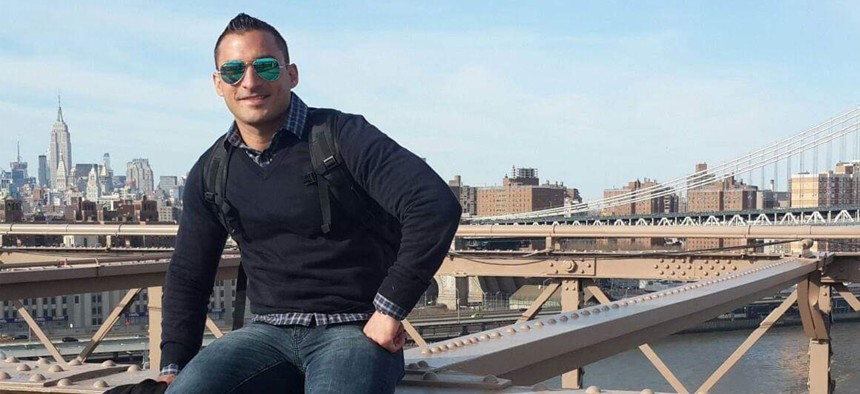
Rafael Rubio didn’t show up for work on Jan. 13 at 250 Broadway. Photo shared by Rubio’s cousin.


It would not be unusual to see Rafael Rubio arriving at his office inside 250 Broadway before his start time. On Jan. 13, several colleagues in personnel services at the City Council were expecting his presence at 8:30 a.m. Except Rubio did not show up. His germaphobically clean cubicle space on the 26th floor remained empty. That’s because Rubio was in detention. The day before, he’d been arrested by ICE in Bethpage, Long Island, at a standard asylum appointment.
It was the first of many surprises, for his office mates and for Rubio himself.
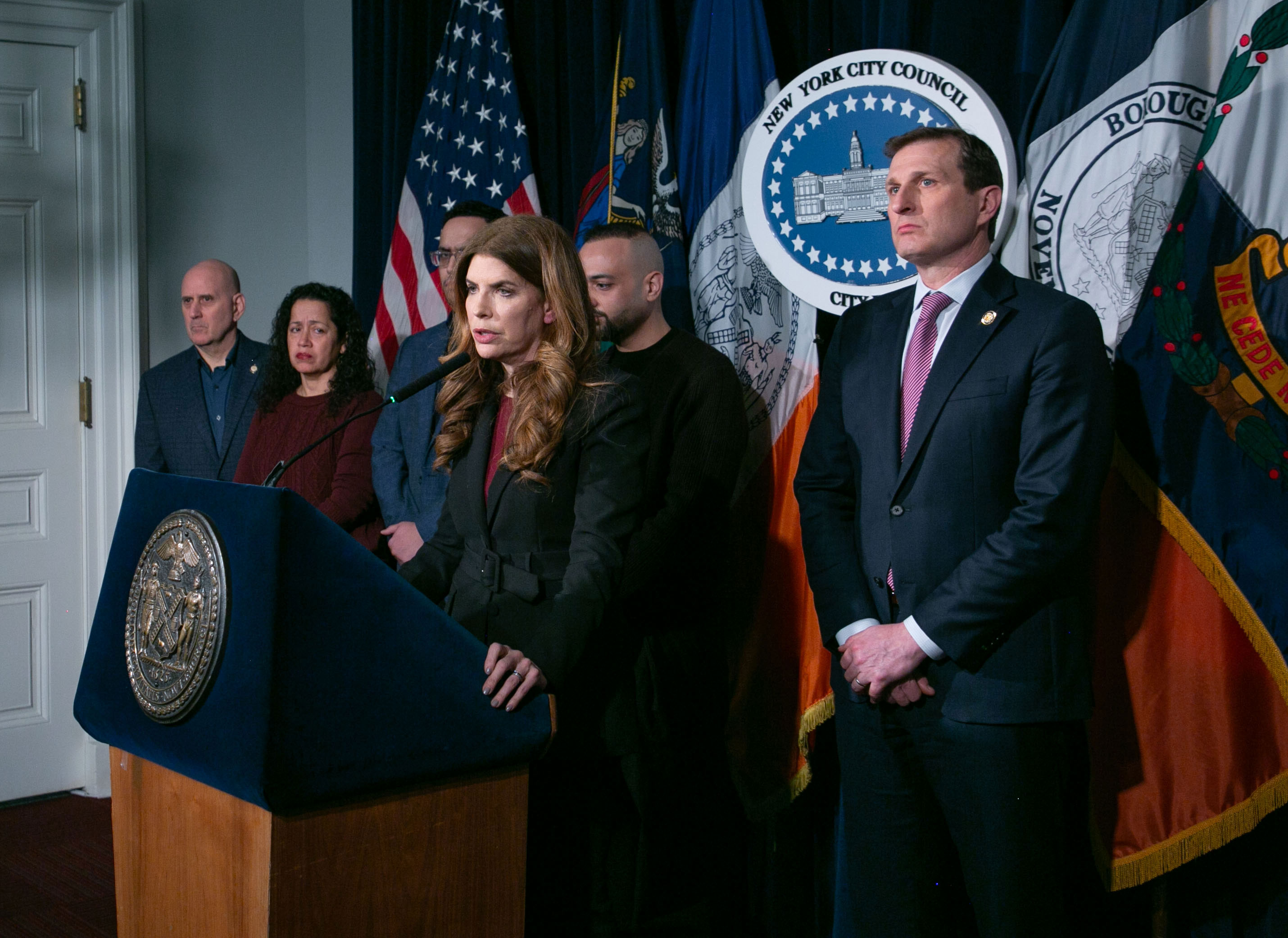
“He’s given one call,” said City Council Speaker Julie Menin. “He called HR at the City Council, who then alerted me.” Menin’s team knew to involve lawyers, but she couldn’t personally reach the Bethpage asylum facility. At that time, she said, the number that came up on Google was disconnected.
Calls directly to the Department of Homeland Security also went nowhere: “They said that they're not releasing him,” Menin said. Indeed they wouldn’t. Rubio was shuffled between facilities, including one in Orange County, New York. Two weeks later an immigration judge decided not to let Rubio out on bond, claiming Rubio hadn’t proven that he was not a “danger to the community.” Yet Rubio passed a background check to work for the council; and he had no criminal history in New York City, according to the NYPD. “I’m, like, traumatized by it,” said Roger Asmar, Rubio’s lawyer. He added that he didn’t believe his client was a flight risk.
It quickly became a case of opposite extremes. In an initial attempt to protect him, the council did not release his name. But DHS did, referring to him as Rafael Andres Rubio Bohorquez. The agency’s press release called the 45-year-old Venezuelan native “illegally employed" and a “criminal.” But in a court filing from the council, he was described as a “person of excellent moral character” who had lived and worked lawfully in the U.S. for years.
Caught in the middle is Rubio, now behind bars at Metropolitan Detention Center in Brooklyn, a symbol of the surprise and shock at the heart of the Trump Administration's deportation push in New York. Even without agents flooding streets as in Minneapolis, immigrants are disappearing, arrested at court appearances, routine check-ins, and neighborhood raids. Among the detained have been permanent residents, parents, children, and individuals in the process of legalizing their status, New Yorkers nabbed with little explanation. On the same day Rubio was taken by ICE, said City Council Member Susan Zhuang, so were seven of her constituents, outside a residential building in southern Brooklyn. One was a church deacon. “We may not have the big headlines that you have in other cities and states,” said Natalia Aristizabal, deputy director of advocacy group Make the Road New York. But there are still “a good amount of ICE agents in New York,” she said, “terrorizing our communities.” The result is that almost anyone without citizenship can be at risk – even someone with powerful allies and a lot going for them, like Rubio.
He’d applied for asylum and been granted Temporary Protected Status, a form of humanitarian relief for nationals of troubled countries that is at the heart of his court case, including a hearing Thursday morning. He could boast of reference letters and speeches from officials from across city government, along with statements from the mayor and governor. Yet, as for many of his fellow detainees, at stake is a one-way flight and, before that, a long time behind bars, where he has remained.
“Without relief from this court,” his legal team’s petition for habeas corpus declares, “he faces the prospect of months, or even years, in immigration custody.”
“He used to be very, very worried”
Immigrants from a wide range of backgrounds have been detained early in Trump’s second term – but the vast majority, like Rubio, don’t have violent criminal records according to DHS statistics.
The behind-the-scenes City Council employee was a lawyer in Venezuela, and his family included professionals in fields like engineering and education, said his cousin Jennifer, who feared giving her full name and who no longer lives in New York.
“Getting here wasn’t easy,” she texted City & State in Spanish, noting that the decision for Rubio to leave Venezuela was “not done lightly.” Rubio worked for Venezuela’s state-owned oil company and “ran away because he started receiving threats from the government,” said Asmar. He arrived in Florida in April 2017 on a tourist visa which soon expired, according to ICE. In 2021, he was first granted TPS under a broad designation for Venezuelans by the Biden administration, per federal documents included with his habeas appeal.
In New York, where he lived without immediate relatives, acquaintances saw Rubio as a friendly and diligent presence. He once worked as a waiter, said his cousin, who called him a very “committed” person always seeking to move up the ladder. He enjoyed life in the city by exercising, going to the beach, and doing a lot of reading, according to a friend named Henry, who declined to give his last name out of concern for his own safety. Rubio was “always careful to keep his paperwork up to date.” At his job, he was known to carry his documentation at all times.
Such concern for his legal status rang true to Yuleancy Lobo, a documentary filmmaker and Rubio’s former roommate who remembered once enjoying a Yankees game with him in the Bronx. That kind of high point was tempered by Rubio’s worries about his immigration situation and the federal government’s ramped-up deportation push, particularly close to home once Trump began trying to revoke TPS protections for Venezuelans – an effort that has been making its way through the courts.
“He used to be very, very worried,” Lobo said.
The former lawyer appears to have fought those fears through work. The data and compliance job he ultimately landed was not the first Rubio applied for at 250 Broadway. He sought a payroll position in 2024 and was seen as “overqualified” for the role. Camille Francis, director of the council’s personnel services division, held onto his resume until another position opened up last year. “I clearly remember on his first day with the team that he was flooded with emotion and gratitude for being given this opportunity,” Francis wrote in a reference letter to the court supporting Rubio’s release. The letter calls him a “well-liked member of the team and one who has garnered the respect of those around him.”
Court records include other notes from colleagues describing Rubio’s “legal acumen” and “technical expertise.” They praise him as “warm and engaging” as well as “articulate, well-read, and able to apply his knowledge effectively in a practical work setting.” Close coworkers call him a news junkie, always eager to go out for a ramen lunch or another Fulton Street staple where he’d talk about politics, including updates about Nicolás Maduro, the former president of Venezuela, and his fears about returning.
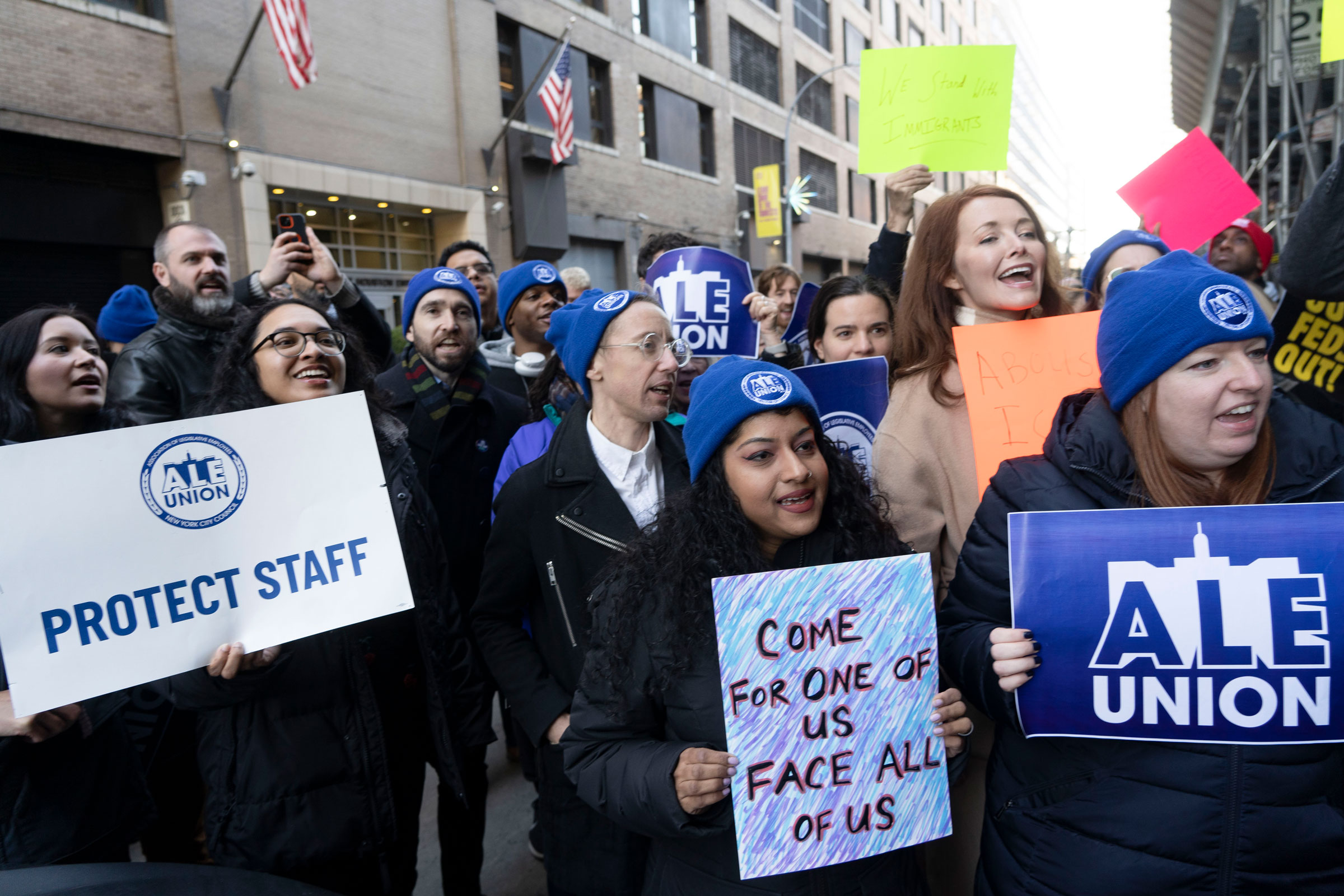
Rubio’s arrest has been “jarring” for the council’s workers, one staffer told City & State. Council members and the body’s staff union alike have rallied for his release.
“This was someone who was working at the City Council and who really wanted to make the city run, wanted to help New Yorkers, was committed to public service,” said Matthew Malloy, president of the Association of Legislative Employees that represents hundreds of council workers. In recent months, the group had conducted “know your rights training” in the face of growing ICE activity nationwide. Malloy noted that it’s “not uncommon" for people to call their City Council member when they see an ICE agent and ask for advice. Rubio’s arrest shows how threatened not just constituents, but also employees, can be.
The habeas strategy
Rubio’s detention also raises multiple questions about the limits of city sanctuary policy, and the current moment of immigration enforcement. Neither ICE nor DHS responded to specific questions about Rubio, but in January the agency’s press release highlighted an assault arrest on Rubio’s record. His lawyer said it stemmed from an altercation with a former roommate in which video showed the roommate attacking. “My client was filming that day with his phone because he was afraid of his roommate,” said Asmar, who has seen the video. Police responded and arrested both men, but ultimately the case was dismissed and sealed.
Asked about Rubio’s case, an NYPD spokesperson pointed to his lack of a criminal history here and said the agency doesn’t engage in civil immigration enforcement. Federal immigration officials do, however, have some access to local law enforcement databases, like fingerprinting information sent to the FBI.
“When they run the rap sheet, they're getting the rap sheet from the FBI,” said Ala Amoachi, a Long Island-based immigration lawyer. “Oftentimes the information is not complete.”
Rubio is also the subject of a wave of misinformation on social media, where right wing accounts have incorrectly called him a “staffer” or “top aide” to socialist New York City Mayor Zohran Mamdani, a favorite bugaboo to conservatives. DHS itself drew attention to Rubio’s job, pairing him in its press release with other public sector immigrant workers in liberal jurisdictions and saying that he was “not the first illegal alien government employee ICE arrested.”
Like many immigrants in detention, Rubio currently has a narrow range of options to secure his release. One of them is his petition for writ of habeas corpus, a claim of wrongful detention whose roots go back to the Magna Carta and was originally “conceived to guarantee protection from the king arbitrarily disappearing subjects to secret dungeons without just cause or due process,” according to the Brennan Center. Habeas appeals don’t focus on arguments about an individual’s right to stay in the U.S., but rather on whether the government can legally keep them behind bars.
This appeal has become a common strategy for detained immigrants, with some 200 cases filed every day across the country this year. It can be successful, but it must be filed quickly to prevent authorities from hastily moving detainees out of the state or even country. That means you need immediate money for lawyers.
Immigration advocates and lawmakers alike see this as a key issue during Trump’s second term, a slim tendril of practical hope beyond the whistles and community defense Signal groups that have become prevalent in Minneapolis, Los Angeles and Chicago. Along with the proposed New York for All Act meant to limit state and local resources from helping ICE, the habeas push is one of several efforts snapping into the foreground as the Trump administration contemplates making New York City the next big ICE proving ground. The city currently helps fund some legal services for immigrants, giving tens of millions of dollars to groups like Catholic Charities, The Legal Aid Society, The Bronx Defenders and the New York Immigration Coalition, but Menin says she would “like to even increase that.”
“It’s imperative that people know to immediately get that free legal representation so that habeas can be filed,” she told City & State.
In the meantime, Rubio has spent weeks in Brooklyn’s Metropolitan Detention Center, which is currently holding close to two cell blocks-worth of immigrants, according to reporting from The City. “MDC has become a de facto detention center,” said City Council Member Alexa Avilés, who called the federal arrests “abductions” and named it as one of a network of sites around the country into which immigrants are getting "disappeared.”
“It’s an awful place,” said Avilés, whose district includes the jail.
Rubio’s experience in detention has been “terrible,” said his lawyer. “He’s super depressed.” Another of Asmar’s Venezuelan clients was also being held at Metropolitan Detention Center and befriended Rubio, who came from the same town. This client, whose habeas case was before a different judge, won his release, and recently told Asmar that Rubio needed help in the facility, perhaps a psychiatrist. The Brooklyn complex has also been home to now-convicted criminals like Sean “Diddy” Combs, Sam Bankman-Fried and Joaquín “El Chapo” Guzman. Maduro, the former president of Venezuela who Rubio used to spend lunchtime discussing with colleagues, is now detained in the same building as Rubio, also caught up in the Trump administration’s version of justice.
Metropolitan Detention Center has been called “dirty” and “infested with drugs” and is widely known to be less hospitable than the Orange County detention center where Rubio was previously sent. But such is the speed with which detainees can now be shuttled between secure locations and vanished from their old lives. The whiplash is significant considering that Rubio’s work email and office badge remain active. When he became a ghost to his colleagues, his work of compliance and tracking and box-checking had to be split up between five different people in the personnel department, tasks that continued even as he was taken to life behind bars.
Menin said Rubio should have been able to expect a future as a council data analyst: “we want him to come back to the City Council.” The obstacles amount to what Rubio’s cousin calls a “painful contradiction” in a text.
“We are people who are complying with the law, while the very institutions that created it don’t respect it or apply it with humanity, consistency or justice.”
Mark Chiusano is a writer and reporter based in Brooklyn. His third book, “Gigging Alone: A Year in America’s Shadow Economy” is forthcoming from One Signal.