

sponsor content What's this?
Sponsored Content
How projects like Monitor Point can address the affordable housing crisis
A Q&A with Bryan Kelly, president of development at Gotham
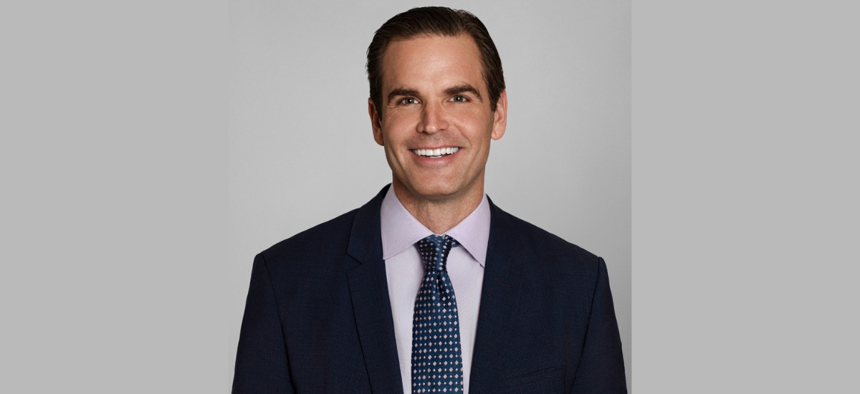
Bryan Kelly, President of Development, Gotham Organization Gotham


.png)
How would you describe the need for affordable housing in New York?
The need for affordable housing in New York is dire. We need housing that serves a broad mix of incomes, especially in neighborhoods with strong transit, good schools and access to jobs. Mixed-income housing is the solution that makes this possible – it’s what allows us to integrate deep affordability into high-opportunity neighborhoods in a financially sustainable way.
When affordability isn’t part of the equation, entire communities become out of reach for working families. But when we intentionally create mixed-income communities, we can unlock sites, leverage cross-subsidy and build housing that works for a full spectrum of New Yorkers. Mixed-income housing is an integral strategy. It ensures economic diversity, long-term stability and access to opportunity.
Meeting that need requires stronger public-private collaboration and more holistic models of development. At Gotham, our partnership with city and state agencies like the MTA, HPD and HCR has shown that it’s possible to balance deep affordability and design excellence with public sector collaboration.
What role do you play in meeting the need for affordable housing?
At Gotham, we focus on complex public-private partnerships that deliver permanent affordability at scale while advancing broader community goals. Across our portfolio, we work with public agencies, nonprofits and institutional partners to unlock underutilized sites, close complex financing and create mixed-income housing that integrates affordability, infrastructure, resiliency and community facilities.
Proposed projects like Monitor Point – our proposed mixed-use waterfront project in Greenpoint seeking to deliver permanently affordable housing, new public open space and critical infrastructure upgrades – reflect this broader approach through a true public-private partnership with the MTA by unlocking publicly owned land for the betterment of the community.
What's on your agenda in 2026?
This year, we’re full steam ahead in advancing Monitor Point through the ULURP process and most recently received approval (with conditions) by Brooklyn Community Board 1, in a vote of 24-9, an important step forward in advancing this transformative development on the North Brooklyn waterfront.
As we continue working through the rezoning process, we look forward to engaging the Borough President, City Planning Commission and City Council with the goal of working collaboratively to secure approvals and move this project forward.
What makes Monitor Point different from other waterfront developments?
Monitor Point reflects Gotham’s mission to deliver deeply affordable, mixed-income housing through innovative public-private partnerships. Before we can even begin building this project, we will relocate three MTA operations to a brand-new facility in an industrial neighborhood, which will remove truck traffic from residential streets and enable the full realization of the long-awaited Box Street Park. Then, we will need to conduct extensive environmental remediation due to the site’s industrial history and stabilize the eroding shoreline. This is a massive, ambitious undertaking that will provide incredible benefits for the community.
At a time of historic housing scarcity, Monitor Point commits to bringing permanent, deeply affordable homes. By increasing the zoning density of the project site, the market-rate housing we will build will help cross-subsidize the project’s affordable units. Ultimately, Monitor Point will be 40% affordable, creating approximately 460 units for low-income residents. For example, there will be three-bedroom apartments for the warehouse worker with two kids earning $58,000 a year. Additionally, for example, there will be one-bedroom apartments for plumbers earning $45,000 a year. These are truly affordable units for the people who live in the community. It’s unprecedented for the Brooklyn waterfront.
We will pair that commitment with 51,150 square feet of publicly accessible open space, connecting to Bushwick Inlet Park and the North Brooklyn Greenway, and the creation of a permanent home for the Greenpoint Monitor Museum, honoring the neighborhood’s industrial and maritime heritage.
For Gotham, it’s about leveraging private investment to expand affordability and keep neighborhoods like Greenpoint accessible to working families in the long term.