

City & Sports
Is Zohran Mamdani ready for the World Cup?
The international sporting event is yet another managerial test for the mayor.
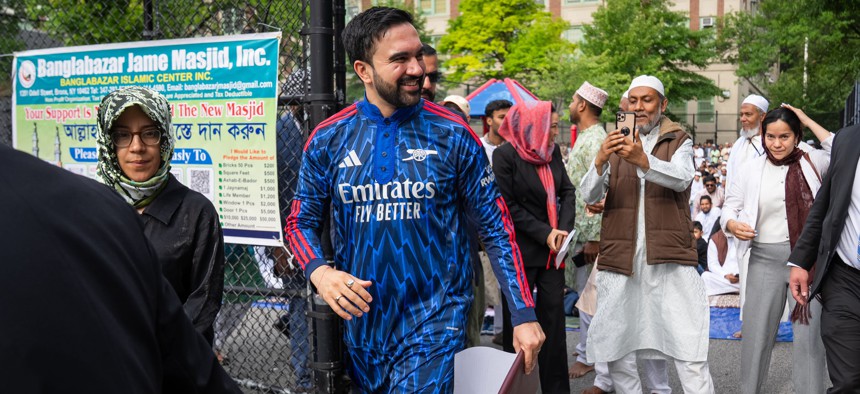
New York City Mayor Zohran Mamdani will have to manage an expected 1.2 million tourists coming in for the World Cup. Ed Reed/Mayoral Photography Office



Several months before winning the general election for New York City mayor, Zohran Mamdani demanded that FIFA reverse its plan to sell World Cup tickets using dynamic pricing. And he did it in typical Mamdani fashion: waving the banner of affordability, releasing a viral social media video and a petition titled “game over greed” – urging soccer’s global governing body to make the tournament more accessible for local fans.
In the months that followed, Mamdani, an avid soccer fan himself, frequently reminisced about seeing a game in South Africa during the 2010 World Cup. Each time, he’d reiterate his concerns that other young New Yorkers would miss out on a similar formative experience should the tournament’s 2026 pricing model persist.
But with the first kickoff at MetLife Stadium approaching, greed appears to have won the war. Ticket prices are astronomically high, so much so it spurred New York and New Jersey’s attorney generals to launch an investigation into the process. Resale prices across various platforms stretch well into the thousands of dollars.
Enter Mamdani with an unprecedented concession from FIFA: After months of negotiations, he managed to secure 1,000 $50 tickets to upcoming matches. Only available to New Yorkers through a lottery, they will be distributed on game days to prevent reselling. “We are making sure that working people will not be priced out of the game that they helped create,” Mamdani said at a May 21 press conference in Harlem’s Little Senegal.
While 1,000 discounted tickets might not seem like much given the sheer demand, it’s just one example of the ways that Mamdani has attempted to create opportunities for New Yorkers amid logistical and economic challenges. The World Cup will be a major test of the 34-year-old’s managerial chops – one that will put Mamdani under an even greater spotlight with an expected 1.2 million tourists streaming into the metropolitan area. Finding ways to make the tournament accessible, managing public safety and public transportation, leveraging the potential economic boom and ensuring the city continues to run efficiently for tourists and New Yorkers alike will be important.
“If things go bad with any of those things, then certainly he will be blamed,” Democratic political consultant Eli Valentin said. “Will Mamdani, with very little executive experience, be able to manage the largest city in the nation? That’s the question: Is he up for the test?”
FIFA’s initial projection that the World Cup would generate more than $3 billion for the New York-New Jersey region looks increasingly unlikely. The first local match is June 13. And as of mid-May, a mere 25% of available New York City hotel rooms had been booked, according to The City Reporter. While external factors, like high prices and fears of the Trump administration’s immigration crackdown, are out of Mamdani's control – and planning for the tournament has been years in the making, well before he took office – some of the ensuing disappointment could be still directed the mayor’s way.
Maya Handa, the mayor’s World Cup czar, said the city is blazing ahead with its plans. She pointed to the flurry of World Cup-related initiatives that the Mamdani administration is putting on, including watch parties at iconic city locations, soccer-related open street events outside of dozens of schools, scavenger hunts highlighting small businesses across the five boroughs and partnerships with city restaurants to offer $26 dining deals. The idea, she said, is for everyone to have the opportunity to participate – even if they couldn’t score those coveted tickets to the matches.
“We’ve been continuing to make it clear that New York is here to welcome every single tourist and visitor that wants to come here this summer,” Handa said. “When they are here, we are focused on making sure that they can go out to all five boroughs, really patronize our restaurants and bars and small businesses, and celebrate, stay longer and then hopefully return.”
Hoping to alleviate some of the public transportation challenges, the Mamdani administration announced street closures, a new bus lane in Queens aimed at improving commutes to and from LaGuardia Airport and helped Gov. Kathy Hochul negotiate lower shuttle bus tickets to the MetLife Stadium. New Jersey Transit, meanwhile, is selling train tickets from the city to the stadium for $98 – more than seven times the typical $12.90 fare.
How the mayor handles public safety largely remains to be seen. Mamdani did recently agree to put New York City Police Department officers on 12-hour shifts during the World Cup – something he’d initially been reluctant to do, given his campaign promises to lower police spending.
New York City Council Member Virginia Maloney, chair of the Committee on Economic Development, credited Handa and the mayor for making progress on planning.
“There’s more work to be done for sure,” Maloney said. “I’m also hopeful that we won’t see an overexaggeration of economic impact.”
There’s no denying Mamdani’s enthusiasm for the World Cup. He has approached the tournament with gusto, promoting it in a way only a fellow fan could, according to former City Council Member Francisco Moya. Moya, who has played an instrumental role in bringing the first dedicated professional soccer stadium to the city, believes that alone will go a long way – both for the city and New Yorkers who love the sport.
“There’s a breed of talented young kids that are coming up in this city that have the talent if we just give them the right tools,” he said. “This World Cup can be the catalyst in how we change the mentality of U.S. soccer – by making sure that the money (that) is coming in gets trickled down to the communities that need it.”