

New York City
Book excerpt: How David Dinkins’ diverse coalition fell apart
By 1993, identity politics had fractured the mayor’s tenuous hold on different groups of constituents.
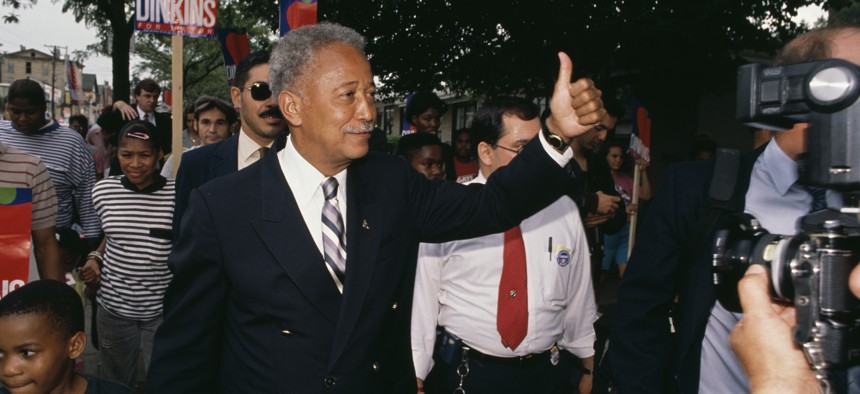
David Dinkins narrowly defeated Rudy Giuliani in 1989. Rick Maiman/Sygma via Getty Images


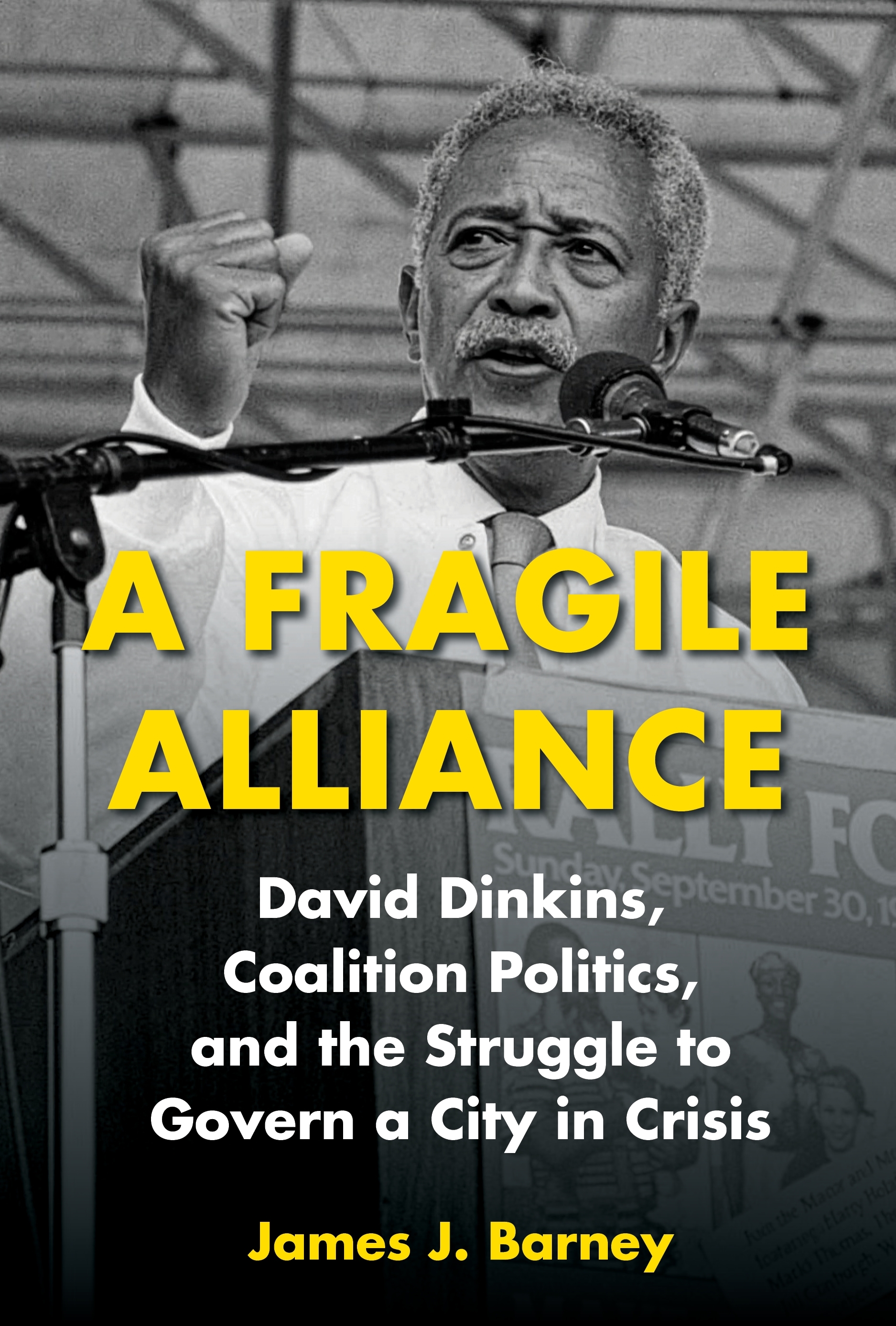
David Dinkins, the first Black mayor of New York City, narrowly defeated Rudy Giuliani in 1989 with a fragile coalition of voters. The “gorgeous mosaic,” as he liked to describe the city’s diverse communities, that he tiled together in 1989 had fallen apart by the time he sought reelection in 1993. The Dinkins era, as described by author James J. Barney, a Brooklyn native and professor of legal studies in the American Public University System, was a time of transition. Racial tensions were heightened by high-profile police killings, crime was historically high nationwide and the AIDS epidemic was peaking in the early ’90s. Dinkins had to deal with all of that, and keep his core constituencies happy – which was impossible when their goals were in opposition to each other. From the introduction of “A Fragile Alliance: David Dinkins, Coalition Politics, and the Struggle to Govern a City in Crisis,” a new book that comes out Sept. 1 from Fordham University Press, Barney explores Dinkins’ legacy and outlines his main thesis.
When David Dinkins passed away on November 23, 2020, the public and media response differed markedly from what he had received while in office as mayor of New York City. Dinkins’s death sparked an outpouring of largely positive obituaries for a man who had been the subject of harsh criticism by New York City’s tabloid and local press during his time in office. Dinkins, a soft-spoken liberal, lacked the bravado and bluster of both his predecessor, three-term mayor Ed Koch, and his successor, Rudy Giuliani. In 1993, many in New York City viewed Dinkins as a well-meaning man who was simply not up for the job, and New York City voters cast Dinkins out of office, ending his political career. But the passage of time has led many to reconsider Dinkins’s tenure and legacy, and this book represents one such attempt. By integrating newly released archival collections with underexplored community-specific news sources, this book critically assesses the limits and possibilities of identity-based liberalism in urban governance.
My thesis is that analysis of the fragile nature of Dinkins’s political coalition and his inability to navigate the complexities of modern liberalism provides insight into the shift from the Great Society liberalism of the 1960s and 1970s to the neoliberalism adopted by Bill Clinton and the Democratic Party at the national level in the 1990s. While this thesis may not seem groundbreaking in 2025, the time of this writing, Dinkins and the initial commentators did not fully appreciate the skill required to assemble a complex political coalition or the difficulties of governing during this transition period. Dinkins attributed his failure to white racism, while his detractors cited his incompetence or poor decision making. These assessments overlooked the inherent complexity of Dinkins’s undertakings, the changing nature of liberalism during that era, and the shifting political landscape of the 1980s and early 1990s, which featured the departure of large numbers of white working-class voters from the Democratic Party; the politics of drugs and crime, which confounded Great Society liberals like Dinkins; and the prioritization of other issues like the economy and public safety over appeals to identity.
Dinkins, New York City’s first African American mayor, has often been remembered more for his defeat than his achievements. Yet his mayoralty offers a crucial window into the difficulty of crafting policy and maintaining a liberal consensus in an era of robust identity politics. Dinkins sought to create a durable electoral coalition that included people from diverse back-grounds. But each constituent of his electoral coalition competed for limited resources in a city plagued by a recession and budget constraints. In such an environment, each part of his coalition advanced conflicting goals and agendas, providing a window into both liberalism and the Democratic Party in a time of transition. So, while he may have been a good man with a noble vision for a diverse New York City, he failed, in large part, because he did not forge a universalist message powerful enough to unify the city, providing a warning of the dangers of identity politics.
In the 1980s, when he was Manhattan borough president, Dinkins described New York City as a “gorgeous mosaic” composed of separate and unique neighborhoods that created a complex but beautiful city unlike any other in the world. When he published his autobiography in 2013, Dinkins again described the city as a “gorgeous mosaic.” Yet during his term as mayor in the early 1990s, New York City faced a collection of serious problems that included the lingering impacts of the 1970s fiscal crisis and the 1977 blackout, increased racial tension, white flight, a crack epidemic, the apex of the AIDS pandemic, a recession, a real estate slump, and even a secession movement. Together, they rendered New York City nearly “ungovernable.” New York City’s genuine problems were exacerbated by a tabloid and a local press that sensationalized the city’s numerous challenges, creating a sense of malaise and fear that the city was drifting back to the “bad old days” of the 1970s. When Dinkins, who had previously won only one race for elected office and who was completing his single term as Manhattan borough president, announced that he would challenge then-mayor Koch, who was attempting to secure a fourth term in office, in the 1989 Democratic primary, few, including Dinkins himself, believed that he had a realistic chance of winning.
To the amazement of most political pundits, Dinkins and his gifted political advisor Bill Lynch crafted a diverse and multiracial political coalition that resulted in the election of New York City’s first African American mayor. Dinkins’s electoral success in 1989 derived from forging together a diverse political coalition unified in its opposition to the policies of Mayor Koch.
Dinkins was defeated in 1993 because he was unable to balance the conflicting demands of the constituent parts of his coalition.
Dinkins’s political career illuminates the shifting identity of the Democratic Party. Dinkins navigated various crises and sought to hold together a fragile coalition reflective of broader trends in the Democratic Party and liberalism in a time of transition from the Great Society liberalism of the 1960s and 1970s to the neoliberalism of the 1990s. The Dinkins coalition, a product of the particularities of New York City, also pointed to the rise of identity politics, which continues to shape the political landscape of the United States. Thus, Dinkins’s brief mayoralty still casts a long shadow on American liberalism and the modern Democratic Party. An examination of his career helps us explore the relationship between government policy, social activism, political coalition building, and governance during the era of identity politics and conservatism. This book does not seek to vindicate or condemn Dinkins. Instead, this book seeks to understand the political conditions that shaped both his rise and his defeat.
Dinkins dealt with various flashpoints during his political rise and his mayoral term from 1990 to 1993. These include the marches conducted by Reverend Al Sharpton into the white neighborhoods of Howard Beach, Queens, and Bensonhurst, Brooklyn; protests by African Americans against a Korean grocer in Flatbush, Brooklyn; the political crisis caused by rising crime and the crack epidemic, with a focus on Washington Heights; the racial riots in Crown Heights; the demands of LGBT and AIDS activists; and the emergence of the secessionist movement in Staten Island. Exploring these episodes provides insight into the Democratic Party in transition and the changing political landscape in the aftermath of the culture wars of the 1960s and 1970s that broke down the New Deal coalition. During these flashpoints, Dinkins failed both to maintain his coalition and to expand his base of support, as he struggled to address the often-conflicting demands of African Americans, ethnic whites in the outer boroughs, white establishment liberals, women, and the LGBT community. This failure led to Giuliani’s victory in 1993.