

Publisher's Section
The 2026 Above & Beyond: Women
Remarkable leaders moving New York forward.
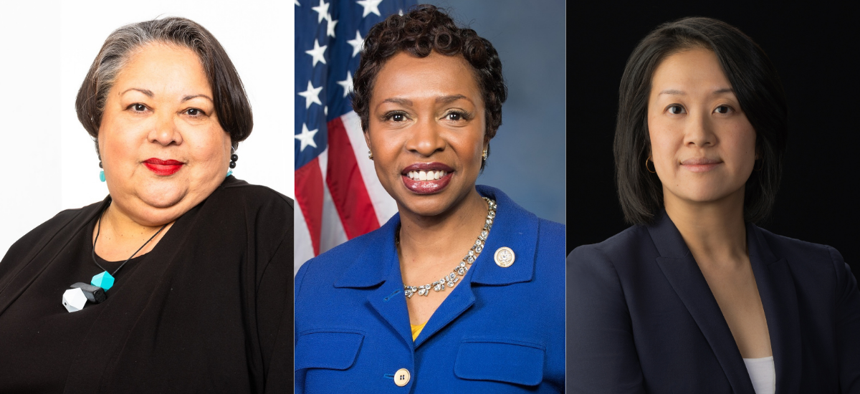
City & State presents 2026 Above & Beyond: Women. Josh DeHonney; U.S. House of Representatives; Morrison Cohen


They’re public officials, policymakers and planners. They’re visionaries creating new transit hubs, new streetscapes and new cultural attractions. They’re taking on new roles and new challenges, whether it’s writing the next chapter in sustainable energy, improving and expanding services for the most vulnerable or educating the next generation of leaders.
What unites them is that they’re all part of this year’s Above & Beyond: Women – and they’re doing their part to move New York forward.
This year’s list honors elected and appointed officials in key offices, including Rep. Yvette Clarke of Brooklyn. It recognizes new leaders at institutions and organizations like the Association for a Better New York, the Long Island Power Authority and the Emma L. Bowen Community Service Center. And it features influential drivers behind such projects as a reimagined Fifth Avenue, the highly anticipated Hip Hop Museum and the long-awaited overhaul of Penn Station.
City & State is pleased to present the 2026 Above & Beyond: Women honorees who are improving New York.
– Profiles by Amanda Salazar

Yvette Clarke, ICON

When Rep. Yvette Clarke was growing up, her parents were activists in Flatbush, Brooklyn, bringing her along to their meetings. She would sit in the corner with crayons and snacks, absorbing the information and the determination the participants displayed.
“That helped shape and mold me,” Clarke says. “I was trained by my parents to be of service to others and to coalesce, and was given great exposure to the diversity of the people that live in the 9th District.”
From then on, Clarke dedicated herself to serving her Central Brooklyn community. She succeeded her mother, Una Clarke, in the New York City Council, making the pair the legislative body’s only mother-daughter succession. Earlier in her career, she was a staffer in the state Legislature and worked for community-based organizations.
“I know what it is to have caring elected officials, those who really understand the challenges of today and are willing to put themselves on the line to fight for opportunities,” she says.
Clarke is only the second Black woman to be elected to the New York congressional delegation, following in the footsteps of her childhood representative, the trailblazing lawmaker Shirley Chisholm. She’s now chair of the venerable Congressional Black Caucus.
“I tell people all the time I was the beneficiary of a fabulous community,” she says. “I was really a product of the village that raised the child.”
Some recent work she’s proud of include cosponsoring the American Dream and Promise Act, a pending immigration reform measure, and her work in the technology space, such as introducing the Deepfakes Accountability Act. As a member of the House Bipartisan Artificial Intelligence Task Force, Clarke is contributing to policy solutions to bring systems into the 21st century while still protecting constituents.
One of her biggest accomplishments was helping to pass the Affordable Care Act, which she considers to be one of the “heaviest lifts” that she and her colleagues have had to make.
While she was initially motivated to go into public service from observing her parents, Clarke is continually inspired by her district.
“It’s the honor of a lifetime to represent a constituency where you were born and raised and have lived all my life,” she says. “Knowing that I’m of service – what I consider to be one of the ultimate services to my constituency – really gives me a lot of gratitude, a lot of joy and and it’s very fulfilling.”
Alicia Alvero
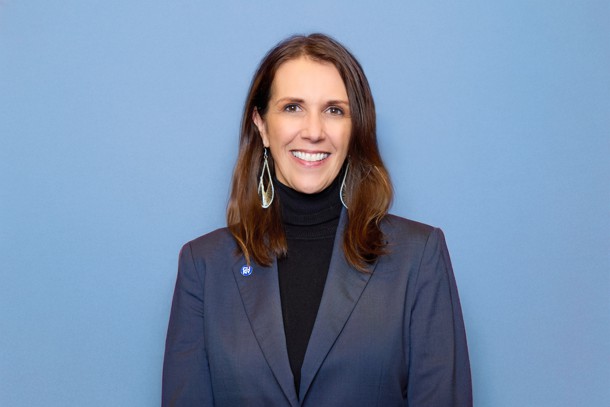
Alicia Alvero’s grandmother and mother were women ahead of their time because they wanted to go to school and work despite living in a period when they were expected to stay in the home. As a result, Alvero’s mother always hammered home the power of education.
This lesson stuck with Alvero, as she is now the first Latina to serve as executive vice chancellor and university provost of the City University of New York.
“They knew it was the gateway to the future for me,” says Alvero, the daughter of Cuban immigrants. “It’s hard for me not to talk about that as driving my passion.”
Appointed to her current role in February after serving on an interim basis since November 2024, Alvero oversees all aspects of the academic ecosystem, including enrollment, research and student well-being.
One of Alvero’s biggest undertakings is the CUNY Transfer Initiative. When students transfer schools, about a third of their credits are typically lost, potentially delaying graduation. Alvero has been leading efforts to improve this system by automating transfer systems, creating a universal transfer path for CUNY and breaking down other barriers.
“We want to establish a common standard of care for every single student,” Alvero says. “It shouldn’t just be that if you’re lucky enough to be in a specialized advisement program that you get really great advice and know what your journey should look like. That should be a given and a standard for every CUNY student.”
Alvero herself is the product of public higher education, which has been a motivating factor in her work.
“I really see myself in every student,” she says.
Saima Anjam

When Saima Anjam was in third grade, she joined her school’s environmental club. It prompted her to wonder: Why aren’t the adults doing more about the environment? How do we get them to understand? Why am I 8 years old and raising money to save turtles?
These tough questions put Anjam on a path to a career in advocacy. She’s currently a senior vice president on The Parkside Group’s government relations team, representing environmental and human rights nonprofits as well as labor unions.
“I just want to make sure that we’re doing better than what we did before and that when we know better, we should do better,” she says.
Through her collaboration with clients, she’s been doing just that.
An example is her work with the Timbuctoo Climate Science and Careers Summer Institute, which teaches students from marginalized communities about the environment and history of New York’s North Country and connects them with professionals in green fields. With labor clients, Anjam has also been working on promoting union grocery store jobs amid a proliferation of anti-union supermarkets.
It’s her belief that working together can both solve societal problems and help people grow in their roles. When asked what advice she’d offer to young professionals, she said to not be afraid of asking questions and talking to people.
“There are solutions to these problems that we’re all facing,” she says, “and we can come together and figure out what they are and how to move forward to address them.”
Sara Appleton
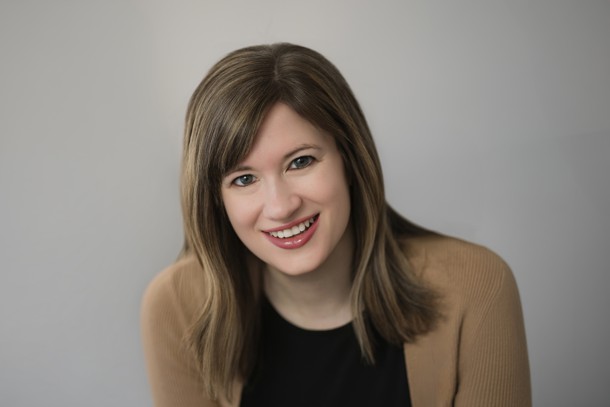
As a teenager, Sara Appleton got the opportunity to intern for then-New York City Mayor Mike Bloomberg, where she saw firsthand how government can drive positive change for communities.
That first professional experience directed the trajectory of the rest of her career.
“I wanted to work in and around government to help improve quality of life in my home city ever since,” she says.
She does exactly that as Amtrak’s director of the Penn Station Transformation, an initiative to redevelop the bustling station to increase safety, efficiency and traveler experience for the hundreds of thousands of commuters who pass through it every day.
With her help, the project has been progressing, with construction expected to begin in late 2027. The team is getting close to selecting a master developer to drive the renovation.
“It’s not just about fixing a station, we’re really building for the future of the region,” Appleton says. “It’s just this incredibly exciting opportunity to drive impact here with national ramifications.”
The native Manhattanite found her passion for transportation while working at the New York City Economic Development Corp. after college, where she saw how transportation and infrastructure impact the quality of life of residents who need reliable ways to get around.
“It’s deeply personal for me as a native New Yorker who spent my life traveling through Penn Station and really knows how much people in our region depend on it,” she says.
Michele Arbeeny
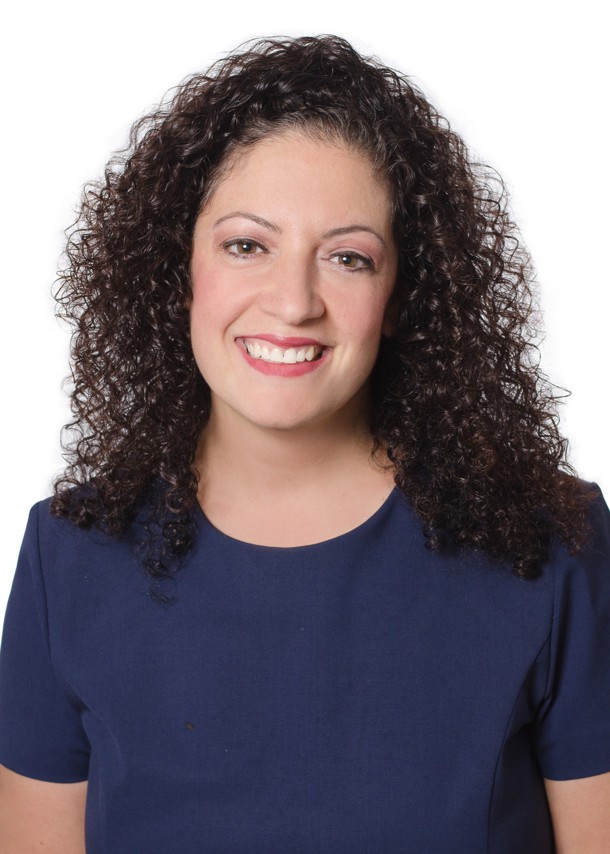
Attorney Michele Arbeeny is focused on using her career to help others – whether it’s guiding clients through business development and transactions or mentoring young professionals in her field.
At the law firm Windels Marx, Arbeeny’s practice combines banking, finance, real estate and nonprofits, as she represents financial institutions, developers and nonprofit organizations on issues regarding finances and affordable housing. She has a track record of helping clients with acquisition, construction, loans, bonds and financing.
“While I was originally drawn to litigation, I made the switch to a transactional practice early in my career and have never looked back,” she says. “The people who’ve shared this journey with me are a testament to the creativity and collegiality in finance, real estate and not-for-profit law.”
Arbeeny is the chair of Windels Marx Women, a group of women legal professionals who get together for networking, development and mentorship opportunities. She credits mentors for helping her understand her own motivations behind her work, which paved the way for her transition to transactional law.
“Teamwork really does make the dream work,” she says. “I thrive in the diversity of the day’s ambitions and a team that shares enthusiasm for what we’ve undertaken, what we’ve accomplished and what we have yet to achieve.”
Additionally, Arbeeny helped the firm establish a scholarship program to promote diversity in law schools and workplaces.
“When considered on the whole, it is a life and career of my own unique design, which fills me with tremendous pride,” Arbeeny says.
Barbara Askins
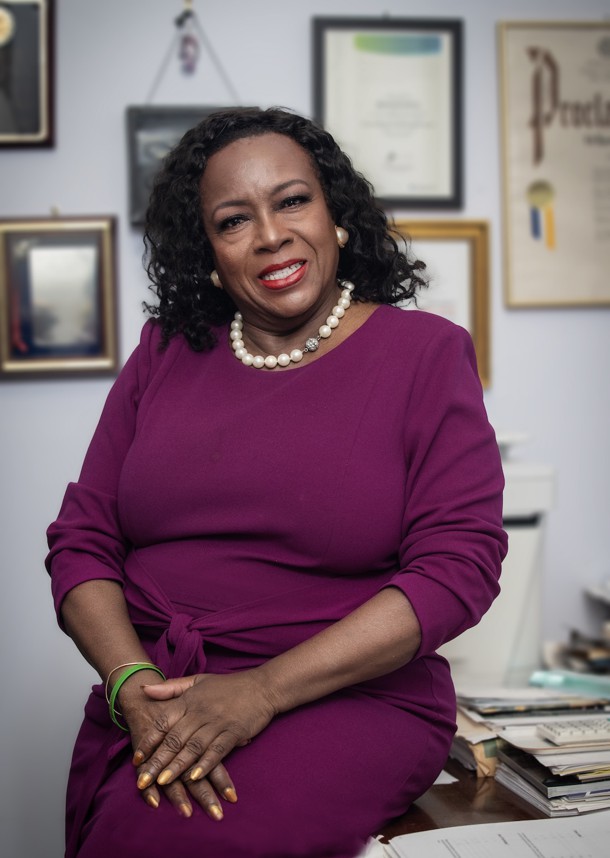
Barbara Askins is the founder, president and CEO of the 125th Street Business Improvement District, the first of its kind in Harlem.
She was inspired to create the BID because of her love for the neighborhood – the people, arts, history and culture. 125th Street, a main thoroughfare in the community, features four major cultural attractions: the Apollo Theater, the Studio Museum in Harlem, the National Black Theatre and the new Urban Civil Rights Museum.
“It is our Park Avenue,” Askins says. “It is the street that everybody comes to. It’s the major connector.”
Her organization works with property owners, businesses, residents, the community board and local elected officials to bring growth to 125th Street and develop solutions that work for all stakeholders.
“When you walk down the street, the culture and the history is just screaming out at you,” she says. “To have the opportunity to use that in developing a whole economic system for growth, to bring job creation and to bring in inclusion, is really exciting.”
One of the BID’s best known initiatives is its Harlem Holiday Lights Celebration. It includes indoor and outdoor activities to help celebrate Harlem’s unique culture, plus giveaways and a parade. Askins hopes to make it a signature event for New York City, as the celebration gets bigger every year. Another goal of hers is to determine where tech fits in with the BID’s focus on arts, culture and community.
“There’s no place like Harlem,” she says.
Arlen Benjamin-Gomez
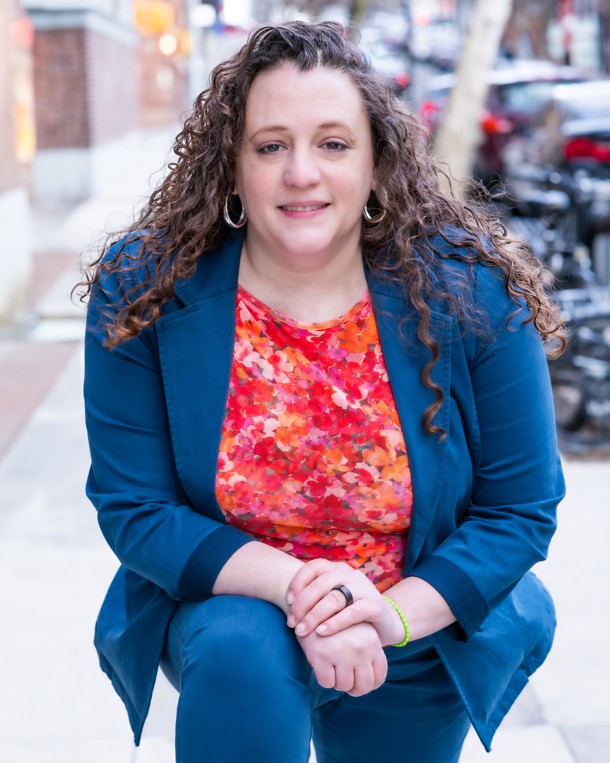
Growing up, Arlen Benjamin-Gomez embraced school as a safe space to be seen and heard without consequence. As a result, she’s always understood the way school and an education can empower people.
“I’ve always seen education as an opportunity for people to overcome incredible obstacles in their lives,” she says. “I grew up understanding the power of education to change lives and the fact that it doesn’t do so for so many people that need that level of support.”
This is what led her to her career in education equity. She is the executive director of EdTrust-New York, a nonprofit that uses research, policy and advocacy to ensure students of color and low-income students have access to a good education.
“There’s so much work that we could be doing to improve our system, improve the outcomes that we achieve and make sure that every kid has the potential to thrive in our society,” Benjamin-Gomez says.
She leads EdTrust in its research and advocacy, which often has her connecting with elected officials in Albany and New York City on the organization’s policy agenda.
The nonprofit had heavily advocated for more investments toward education in the state budget. Benjamin-Gomez was “pleasantly surprised” to see that their efforts resulted in funds for literacy and creating a statewide database to track student outcomes were included in the governor’s State of the State address.
“I think we’re in a very difficult time as a country,” she says, “and so being able to be part of positive, forward-moving change that’s moving us toward justice is a personal mission of mine.”
Rachel Bleecker
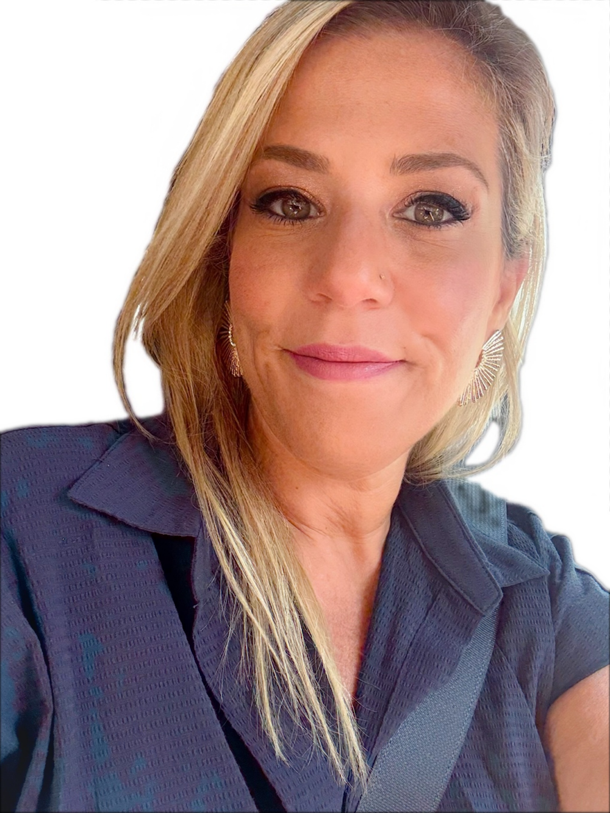
As the executive director for residential services at Lutheran Social Services of New York, Rachel Bleecker doesn’t just meet clients’ basic needs – she also tries to bring them joy as they get back on their feet.
The nonprofit operates supportive housing, family shelters and a nonsecure detention center, serving thousands of people every day. Bleecker oversees these programs and has helped expand them since being promoted to her role in 2021.
“It makes me feel like I’m doing more to leave this world a better place, a better place for my children and for future generations to come,” she says.
While Bleecker endeavors to get her clients’ needs met, such as a roof over their heads and food, they go beyond just that to serve the whole person and not just address their struggles. One way is through a partnership with The Good Dog Foundation to bring therapy dogs into shelters. The organization also partnered with a real estate organization that helped secure clothing donations from its clients. All of this creates what Bleecker calls a “village” of support.
Lutheran Social Services of New York is also an anti-racism social justice organization, which targets the systems of oppression that have led to homelessness.
“We have all needed help at one time or another,” Bleecker says. “I can’t think of any person I’ve ever met that says, ‘My life has been pain free, problem free.’ Being able to show up in the role of the helper is a privilege.”
Erin Burns-Maine
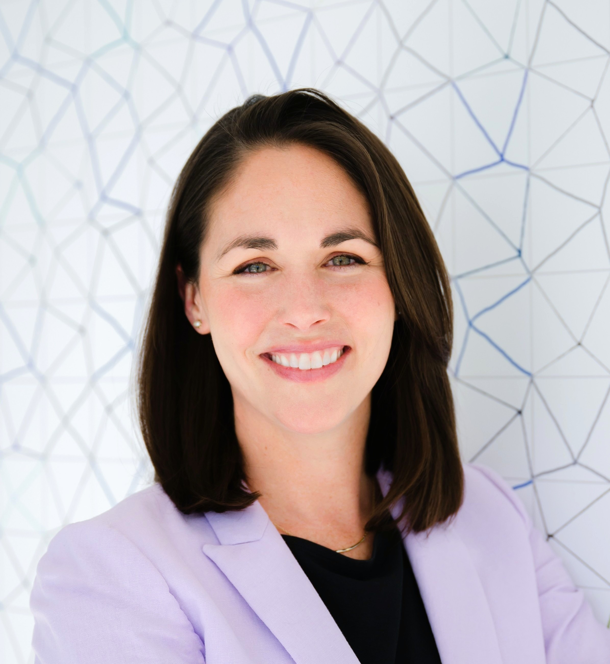
While New York City Mayor Zohran Mamdani’s name may be the one people associate with rent-stabilized housing, Erin Burns-Maine and Community Preservation Corp. also elevated the conversation about it last year.
Burns-Maine and her team put out a data brief evaluating CPC’s rent-stabilized portfolio, which was communicated to elected officials and residents alike and highlighted a different way of considering the subject.
“For many years, it has been a fight between tenants and owners, and the reality where we sit is we need to look out for the buildings,” she says.
She has worked at CPC for five years, driving strategic planning, policy, government affairs, marketing and communications for the nonprofit lender. This allows the organization, which has financed over 230,000 units, to shape public attitudes and housing legislation.
Her North Star, she explains, is the belief that everyone should have the ability to live in a safe, quality home.
Burns-Maine was first inspired by her father, who was a city planner. When she was a child, he would take her along to meetings and flyer distributions as he worked with the community.
“I had a front-row seat to the impact that one dedicated, hardworking government employee could make,” she says. “I think that that is really when I fell in love with public service. I always felt that whether I’m in government or the nonprofit sector, I want to be doing something that is ultimately going to have a positive impact in my community and beyond.”
Sherri Cohen
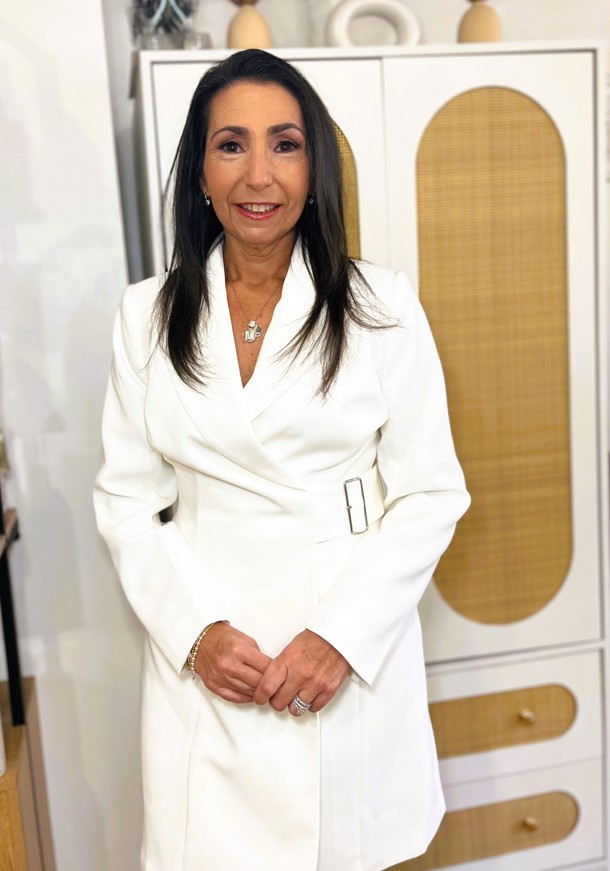
As a child, Sherri Cohen would help her mother do the books for her rental properties. She came to enjoy the process, done the old-fashioned way, handwritten in a ledger.
This childhood chore was the earliest precursor to Cohen’s 25 years of work as a certified public accountant, which she does at full-service accounting firm Grassi.
She’s on the advisory side of the firm, guiding nonprofit and industry clients on financial issues, efficiency questions and other matters. She could be handling an organization’s accounting, reorganizing its internal systems to increase efficiency or even act as an outsourced chief financial officer. Overall, she serves as an adviser for her clients, in fields ranging from automotive to health care and beyond.
“What inspires me is the fact that my clients really can grow and move forward,” Cohen says. “What really drives me is to make sure that they know and understand the back end of it all, so that they can scale … understanding where they’re going and where they need to be going and what they need to do to achieve that.”
In addition to serving clients, Cohen manages a team of 40 people, in whom she instills the importance of helping clients grow and excel.
“The biggest accomplishment is making sure that the team knows that their job is to make sure that the clients are always happy, and that we’re moving those clients forward,” she says. “Accounting should enable the decisions, not slow them down.”
Julie Coker
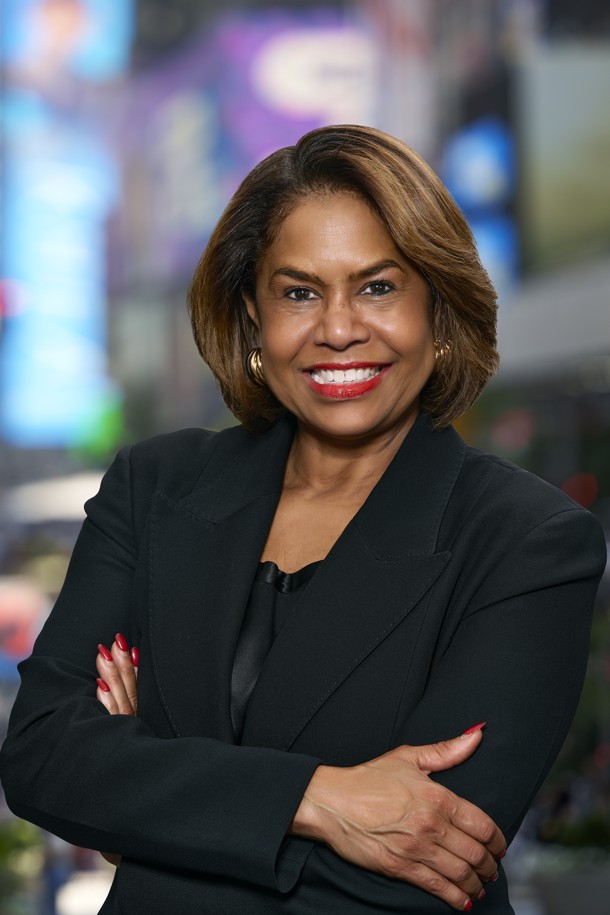
Julie Coker is New York City’s brand ambassador.
As the leader of New York City Tourism + Conventions, she’s a top advocate for tourism and tells the story of New York City and its businesses nationally and internationally.
“Representing the brand of New York City, the fact that it is a diverse and welcoming city, the fact that it is a city of immigrants, the fact that we have five amazing boroughs and you can have a different experience in each and every one of them – that’s my responsibility to share that story,” Coker says.
The 1,600-member organization evaluates what attracts tourists and promotes the unique experiences people can enjoy, whether it’s food, culture or other attractions. And the effort is paying off; in 2024, tourists spent $51 billion in New York.
“We are an economic driver that really propels the economy of New York City, which we’re extremely proud of,” she says.
While the sector had concerns going into 2025 due to geopolitical tensions, the city maintained its destination status and saw strong tourism levels.
Coker is particularly proud that in the past year the organization continued to market the city as a diverse and welcoming place at a time when those concepts are not always being celebrated nationally.
“We didn’t waver, because that’s the DNA of New York City,” she says. “That is how the city was founded. That is what you find on the ground every day, whether it’s in the subway or your grocery store.”
Kristina Coleman
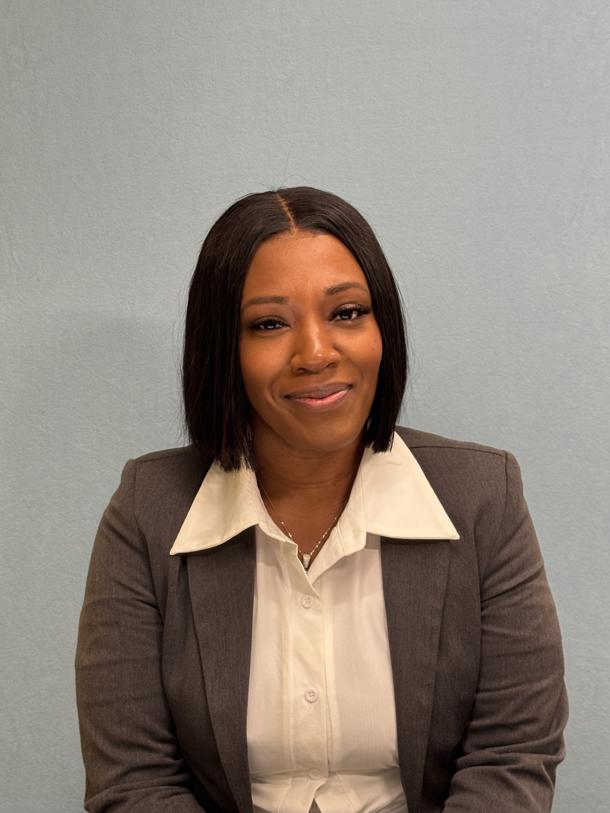
Kristina Coleman doesn’t have a lot of down time.
At her day job, she’s a vice president at Safe Horizon, a victim services nonprofit, where she oversees programs supporting families that have dealt with abuse. When she’s not on the clock, she’s running YouRmore, a women’s empowerment and mental health organization that she founded.
The common thread between both of her roles is helping people grow from their challenges to create a better situation for themselves.
“My goal is to help people to take their stories and shape it in a way that tells the right story for them, that they can tell the story how they see themselves and not how they’ve been told,” Coleman says. “I help people to actually find that strength in their stories.”
This mission extends toward her staff too, not just her clients.
“I feel like if I’m not developing people and supporting them, I almost feel like I’m not effective,” she says. “I really love to focus on overall development for staff.”
As a mentor, Coleman emphasizes that young professionals need to advocate for their careers and find the right circle of people. Most importantly, she advises them to take a chance on something new when it presents itself.
“Don’t turn down any opportunity if it makes sense and it aligns,” she says. “Do it afraid. Do it crying. Do it kicking. Do it however you have to do it. Just do it. Never let fear be the reason you didn’t do anything.”
Meredith Firetog
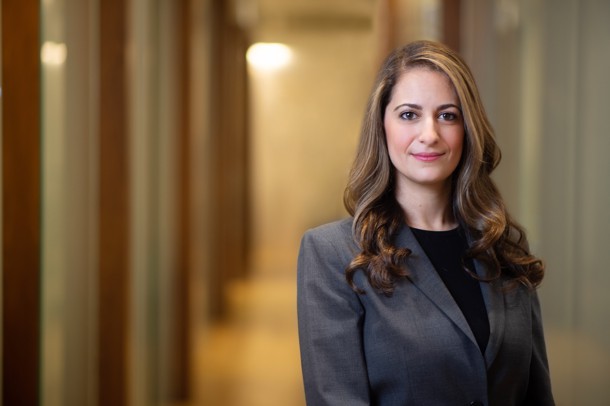
In 2023, Meredith Firetog represented singer Cassie Ventura in a civil sexual assault lawsuit against Sean “Diddy” Combs, Ventura’s ex – a case that was settled in one day and led to a federal investigation and numerous other lawsuits against the rapper and music producer.
While this may be Firetog’s most visible success, it’s far from the only one.
For the past three years, she has been a partner at Wigdor, handling cases on employment law, discrimination and sexual abuse.
“I was always interested in trying to correct the power imbalances that often happen along gender lines,” Firetog says. “My passion is for the David and Goliath narrative of correcting power imbalances and empowering people who are generally not the most powerful in society.”
Currently, Firetog is representing actor Julia Ormond in her sexual assault case against film producer Harvey Weinstein, Disney, Miramax and the Creative Artists Agency – which is unique for making CAA is a defendant for its alleged knowlege of Weinstein’s conduct and failure to protect its artists.
Looking forward, Firetog is paying close attention to the impact of the New York City Council’s recent sexual abuse lookback law to give victims more time to file cases.
“It is inspiring how brave people are to stand up to something that is wrong,” she says. “That’s what inspires me, that there are individuals who are willing to stand up for themselves and, in doing so, stand up for others. That is what gets me out of bed in the morning.”
Jan Fisher
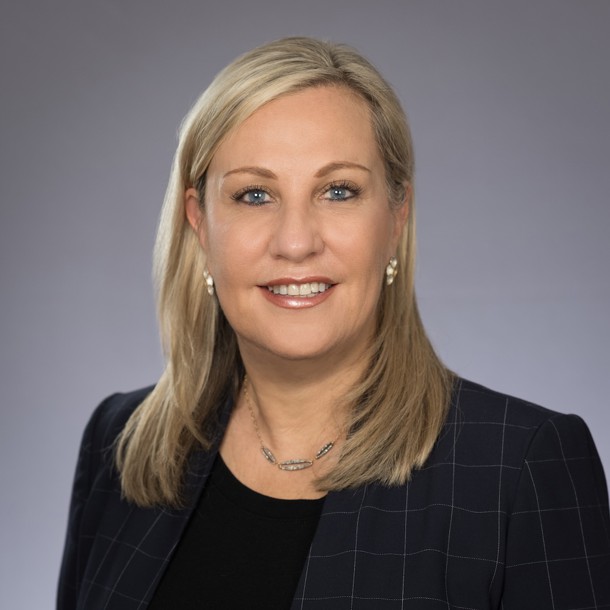
When a nonprofit in Westchester struggles, it has Jan Fisher and the membership organization she leads, Nonprofit Westchester, to rely on.
Nonprofit organizations provide critical services to vulnerable communities. Nonprofit Westchester supports 400 member nonprofits, providing advocacy, research, professional development, training, collaboration among organizations, events and workforce retention efforts.
“We not only are concerned about the people served by the nonprofit organizations, we are concerned about the organizations themselves and the nonprofit workforce,” Fisher says. “Our sole mission is to strengthen the nonprofit sector in Westchester County.”
Fisher provided direct services earlier in her career, but came to realize that she was meant to do advocacy and program development work for the field instead.
“I really think that, without advocacy, we’re not going to get anywhere,” she says. “We need the advocacy to change systems.”
One of the key issues Fisher works on is the state’s nonprofit contracting system, which is often complicated and slow to pay organizations. She also supports fair wages for staff. Fisher said she’s hopeful state government will address these issues this year, as Gov. Kathy Hochul made mention of some of them in her State of the State address.
Something else that inspires her is seeing the sector come together at Nonprofit Westchester’s events, where leaders have a safe space to discuss problems and generate solutions.
“I love the work,” she says. “I’m excited by the work and now more than ever given everything that’s going on the work is really needed as well.”
Elizabeth Frederick
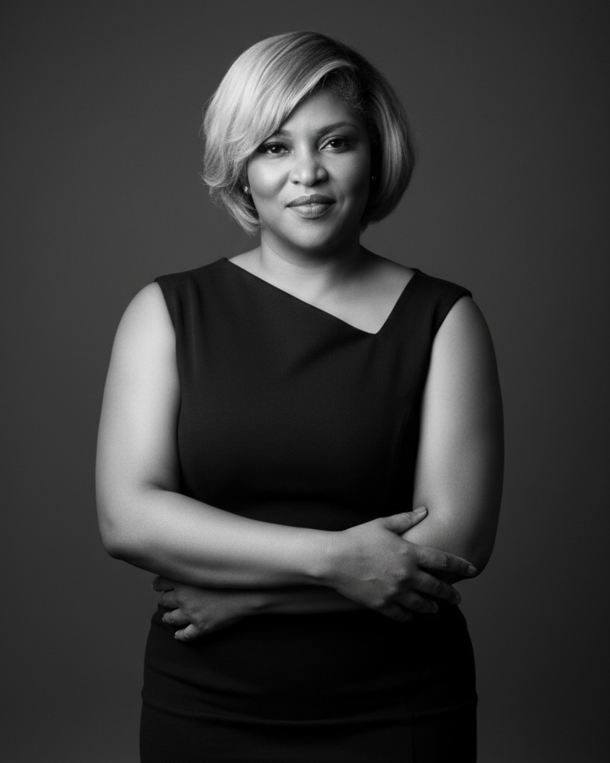
Elizabeth Frederick’s father worked for an international organization, which meant the family spent time living in other countries, including Bangladesh and Tanzania. While abroad, Frederick observed the injustices people faced, especially women and children.
When she returned to New York, she noticed the same injustices, but here it was people of color and low-income people on the receiving end.
“That’s really what fueled my drive into social justice,” Frederick says.
Her social justice work brought her to Avenues for Justice, where she has worked for nearly two decades and has been executive director for two years. AFJ is a justice reform nonprofit that offers free court advocacy services and wraparound enrichment services for workforce development, education and mental health.
“My current journey right now is really balancing motherhood, justice reform, community and executive leadership and taking negative experiences and then turning them into positive experiences,” she says, “because I want to be very mindful of how I lead and how it shows up to my daughter.”
Just last month, Rep. Dan Goldman presented AFJ with a $250,000 federal grant for its HIRE Up program, something Frederick had been seeking for years.
“I came to the determination in these two past years that I don’t need to fill someone else’s shoes; I wear my own,” she says. “My shoes are just getting warmed up.”
Maggie Fronk
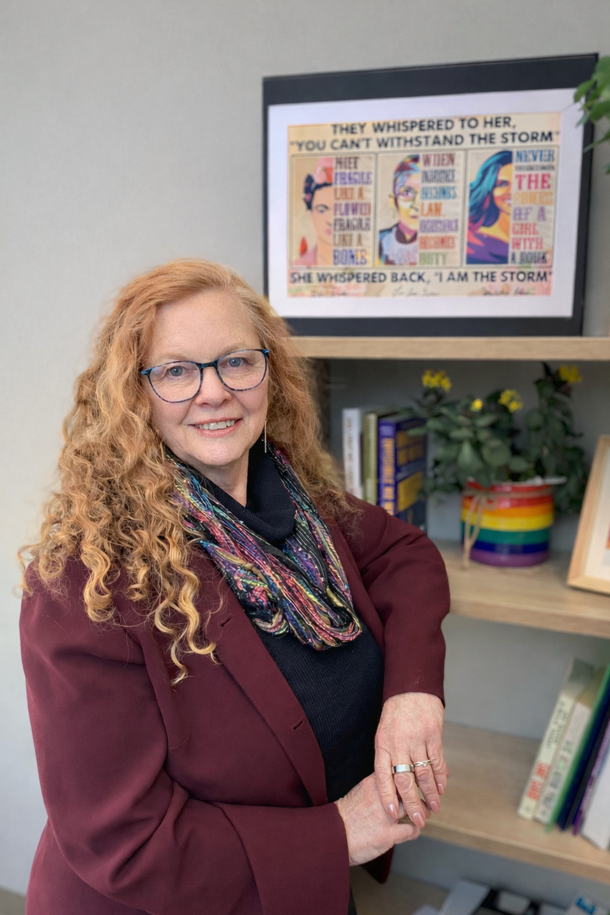
A domestic violence survivor once told Wellspring’s Maggie Fronk that her abusive relationship felt like a cold, gray, never-ending winter – but when she got to Fronk’s victim services nonprofit, it felt like that first warm, hopeful day of spring.
Whenever the first day of spring hits, Fronk thinks back to this interaction and how her organization has been able to help people escape the worst situations of their lives.
“Every single day, my advocates help someone who didn’t know where to turn next, who might have been living in fear, who might have just every day been diminished and walking on eggshells at home,” she says. “Then they walk into our office and they see a pathway to a better life, and every day we help people on their journeys to a better future.”
Wellspring offers services for people suffering from domestic, sexual, partner and elder abuse. Fronk has led the organization for 23 years, overseeing operations, grant writing and stakeholder relations.
Fronk previously worked with people facing mental illness, AIDS and homelessness. It’s a chance to help people when they need it most that drew her to the field.
“I’ve always been committed to this sector and to helping people in need, and being a voice for people who aren’t able to be that voice for themselves,” she says. “Most people hearing about the work of Wellspring think that this must be a really depressing place to work. Yet our office is full of lightness and hope.”
Carrie Meek Gallagher
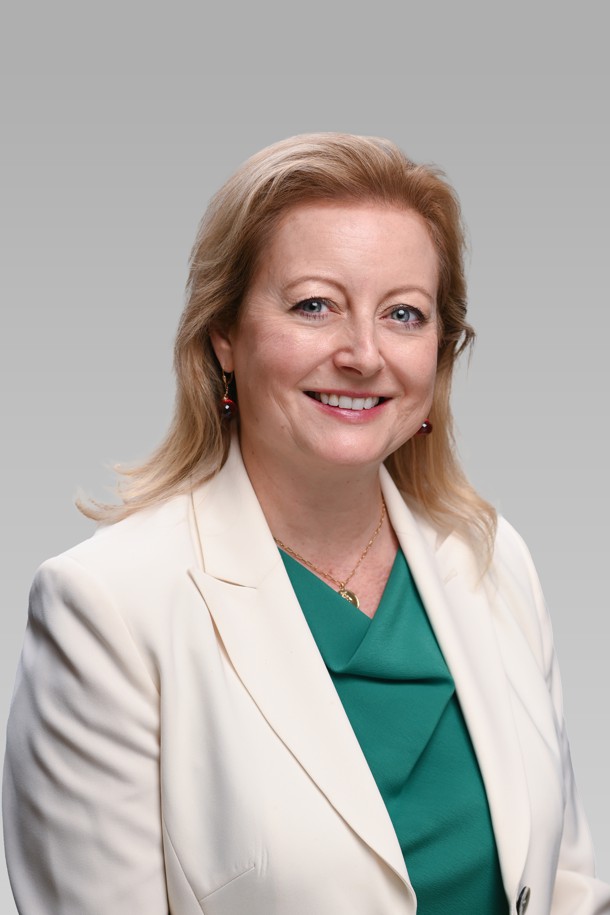
A fervent lover of the environment, Carrie Meek Gallagher became a vegetarian in middle school after learning about the degradation of rainforests by the cattle industry.
That passion has been a motivating force in her career, as she works at the intersection of government, environment and energy. Gallagher was appointed CEO of the Long Island Power Authority – the nonprofit electric transmission and distribution system serving Long Island and the Rockaways – in June, making history as the first woman to hold the role.
“I really do want to have a meaningful, measurable impact on the place that I call home here (on) Long Island and, on a bigger plane, New York state,” she says, “and I feel like I can do that right now by ensuring reliability, safety, equity and sustainability, all while maintaining affordability.”
Gallagher – and by extension, LIPA – is focused on ensuring the community gets affordable and clean energy that is delivered reliably in an increasingly unstable environment. She oversees the system’s performance and strategic policy while also planning for the long term.
To that end, LIPA has been spending $1 billion annually on modernizing the utility infrastructure. The South Fork Wind farm, the first commercial-scale offshore wind farm in the country, was approved by LIPA and has been operating successfully. LIPA has nearly 100,000 customers with solar panels.
“Electricity is something that touches everybody’s lives every day,” Gallagher says. “So, right now, that really inspires me in a thoughtful, strategic, meaningful way.”
MaryJo Ginese
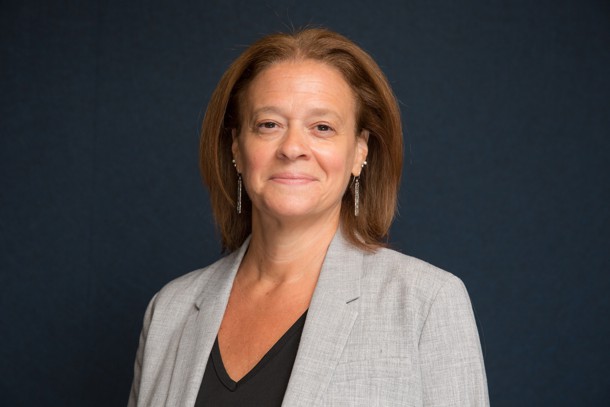
Earlier in her career, MaryJo Ginese worked with a student with cerebral palsy. She was able to get him a motorized wheelchair and a service dog to help him navigate school and the world more easily. The student went on to become a teacher and still stays in contact with Ginese.
This story stands out to her as an example of the impact schools and the United Federation of Teachers can have when they advocate for students.
“When you really go the distance with a given child, you watch them flourish and go out there in the world,” Ginese says. “Those are the kind of things that definitely make it well worth the effort.”
As the vice president for special education at the UFT, she works on special ed policy and educates school staff on their contractual rights and how to advocate for their students and themselves.
“I would love to see schools just get stronger and more equipped, that we see more kids getting the services that they need,” she says.
One of her recent successes that will help schools is helping to establish a contractually mandated special ed regulation training, so all schools and staff understand the rules.
“I feel that a lot of times, we don’t hear about the special ed students or those who work with them,” she says. “I want them to know I see them, I hear them. I want to be their voice, and I want to watch them succeed.”
Clementina Jose

Early in her time in education, Clementina Jose was transferred to a new school. When she entered her classroom, she found an autistic child having an episode. But the head teacher instructed her to ignore him because he was “misbehaving.”
This moment illustrated to Jose the importance of inclusive classrooms with staff trained to work with neurodiverse students and those with disabilities.
“It just goes to show how there is a lack of psychoeducation, there is a lack of resources, there’s a lack of understanding, especially in underserved communities,” she says. “That causes a lot of students to not be served and, for me, I want to fill those gaps.”
Jose has stuck with this mission ever since. She’s now LaGuardia Community College’s program manager for the ACCES Pre-Employment Transition Services program, which helps students with disabilities with academics and career preparation. Participants get life skills coaching, help finding internships and academic support.
“We support students to just really get these critical skills that they need to become all that they hope to be,” she says. “I often say that the goal of our program is to ensure that students with disabilities thrive, not just survive.”
Jose is also a speaker and consultant on higher education issues. Last year, she led a presentation at New York University about how schools can support Black girls’ mental health, and in 2024 she spoke to then-President Joe Biden’s Cabinet about education.
“I love higher education,” Jose says. “I want to stay within higher education and continue to grow.”
SenYon Kelly
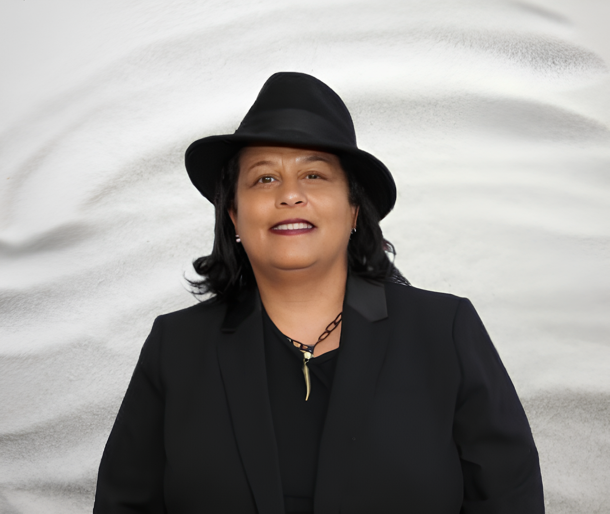
From the time she was about 6 years old, SenYon Kelly knew she wanted to have her own museum. She would collect music and movie memorabilia, and tell her family and friends about the museum she would one day open to showcase her collection.
Little did she know that she actually would help launch a new museum – The Hip Hop Museum, opening in the South Bronx this fall.
“My passion for preserving hip-hop, my passion for self-expression through the arts and music and preserving the culture is why I’m where I am now,” Kelly says.
Kelly, who has a background in finance and business administration, has been part of the museum’s team since 2017, though it’s been in development for even longer. In her role, she works with the human resources, marketing, technology and finance teams to make sure everything runs smoothly.
Her overarching goal is to ensure the new cultural attraction accurately and inclusively reflects and preserves hip-hop’s history, culture and impact for generations to come.
This has been a big undertaking, however, as the museum is being built from the ground up. The exterior is completed and the hype is building; Smithsonian Magazine named it as one of the most anticipated new museums of 2026.
“The idea is for the museum to be seen as an international and national institution, along the lines of the Smithsonian and the Guggenheim and the Met,” Kelly says. “That’s how we want to be perceived.”
Cynthia Kleinbaum Milner
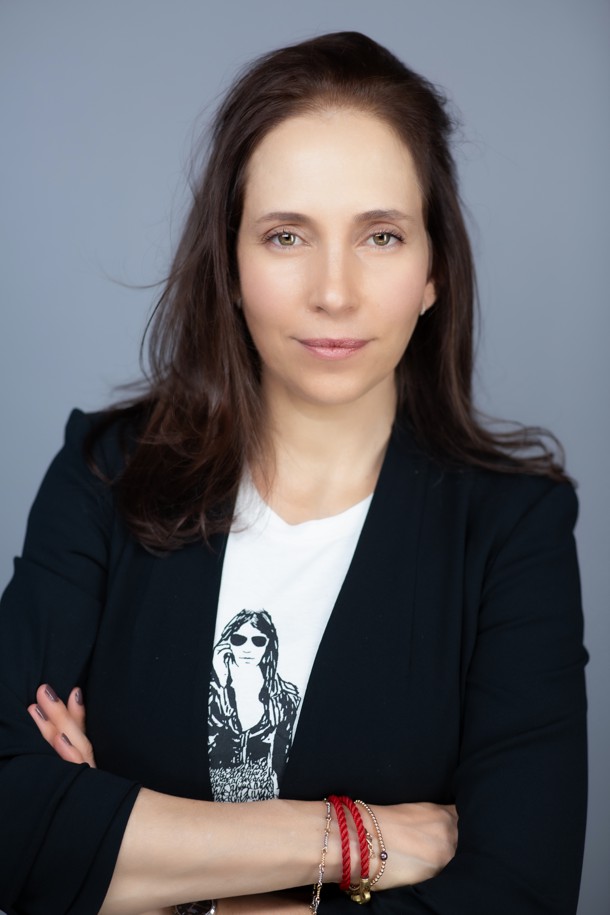
When Cynthia Kleinbaum Milner was growing up in Mexico, her father was a successful entrepreneur – but today she believes he could have fared far better if he’d had support from an organization like New York Professional Advisors for Community Entrepreneurs, where she volunteers.
NYPACE is a nonprofit that offers pro bono consulting services to entrepreneurs in underrepresented communities.
“I want people like my dad to be able to build businesses that outlive them,” she says. “I think this is how you do it, by giving access to the most competent, professional advisers so their business can thrive and survive them.”
Kleinbaum Milner – a successful business leader herself as the chief commercial officer at sports platform GameChanger, which is part of Dick’s Sporting Goods – is passionate about helping local business owners develop their ideas and become successful. She feels grateful for having many mentors throughout her career.
“I want to give back,” she says. “It just feels like it’s part of my purpose in life, to leave the world in a better place.”
She hopes to see more volunteers joining NYPACE.
“I admire a lot of people who are entrepreneurs, who can have an idea and the resilience to bring it to life, because there’s a lot of setbacks,” she says. “I consider it a privilege to be able to see from close how they operate and how they overcome those setbacks, and how they are so clear-minded on what they want to achieve.”
Channon Lucas
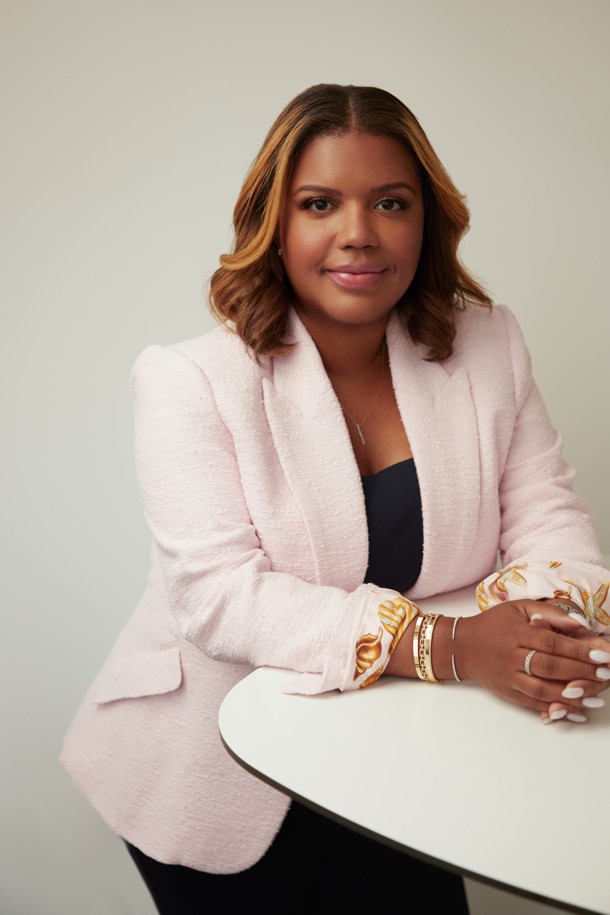
In the late 1800s, the woman who would become known as Mother Cabrini emigrated from Italy to New York City and dedicated herself to serving the poor, creating orphanages, schools and hospitals wherever she went.
Today, the Mother Cabrini Health Foundation carries on her legacy of serving New York. Channon Lucas is the chief administrative officer of the foundation, which provides grants to improve health outcomes and bridge gaps in services.
“We look for dignity in every human regardless of if you have a mental health challenge or substance use issue,” she says. “Radical empathy calls us to act on that and how we could be better citizens and take care of each other.”
The Rochester native began her career in political campaigns, before working for the Archdiocese of New York for over a decade. It was through her connections at the Archdiocese that Lucas was introduced to the foundation.
In her current role, Lucas oversees foundation culture, the legal team and facilities, as well as running the communications and public relations team. The Mother Cabrini Health Foundation, founded in 2018, is the largest health-focused private foundation in the state.
Last year, she helped the foundation launch its first large-scale nursing initiative, which invested $51 million in 13 safety net hospitals to improve retention and create a learning collaborative.
“I think that service trajectory of how I can best help and serve others has been the through line throughout my career,” Lucas says.
Sandra Márquez
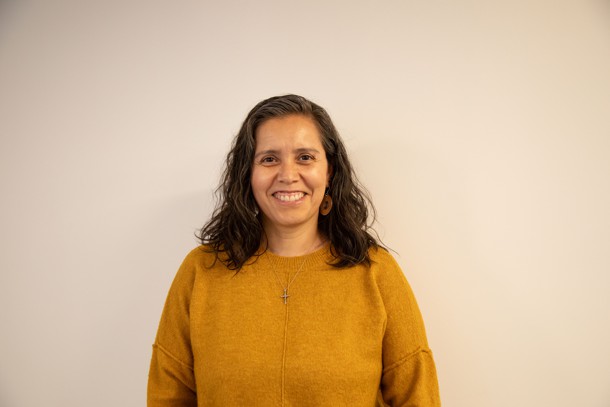
For Sandra Márquez, her role as an assistant vice president at the Volunteers of America-Greater New York doesn’t feel like work, because of how closely it aligns with her personal values.
“More times than not, it doesn’t feel like a job,” she says. “It feels more like a calling; it lines up very nicely.”
As part of her “calling,” Márquez is responsible for the nonprofit’s supportive and affordable housing, shelters and group homes, as well as annual compliance, leasing and recertification. Its tenants also receive services from the program side of the organization, such as for mental health or senior care.
“It’s a beauty and a blessing,” she says of her work and the immediate impact it has on clients. “Knowing that we are making a difference for the community, for the tenants.”
A relatively new building VOA-GNY built in the Bronx is almost ready to be opened for leasing to new tenants, which is something Márquez and her team are very excited about. Moving forward, it’s her goal to continue to expand her department and the tasks it’s responsible for. She wants to move marketing and leasing in-house for her team.
“It’s really rewarding to see the other side of the tenants – not just the social services and the clinical perspective of it – but what having a home means to them and the joy and the pride that they take in coming into a space of their own,” she says.
Tara L. Martin
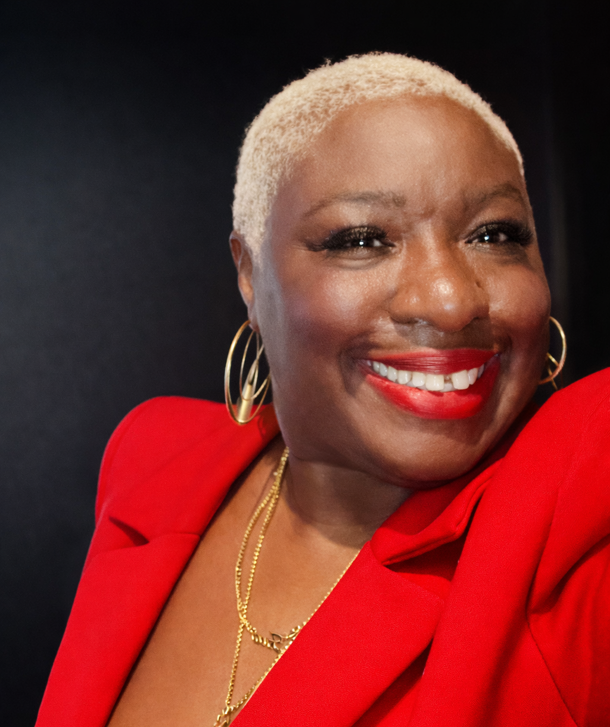
Tara L. Martin starts every day by saying affirmations to herself that remind her of who she is and what her purpose is.
“I use that as my guiding metric throughout each day,” the veteran consultant says. “I’m not superwoman, I can’t take on the universe. I just have to do a little bit and try my best and make sure that I leave the world a better way than how I received it.”
Martin achieves this through her boutique strategic development and social impact firm, TLM Strategic Advisors. Her firm serves unique clients with whom Martin feels she can drive real change, including the Amazon Labor Union, Hip Hop Alliance and the NFL Alumni Association.
She’s passionate about being a voice for those who need it and lifting up other women and people of color.
“My broader purpose has always been to be a voice for the voiceless, to create access and opportunity for those who have none and to dream big dreams for not only my clients, but for the communities that I represent,” Martin says.
As a mentor to younger women, Martin warns against a mindset of scarcity. Believing that there’s limited opportunities to go around for women applicants sparks competition, when what’s needed is togetherness.
“Go into whatever it is that you want to do with the understanding and the belief that there’s more than enough room and opportunity for all of us, and that everybody can win,” she says.
Editor’s note: Tara L. Martin is a member of City & State’s advisory board.
Jill Mastrandrea
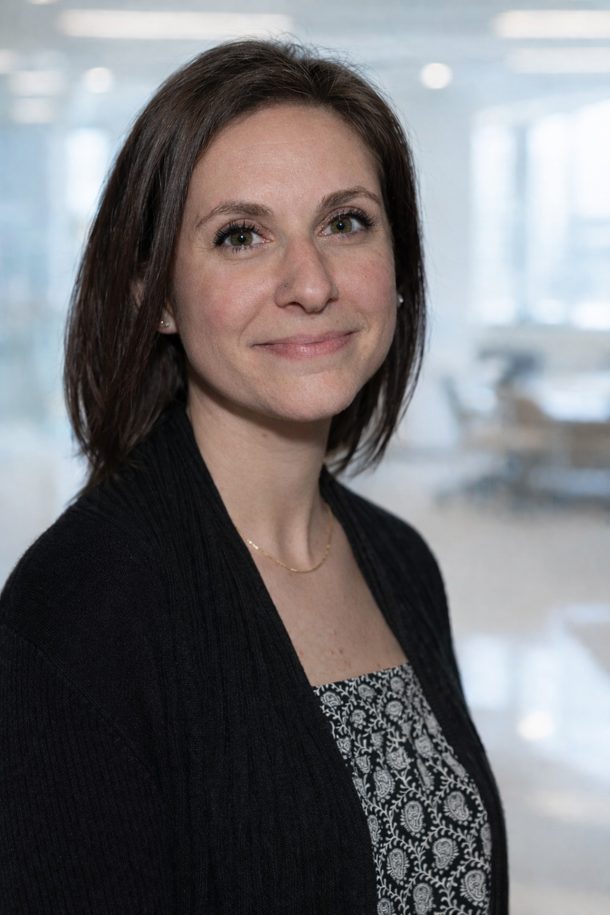
To Jill Mastrandrea, one of the most important lessons for anyone in mental health services is learning to trust the process.
As the director of program innovation at the New York Psychotherapy and Counseling Center, she knows how much change impacts the field, which is why the process of how things get done is just as important as the deliverables at the end.
“There’s so much in the process that can be helpful for us in our learning and development, and I hate to see people rush through that,” Mastrandrea says.
NYPCC reaches more than 25,000 people a year and targets underserved populations. With years under her belt as a licensed mental health counselor, Mastrandrea is responsible for spearheading the center’s operational growth and development, in addition to acting as the bridge between the executive team and clinical staff.
In fact, it’s the staff who inspire her work.
“I’m surrounded by people who challenge me and who make me want to do better,” Mastrandrea says. “It’s really the people here that have allowed me to grow and think and be creative and explore and make mistakes and learn from them.”
On the flip side, she said she loves helping staff grow and in turn seeing how that impacts clients.“Being a part of the growth and development of someone else is just so rewarding,” Mastrandrea says. “I think that it’s what keeps me excited about the work that I’m doing.”
Shelley Mayer
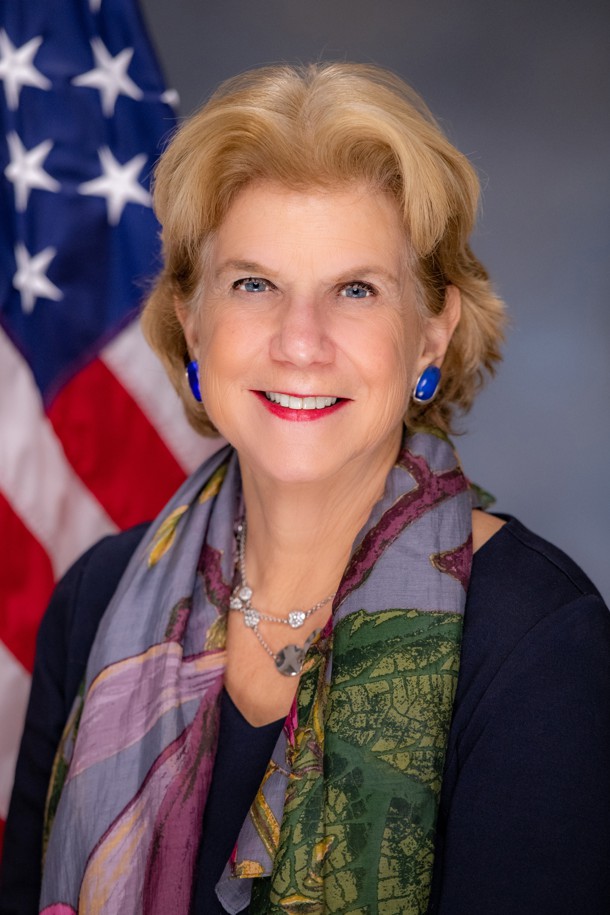
The night before she spoke with City & State, Westchester County state Sen. Shelley Mayer met with the mother of a man who was taken into custody by U.S. Immigration and Customs Enforcement. The mother was heartbroken and Mayer wanted to help in any way she could.
“It’s personal to me as a mother and a grandmother and someone who cares about how people feel about their loved ones,” she says. “I try to do all I can to help her, her son and his family.”
This interaction exemplifies Mayer’s dedication to her constituents and neighbors. She has served in the state Senate since 2018, and she was an Assembly member and assistant state attorney general before that.
“I pride myself on really serving the people of my district in a very proactive way, being present, responding to every call and email if we can and really trying to make government work for people,” she says.
As the chair of the Education Committee and a member of several other committees, Mayer helped achieve full funding for Foundation Aid, state money owed to public schools that wasn’t fully paid for over 15 years.
Mayer went into public service because of a strong desire to make a difference in people’s lives.
“I’m a true believer in our democracy,” she says. “It doesn’t work perfectly, but it is our job to try to make people’s lives better and, if we have the ability, it’s quite an honor. I feel fortunate I have that opportunity to do so.”
Juliette Morris
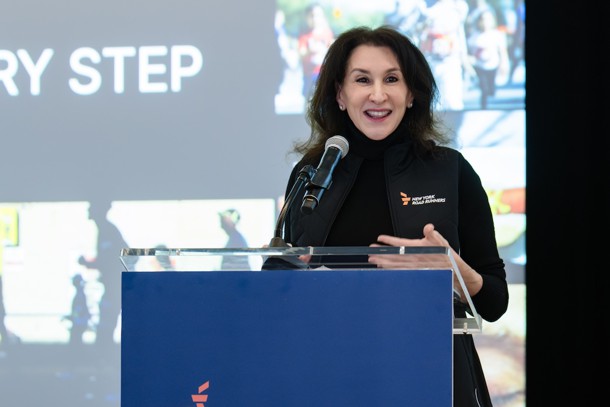
Juliette Morris is part of the team that has New York City on the run.
The New York Road Runners is a nonprofit centered around improving mental and physical health through running. NYRR organizes events and races for runners of all levels, most notably the annual TCS New York City Marathon, the world’s largest marathon with nearly 60,000 finishers.
Morris handles marketing and communications for the organization, promoting NYRR to participants and potential runners and sharing the stories of individual athletes.
“It inspires me to see the joy that those that run with us have when they cross the finish line, the pride that they have in the work that it took to even get to the starting line, not to mention getting to the finish line,” she says.
Morris’ team launched a new content studio to capture many stories, resulting in two documentaries.
Additionally, NYRR rebranded itself in January, with a new logo – Lady Liberty’s torch – and slogan – “Believe in Every Step” – to be more welcoming to runners of all abilities and levels. The old logo was a physically fit man running, which only represented one demographic.
“We feel that ‘Believe in Every Step’ opens up the aperture for us and helps people who may not even see themselves as runners today see that they can have a place with New York Road Runners,” Morris says. “Regardless of how big or small that first step or stride is, it is a step to a healthier life.”
Kaitesi Munroe
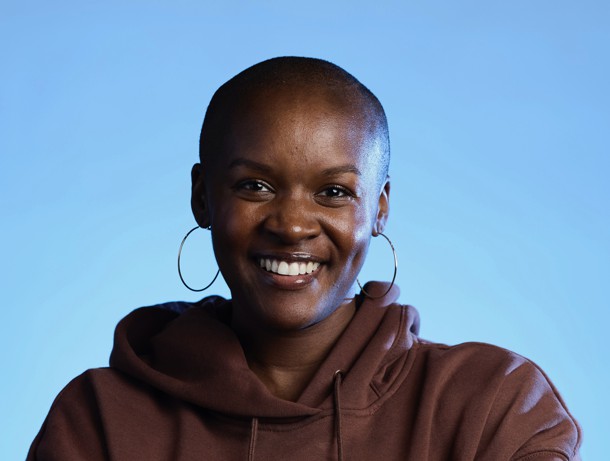
Kaitesi Munroe’s parents wanted her to be a doctor, prompting her to study pre-med in college – until she switched to political science, a topic more aligned with her interests.
It was a good choice, as Munroe has enjoyed a successful career at the intersection of public policy, corporate strategy and community impact. Last year, she became a government and public affairs principal at Nike, where she leads government relations across the state, advocating for policies and programs to better the future of youth sports.
“One of my main goals is to continue blending heart, strategy and creativity to turn bold ideas into meaningful change,” she says, “all while giving back to the communities that raised me to be who I am.”
Munroe has done just that. Around the time that Roe v. Wade was overturned, Munroe experienced a late-term pregnancy loss. When she was discharged, she received little information about her recovery, but luckily she had a doula to guide her – a privilege many don’t have.
As a result, she spearheaded Ava’s Law in the state Legislature, named after the daughter she lost. The 2023 law requires health care providers to inform and support parents experiencing pregnancy loss or stillbirth.
Munroe now has a young daughter who makes her even more motivated in her work.
“What inspires me is doing work that will make my daughter proud when she’s older,” she says. “That’s been a real driving force. I just want to make the world better for her and her peers.”
Genny Ngai
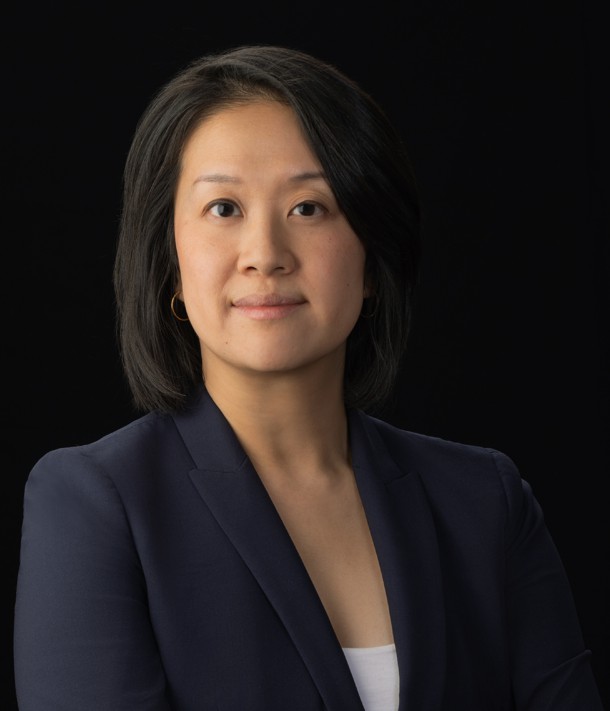
People and companies seek out Genny Ngai in their worst moments.
She’s a trial litigator at the law firm Morrison Cohen, where she has been helping to build the white-collar and government strategies practices. Her work focuses on defending companies and individuals against civil and criminal governmental investigations at the local, state and federal levels – which can make or break companies, especially ones in the emerging tech space.
“Clients need to be armed with a really good defense attorney to help them get out of whatever situation they’re stuck in,” Ngai says. “It really takes time, and it takes someone who understands the processes.”
Ngai and her team also help clients navigate corporate deals and negotiations with the government.
“We’re trying to offer a full-service, government-focused practice group that basically touches on almost every area that a client needs,” she says.
Prior to joining the firm, Ngai spent about five years as an assistant U.S. attorney in the U.S. Attorney’s Office for the Eastern District of New York. The Georgetown Law graduate prosecuted crimes relating to financial fraud, money laundering, sex trafficking and other matters. While she feels the experience taught her a lot and allowed her to work on high-profile cases, she ultimately decided to pivot to private practice.
“I wanted to focus more on how to advise clients proactively to avoid getting into trouble,” she says. “There’s ways to help them proactively mitigate risk. I’m all for that.”
Ellen O’Hara
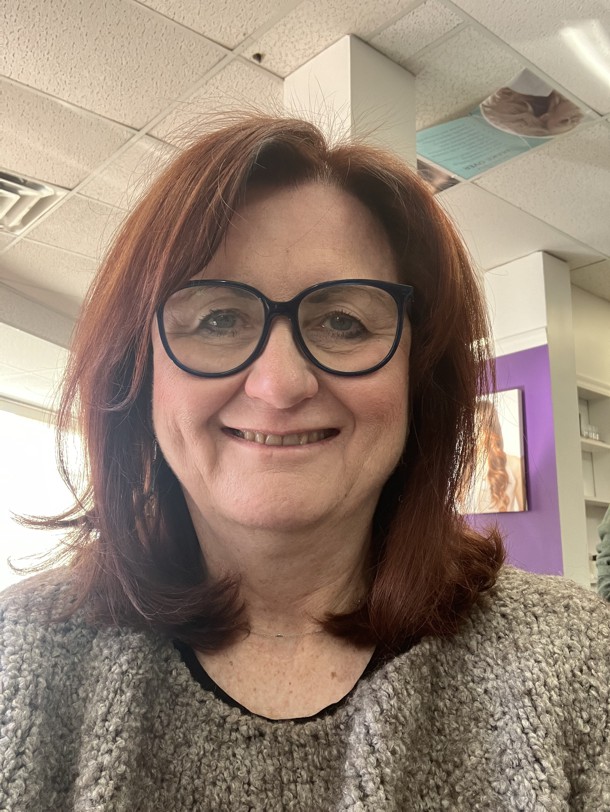
After spending nearly four decades with the social services nonprofit Good Shepherd Services, Ellen O’Hara recently retired from her role as senior vice president.
But it’s not the end for O’Hara’s involvement in the nonprofit sphere.
Following a planned break to take some time to regroup, O’Hara intends to get into social work consulting and supervising to continue passing on her knowledge.
“It has been the most rewarding experience and I am absolutely grateful for it,” she says.
In her time at Good Shepherd Services, O’Hara helped the organization create a better environment for families. As senior vice president, she oversaw six prevention and two violence survivor programs, plus the coordination program. She also started “reckoning work” within the nonprofit to evaluate the harm its own programs may have unintentionally caused clients, such as through custody removals, and how to improve.
In December, her impact was recognized by the New York City Administration for Children’s Services with a Lifetime Achievement Award.
What drew her to the field was an interest in human behavior and understanding people, especially as it relates to caring for children. While studying psychology in college, her professor introduced her to social work – tying together psychology, biology and the environment – which clicked for her.
“That has always been a very, very inspiring area for me, and also realizing with better environments or situations or opportunities, people can reach their fullest potential,” O’Hara says.
Emma Pfohman
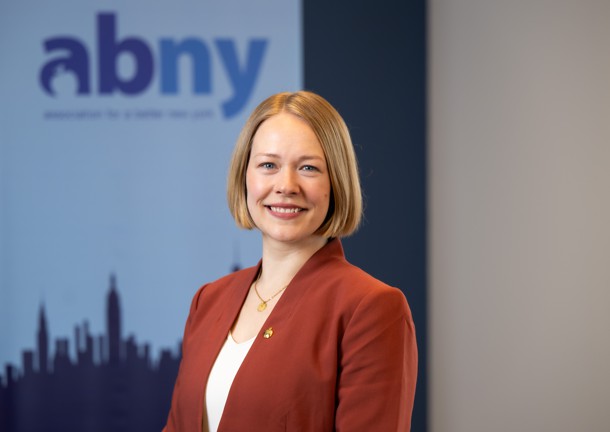
With a mother in education, a father in journalism and siblings in government and in the military, Emma Pfohman hails from a family that considers public service a calling.
“There are so many challenges that the city faces, but I am forever an optimist, and I think, if you get enough of the right people in the right rooms, then these problems are solvable,” she says. “There’s really no limit to what we can accomplish.”
This optimism serves her well as the CEO of the Association for a Better New York, which convenes more than 250 business, nonprofit, cultural, labor and civic leaders. ABNY aims to connect and expand the civic community, build coalitions around policy issues like affordability and public safety, and mentor the next generation of leaders.
Pfohman, who’s been running the organization for around 10 months, is responsible for setting its strategic vision and building relationships.
ABNY’s new initiative, the World Cup for All Community Grant Program is especially exciting to Pfohman. ABNY plans to give $5,000 to $15,000 to community-based nonprofits that deliver fan engagement activities or youth programming related to the FIFA World Cup, with several matches, including the final, set to be held in the region this summer. The goal is to ensure all New Yorkers can enjoy the economic and social benefits of the event, even without attending.
“Government can’t solve many of these challenges alone, and we really need a whole-society approach,” she says. “I think ABNY brings that lens.”
Regina Poreda Ryan
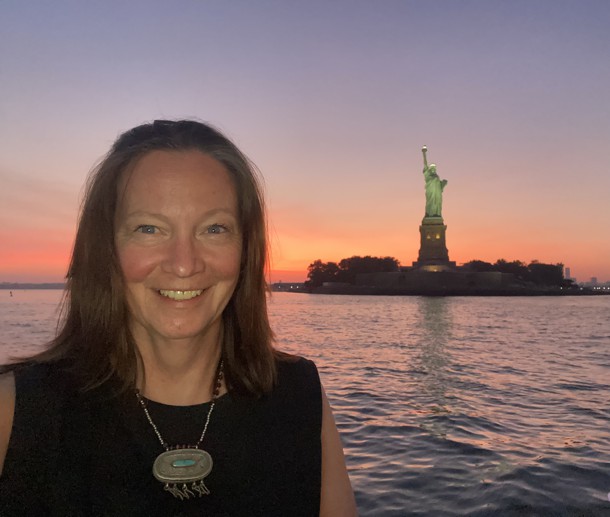
Regina Poreda Ryan comes from a family deeply involved in the public sector and with labor unions. Growing up in this environment was one of the things that sparked her passion for working with government.
She’s currently managing director at the Top 10 New York City lobbying firm CMW Strategies, which represents clients ranging from big corporations to small nonprofits. In her work, she helps nonprofit clients with government relations, funding requests and policy advocacy.
“I’m interested in making New York a better place for people to live and making government work better, and I’ve found that that is something I can help do on the lobbying side, as well as you can do it on the government side,” she says.
In addition to representing her own clients, the Barnard College graduate provides advisory and leadership support across the firm. She’s an in-house budget expert, especially as it relates to New York City, so she helps with applications for discretionary funding and big-picture fiscal analysis. Her goal is to build connections with the new administration to help her clients.
Poreda Ryan also likes to help mentor and train staff to guide them in their professional growth. Her advice to young professionals is to ask a lot of questions and understand what it is that they don’t yet know.
“All it takes is a question, a connection, a call, an email, and you can open up a world of resources that can support you,” she says.
Isamar Puello
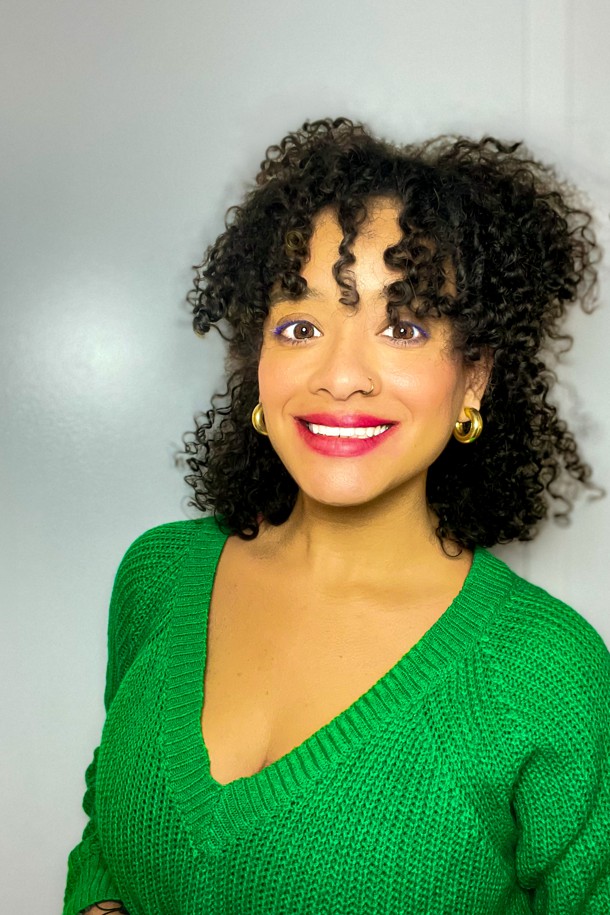
During the COVID-19 pandemic, Isamar Puello and three friends founded the grassroots movement The Fridge Girls in response to the many people who were in need. They collected surplus food from City Harvest and Hunts Point Cooperative Market and dropped it off at public fridges across New York City.
The endeavor was Puello’s foray into food justice, a space the Bronx native still occupies as the program manager of Feeding Our Neighbors, a food pantry initiative of Catholic Charities Community Services.
“We just help support the community by keeping them fed and making sure that they have the tools they need,” she says.
She manages two of the program’s pantry sites in East Harlem and Washington Heights and helps support many of the other sites that are connected through church parishes. Puello feels that food insecurity is often left on the backburner or even treated as a political game, instead of being taken seriously.
“You think it doesn’t make a difference, but it does,” she says.
Puello is also pursuing a master’s degree in food studies at New York University.
Her goal for Feeding Our Neighbors is to expand its initiatives, such as a mobile food pantry and school-based pantry closets, to help even more people.
“I want to do better for them, for us,” she says. “I’m just sick and tired of seeing my community be left behind, so if there’s anything I can do to help, to show them that they’re not alone, I’m going to.”
Rossana Rosado
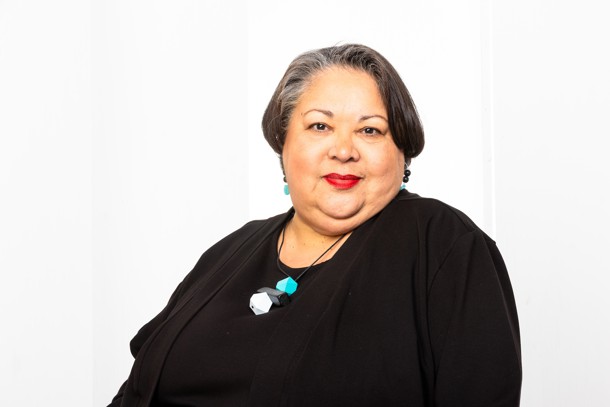
When Rossana Rosado was in elementary school, she stood up to the class bully on behalf of a student with a disability. While the confrontation got Rosado in trouble with her teacher, she gained a new respect from classmates for protecting others.
“I love the feeling of fighting for someone who couldn’t fight for themselves,” she says. “That became my life’s mission, to take on fights that weren’t mine.”
This is how she sees her work as the commissioner for the state Division of Criminal Justice Services, which she has led for four years. The division provides resources for those working in the criminal justice system apart from the courts, including funding training, special programs and crime research. Prior to entering the criminal justice space, Rosado was the state’s secretary of state for nearly six years following a 30-year career as a journalist.
Crime in the state is at a historic low currently, Rosado notes, which she says is the result of evidence-based methods for crime reduction.
“I think it’s important to let communities know that we are safe, that we are a safe state,” she says.
In addition to improving public safety, Rosado is focused on community justice – helping to repair communities harmed by violence – and preventing recidivism.
“I am inspired by the sheer will of people to come back from their worst mistake in life,” she says. “I want us, as a society, to really give people a second chance once they have done what we asked of them, which was to serve their time.”
Katrina Schermerhorn-Moody
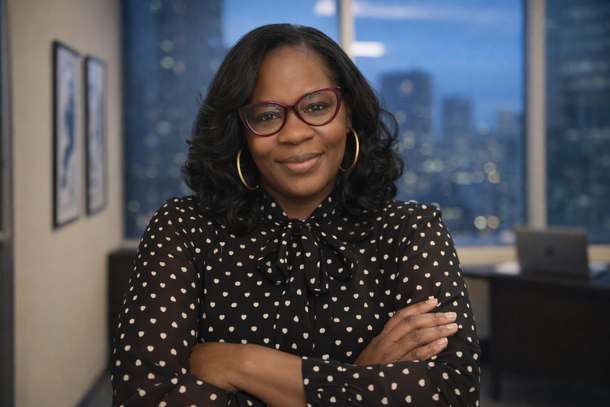
As the first Black woman to become the assistant executive director for children, youth and family services at Westchester Jewish Community Services, Katrina Schermerhorn-Moody deftly manages a range of offerings for members of the local community.
She and her team serve victims of abuse, domestic violence survivors, teens dealing with mental health problems and more, all over the county. Her department is also home to Westchester’s only LGBTQ+ youth program.
“With programs like this, kids can be successful,” Schermerhorn-Moody says. “Families can be successful when they’re able to lean on systems.”
She has worked with children and families since 1999 in various roles, having come to WJCS five years ago. In previous roles, her work touched on foster care, prevention, case management and early childhood.
She’s currently pursuing a doctorate in management, with a focus on policy and procedure. Her dissertation is exploring how diversity, equity and inclusion practices in human service organizations affect women’s access to leadership roles.
At WJCS, Schermerhorn-Moody’s priority – aside from continuing to provide critical services to the community – is to provide the training and space that is needed for her staff to develop.
“People work at places where they feel they can grow, but also do the things that they’re passionate about and they love,” she says. “So to be able to successfully foster that within my unit and keep up a healthy balance is going to be very important. You want to do the things that fulfill you.”
Claudia Schrader
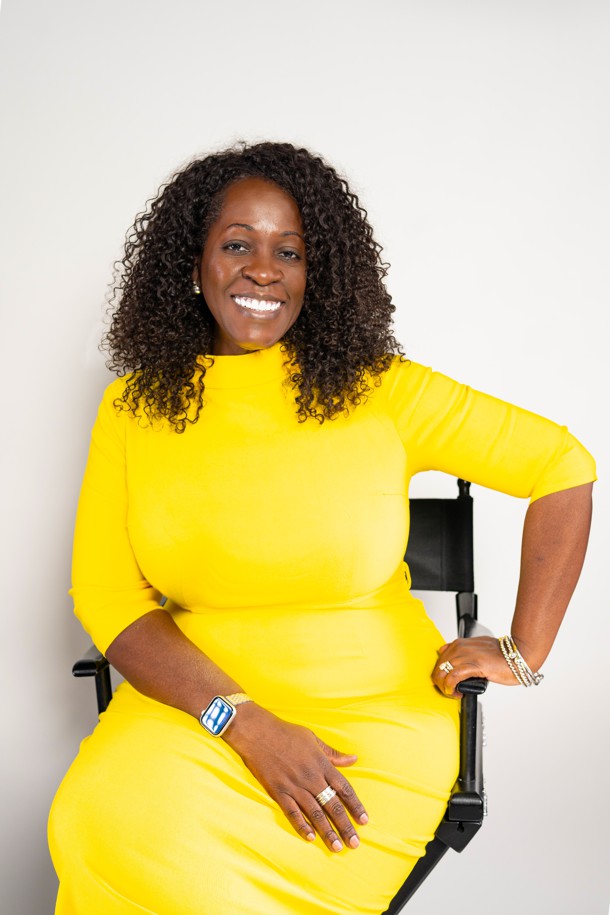
Claudia Schrader is York College’s chief motivator and organizer.
As the CUNY school’s president, she manages staff, academics, enrollment, facilities, student life and more – but what’s most important to her is being the support system for students and faculty alike.
“My role is to ensure that we fulfill our mission of educating students to not just walk across the stage and graduate, but to have careers where they can really make, at the minimum, a living wage and an impact in the communities they live in, to be civically engaged and to be great citizens of the world,” Schrader says.
Since she took the helm on an interim basis in 2024, the school has made a number of improvements. The college’s cafeteria was reopened to provide meals and a gathering space for students after being closed for five years. Enrollment and retention have improved this semester. The Jamaica, Queens, institution secured more than $2 million from Rep. Greg Meeks for STEM research. Schrader is also leading a campus refresh that includes repainting, disability upgrades and sprucing things up.
“How a place looks can affect morale,” she says. “It’s an academic home away from home.”
With a background in special education and a love of school growing up, Schrader started her higher education career as an adjunct before teaching full time.
“I think higher ed was maybe always some sort of inner calling to be in a space where I can teach and help students to grow and fall in love with education,” she says.
Amber Shah

Though Amber Shah has only worked at the Emma L. Bowen Community Service Center for a few months, she has never been more aligned with an organization where she works.
“I’ve never felt more at home than I have at Bowen,” she says. “The people here are so wholesome. Everyone has the passion and the dedication.”
The organization, located in Harlem, provides a range of services for people dealing with mental and behavioral health issues, developmental disabilities and addiction. Among the programs offered are therapeutic preschool, outpatient and school-based support for children and teens, and a residential treatment facility. Bowen serves more than 5,000 people across New York City and is toiling to further reduce barriers to care.
Shah came aboard after working in larger systems and organizations, including the Community Health Care Association of New York State and ABA Centers of America, where she was able to see what works and what doesn’t.
“When systems work, people feel that dignity,” she says. “When they don’t, people feel invisible. I lead with that belief that good intentions aren’t enough. Institutions have to be clear, accountable and worthy of trust.”
Shah is passionate about serving underresourced populations, providing them the support they need without being condescending or paternalistic. She’s driven by the belief that people shouldn’t have to be exceptional just to be treated fairly.
“The work is about dignity, not charity,” Shah says. “People don’t need saving. They need systems that work.”
Jessica Klos Shapiro
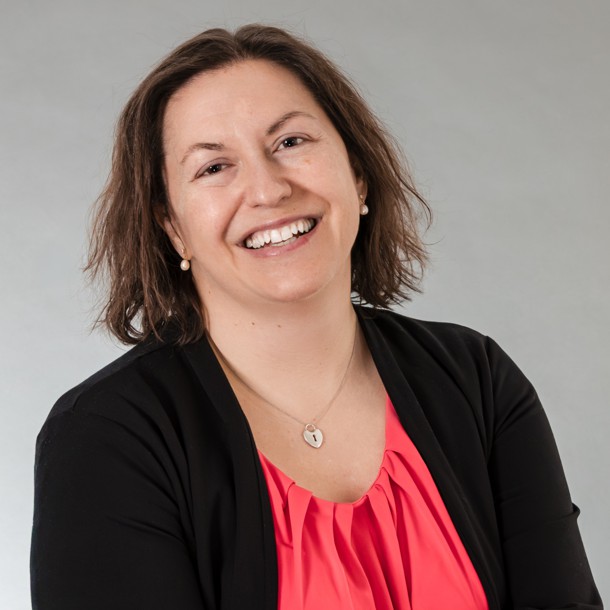
With Gov. Kathy Hochul’s announcement that the state will roll out universal pre-K, this year is going to be big for Jessica Klos Shapiro.
Shapiro is the senior director of policy and community education at the Early Care & Learning Council, a state organization representing 35 child care resource referrals. Advocating for expanded access to affordable child care across the state is at the core of her job, so the governor’s announcement was a big win.
After all, early childhood care, such as day care, 3-K and pre-K, is critical to the economy, as it allows more parents to work and establishes a strong foundation for children’s education and future.
“Our child care system truly keeps the community running,” she says. “It’s the workforce behind the workforce.”
The Early Care & Learning Council provides members with technical assistance, connects with businesses to increase child care options in communities and advocates for legislation that expands care opportunities. Shapiro oversees these policy initiatives.
The state-level child care expansion push isn’t Shapiro’s only success of the past few years.
Last year, she successfully campaigned for a $3 million investment to establish a child care substitute pool. Currently, many providers don’t have substitute teachers and have to close when staff members call out, putting parents in a tough spot.
“When I look at my nieces and nephews, I see the difference that early education programs have made in them,” she says. “It reminds me of why I do the work.”
Lisa Smith
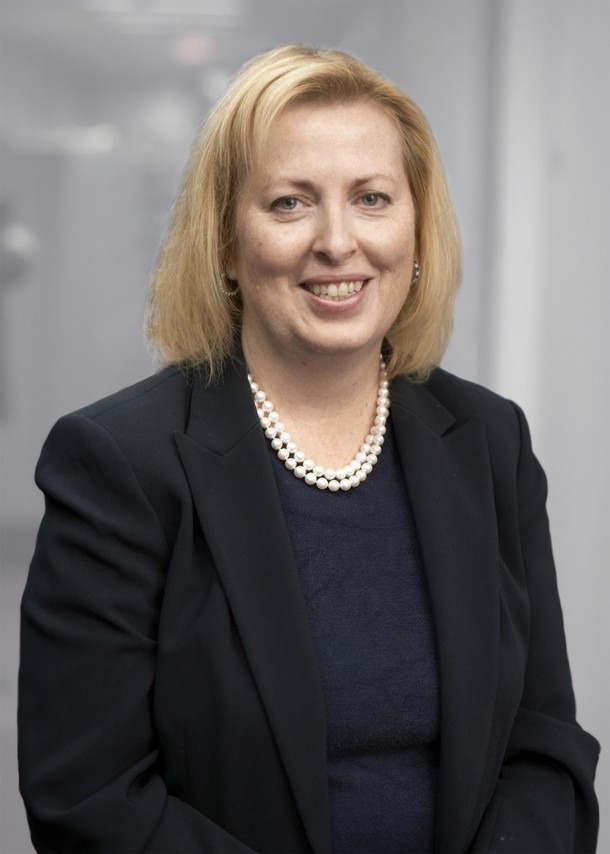
Lisa Smith’s favorite part of her job is solving people’s problems.
She’s a partner at the full-service law firm Phillips Lytle, leading its Product Liability and Mass Tort Litigation Practice Teams. She often represents hospital systems and manufacturing companies.
“What I love most is being able to solve our clients’ problems, and doing it in an environment where we have a lot of smart people and being able to draw on everyone’s expertise in a multidisciplinary way to address the issues our clients face,” Smith says.
Additionally, she is a member of Phillips Lytle’s Governing Committee, which sets its strategy across the firm’s offices in New York, Chicago, Washington, D.C., and Canada.
One thing that Smith is especially passionate about is her work outside of law. She’s an active member of her community, serving as a board member for the Buffalo Philharmonic Orchestra Foundation and LifeSciencesNY, and as the vice president of the board of the Charter School for Applied Technologies.
Smith is also the co-founder of the breast cancer charity The Pink Pillow Project, something she hopes to be able to dedicate even more time to moving forward.
“It’s important for people to leave an entity better than how they found it,” she says. “That sort of continuous improvement mentality is something I try to bring to everything I do, whether it’s the job I do for my clients or what I do in the community. That mindset is something that drives me.”
Julia Stoyanovich
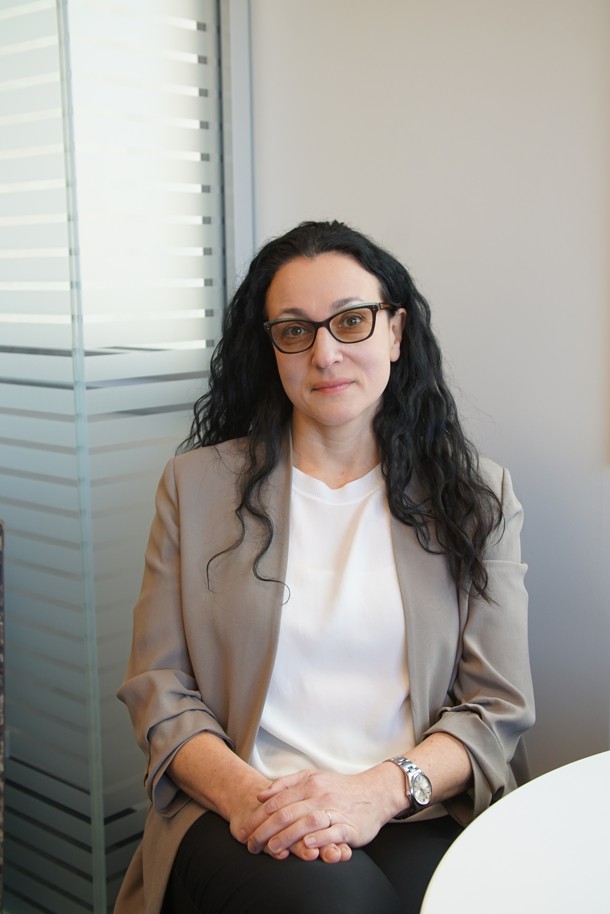
While New Yorkers ponder what artificial intelligence means for their jobs and everyday lives, Julia Stoyanovich studies how to bring them into conversations and shape policies around the rapidly emerging technology.
She’s an associate professor of computer science, engineering and data science at New York University, where she also is the director of the Center for Responsible AI.
Her work involves a combination of sociotechnical research, policy and regulation engagement, education and literacy to ensure that “responsible AI” is the default when people think about AI. This means making sure everybody gets to make their voices heard on how we as a society use AI and other emerging technologies.
“Just as much as we need smarter systems, better ways to process data, better ways to develop faster and richer and more interesting algorithms, we also need to think about how we can bring people into these conversations,” she says.
Stoyanovich is working with CUNY on the New York AI Exchange to create a network of AI research and development in New York City. With the Queens Public Library, she helped create a public course about AI regulation. In 2018, she was an external representative to the city’s Automated Decision Systems Task Force under then-Mayor Bill de Blasio.
“My main goal is to really make it so that everybody understands that they have a role to play, and that they can change what future we create for ourselves in terms of AI and technology and how technology impacts our lives,” she says.
Kanchana Suggu
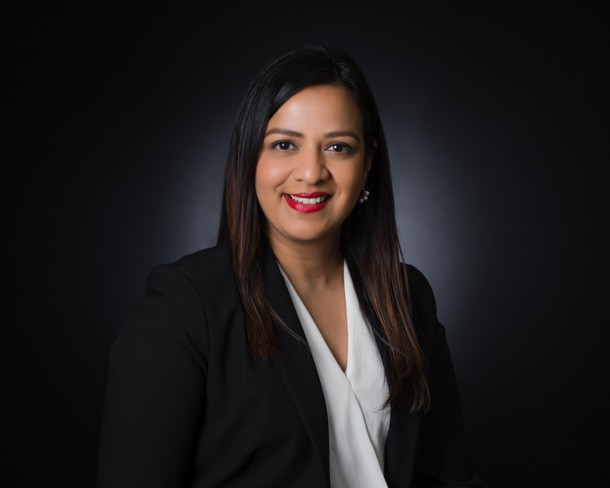
At a health screening event held by a United Way of New York City partner, a man who wasn’t feeling well got a free screening. His blood pressure was so dangerously high that he was rushed to the hospital and treated immediately.
This is one example of the ways the United Way of New York City’s work, supported by Kanchana Suggu, directly benefits individuals and communities.
“This is the real-life impact of the work that we do,” Suggu says. “Stories like this are what keeps us going and what makes us feel that we’re reaching the right people with services that they need the most.”
Suggu leads the organization’s community impact programming alongside its 600 public, private and nonprofit partner organizations, which focus on health, justice, education, food and benefits. She ensures services are being provided in communities that need them across the five boroughs.
Last year, the organization launched a food and medicine program, and this year it joined a new Powering Possibility in Queens Fund to provide utility assistance.
“In a city like New York, the needs evolve,” she says. “The needs change, and as an organization, we are really laser-focused on meeting people where they are, and pivoting as needed to address the evolving kind of emergencies of New Yorkers.”
The overall mission is to harness the power of community to advocate for the needs of New Yorkers.
“New Yorkers have been at the heart and center of our mission,” Suggu says.
Marisol Sumpter
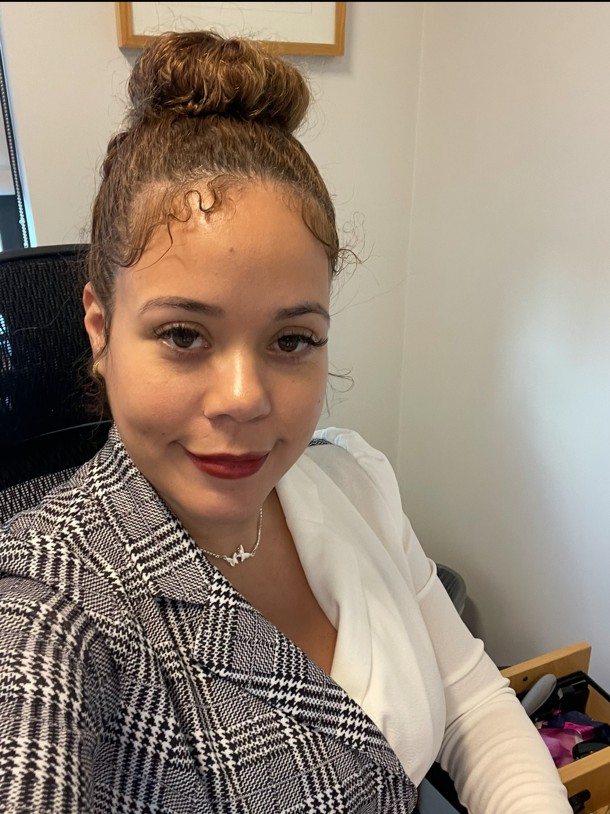
When Marisol Sumpter was working in commercial real estate, she prayed for a job like her current one. She wanted to help people, not just earn a living.
Then she found her place at workforce development company Grant Associates, where she’s now the director of the PACE Bronx Program.
“I wanted to have an opportunity where I was involved in an organization that I can be able to give back, and that I found fulfillment and joy, and that I was in a place of feeling good,” she says.
Sumpter helps people receiving public assistance find jobs or skills training to qualify for jobs. The Bronx program is Grant Associates’ largest program in New York City, serving 8,000 people.
Sumpter started at Grant Associates as a recruiter and worked her way up to account manager, business services manager and now program manager. Her goal is to continue advancing her career.
“I can definitely see myself continue growing with Grant Associates and really putting all my efforts and energy into making sure that the contracts are thriving,” she says.
Part of what inspires Sumpter is her own experience being raised on public assistance and meeting compassionate people who wanted to help.
“I wanted to treat people the same way, making sure that you’re working with people and that they still had the dignity to receive the services,” she says. “It’s really what inspired me to kind of be within the same field of giving and serving.”
Betty Ann Tamaisar
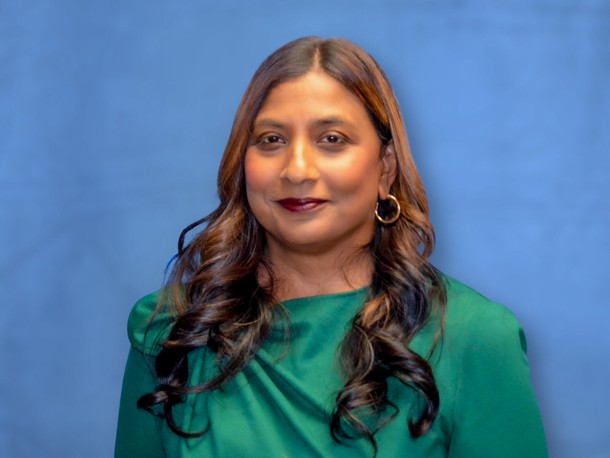
When Betty Ann Tamaisar moved from Trinidad to New York more than two decades ago, her mother worked three jobs to support the family and send Tamaisar to college.
Her mother always drove home the importance of hard work for improving one’s life, and it was this model that inspired Tamaisar to pursue a career helping others find work and economic stability.
“She always told me the pathway to get out of poverty is through education and hard work and resilience,” Tamaisar says. “She was the inspiration to really motivate me to want to help others, to make sure that they had the same opportunities that I was afforded to move forward.”
As the vice president of workforce development at the human services nonprofit BronxWorks, Tamaisar oversees the administration, operations and budgets for all employment, training and financial empowerment programs, helping clients get jobs and become financially independent.
During her 16 years with BronxWorks, she has helped it expand from four contracts and a $1.5 million budget to 30 contracts and almost $8 million.
Tamaisar’s job is to help others in their jobs, and she has sage advice for people entering the social services field.
“Not everybody is well fitted to this, so you have to really dig deep within yourself to see if this is what you want to do,” she says. “I think if you have that passion and commitment, you will succeed in whatever you do.”
Jane Trachet
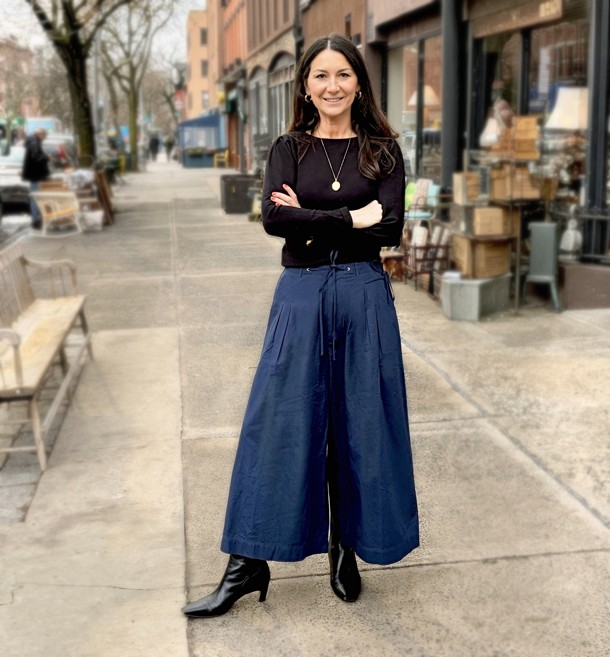
Jane Trachet is a huge advocate for “neighborism” – a concept she invented that means a community coming together to create real change and opportunity.
She employs this concept in her job as the marketing and communications manager at Ponce Bank. The Bronx-headquartered bank isn’t just an institution; it’s a part of the community and does its part to help residents and local businesses manage and understand their finances through various programs. As such, Trachet shifted the company’s language to refer to its customers as neighbors.
“The way that we come together, impassion and inspire creativity and change and action for our communities, it’s like nothing I’ve ever seen anywhere else,” she says.
In her role, Trachet manages internal and external communications, press and marketing for Ponce Bank, a federally designated Community Development Financial Institution. One of her favorite parts of the job is sharing the stories of Ponce’s clients, which can be individuals and small businesses, and how the bank helped them achieve their goals.
“Really helping to break down those barriers so that prosperity is accessible and welcome to everyone,” she says.
One of the reasons Trachet loves working at the bank is because its community roots feel essential to it being a New York institution.
“I come from a family that says New York is our religion, what we eat, breathe and sleep and read about and talk about,” she says. “To be at an organization that puts that center stage is really heartening.”
Caroline Tweedy
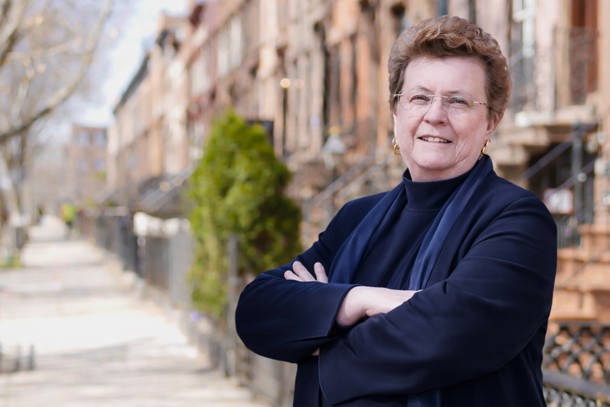
Sister Caroline Tweedy’s passion for service is deeply tied to her faith.
The Sisters of Mercy, a Catholic women’s congregation, is dedicated to serving the neediest members of the community, and Tweedy upholds this mission as the leader of St. John’s Bread & Life, one of New York City’s largest emergency food programs.
“The Sisters of Mercy have always been on the forefront of serving the poor, sick and ignorant,” she says. “I actually entered this community to be of service and to give back and to be part of something bigger. I found, coming to Bread & Life, that’s only reinforced my commitment more and that I learned more about being kind and compassionate and generous from the people we serve than from any book or magazine or class.”
The organization offers a range of services that include grab-and-go meals, soup kitchens, a medical clinic and even a digital food pantry. Tweedy oversees the day-to-day operations and fundraising.
St. John’s Bread & Life never turns anyone away, a policy Tweedy is very proud of. Even during the COVID-19 pandemic when some organizations were forced to pivot or slow down, it continued operating and increased services. IBM even recognized the organization for its efficiency and use of tech in its digital pantry.
“The goal of the organization has always been, and will continue to be, mission-focused,” Tweedy says. “It’s about the people, and that we will evolve as the need evolves, but we will remain true to who we are.”
Ericka Von Salews
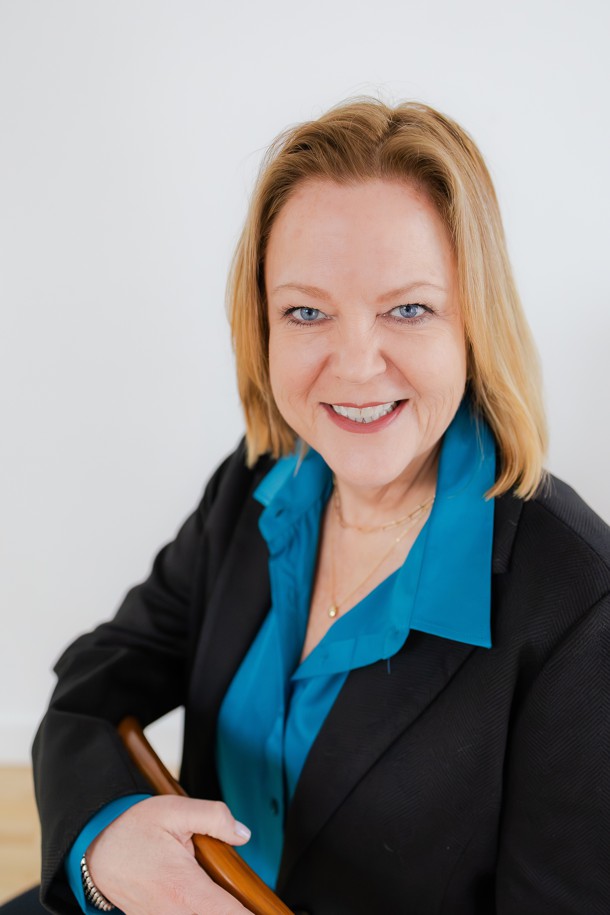
When Ericka Von Salews was a child, she and her elderly grandmother were in a car crash. At the hospital, the staff spoke to her mother, as if her grandmother wasn’t capable of speaking for herself.
The memory sticks with her as a motivating factor in her work on behalf of older adults.
“I knew that that wasn’t the right thing, so that’s what kind of guided me into wanting to make a difference for elders,” she says.
Von Salews is now executive director of Poughkeepsie’s Vassar-Warner Home. The facility opened over 150 years ago and operated as an adult home with some assisted living beds, but eventually faced financial difficulties due to its nonprofit model. In the past year, efforts to save the facility from closing led it to becoming a social adult day care, while it plans to reopen for independent living next month.
Von Salews led the charge to find a path forward after residents vacated the facility in December 2024. Her day-to-day work has included getting the building ready to fully reopen and handling administrative work.
What she loves most about her job is offering a safe space for people who may not have family or a place to live. She maintains a strong bond with many residents, keeping in touch with people long after they move out. The Greek Revival structure is more than just a facility, Von Salews says.
“This place is home,” she says. “It’s not a home or an institutional-like setting, it’s really home.”
Madelyn Wils
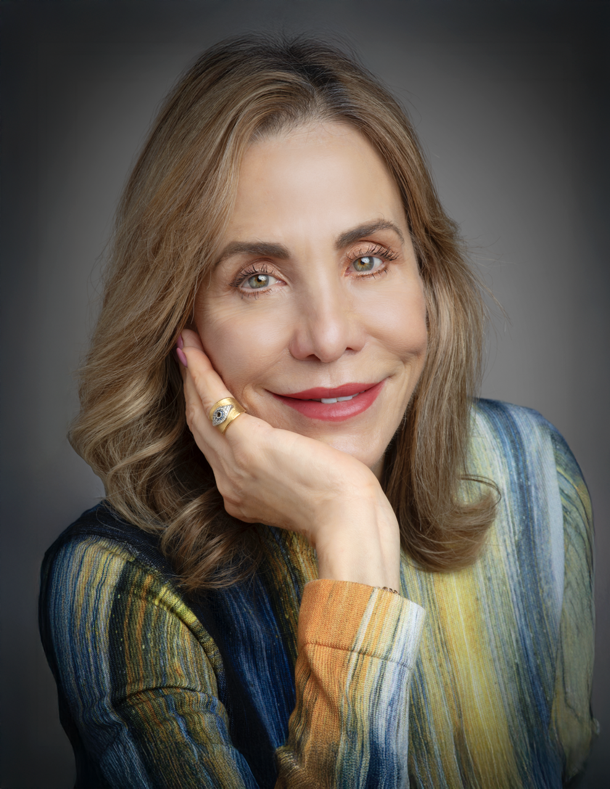
Madelyn Wils chaired Manhattan Community Board 1, covering the Financial District and Battery Park City, when the 9/11 terror attacks left lower Manhattan in chaos. Previously a television producer, she dedicated herself to serving the community after that tragic day, starting with rebuilding.
“It profoundly changed my life,” she says. “That was really the moment where my community became more important to me than the work I was doing in television.”
Wils’ current method of serving the community is leading the Fifth Avenue Association, one of the oldest business improvement districts in the city, which covers Manhattan’s Fifth Avenue.
She is working to revitalize the corridor and address its needs, she says, “to make it into a destination befitting its iconic name and history, to rethink it for the next 100 or so years.”
Currently, her top priority is the Future of Fifth street redesign, which is being conducted with the New York City Economic Development Corp. and the Department of Transportation and other partners. The project envisions a revamped streetscape and sustainability measures.
Throughout her career, Wils has been dedicated to creating and improving public places around the city. She has created parks, built high schools and reimagined what public spaces can be.
“I can look around all five boroughs and find projects that I’ve done, and that’s what gives me joy,” she says. “It gives me joy to see how people use these public spaces and enjoy them, and how important it is in their lives.”
Nicole Yearwood
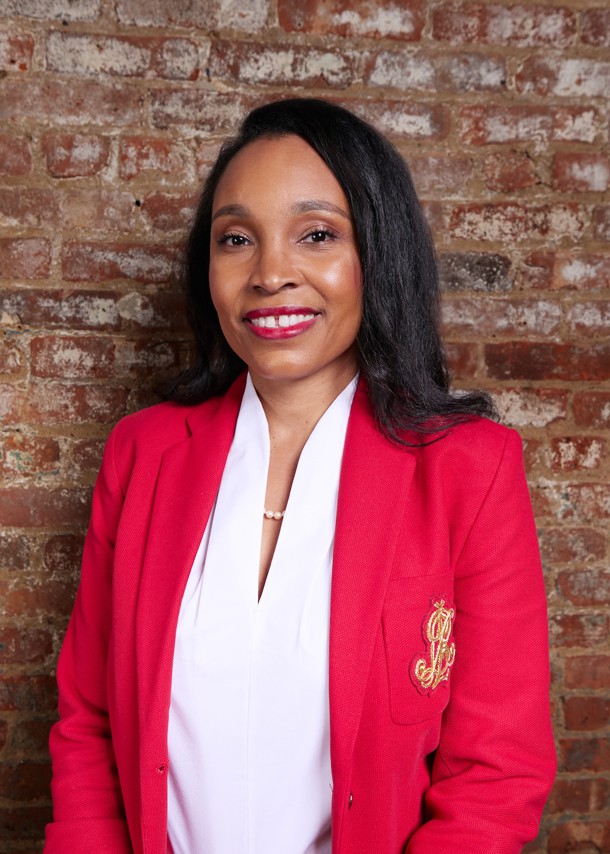
When Nicole Yearwood was an undergraduate at Binghamton University, the governor cut funding for the Tuition Assistance Program, of which she was a recipient. For the first time, she realized the direct impact that the government can have on daily life.
It was that episode that inspired her to pursue a career in government and community relations.
“A lot of times, people don’t realize how government can impact their lives,” Yearwood says. “They think that politics and government is something for other people to do, but everything is tied to government.”
At the micromobility company Lime – known for its e-bikes and e-scooters – the New York City native drives government relations for the region, managing relationships with the city Department of Transportation, elected officials and community stakeholders to ensure operations are beneficial for the company, the riders and the community.
So far, it seems these efforts have been successful, as Lime celebrated its billionth global ride and 10,000 New York rides in one day last year. Yearwood said the goal is to expand service to different cities throughout the state.
She is also a commissioner on the New York City Equal Employment Practices Commission. Prior to entering the micromobility space, Yearwood worked at the U.S. Census Bureau and the City Parks Foundation.
“Bringing innovation to the community where I was born and raised, to the city where I was born and raised, is something that was enticing for me,” Yearwood says. “That’s what kind of led me to this role.”
Mi Jung You
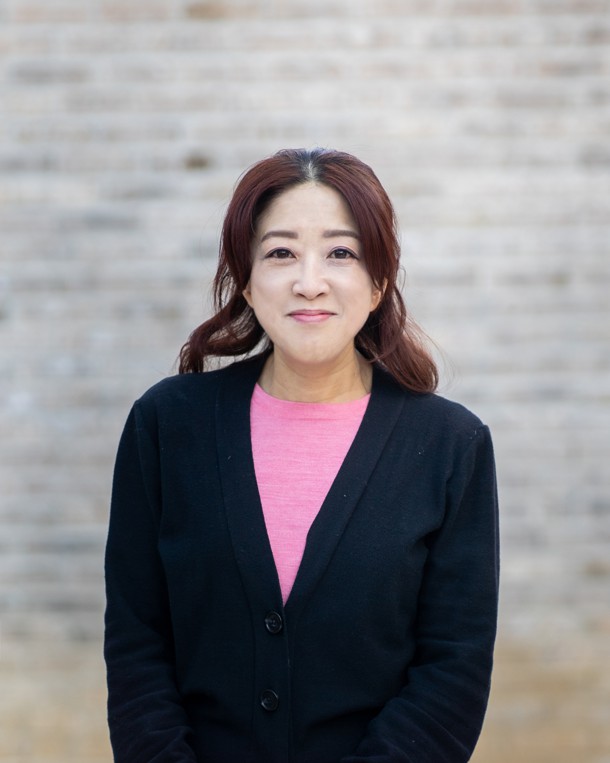
When survivors of violence show up at the Korean American Family Service Center, they’re often facing other challenges, like a lack of stability and a language barrier. Deputy Director Mi Jung You and her team mitigate these issues to help clients move forward with their lives.
The organization is New York City’s first anti-domestic violence organization specifically dedicated to the Korean community. It serves victims of domestic violence, sexual assault, elder abuse, hate crimes and child abuse through counseling, after-school and youth programs, economic empowerment services and housing support, all offered bilingually.
“You have a right to be respected by any other people, especially your husband,” You says. “They become independent, and then they kind of feel like they can survive by themselves.”
You came to KAFSC in 2004 as an intern and has been part of the team ever since. After her internship, she worked as a tutor and counselor with the center’s children, then was elevated to program director and eventually the deputy director.
She’s inspired by both her dedicated coworkers and the clients themselves. They arrive at the center with their lives put on hold by escaping abusive situations, sometimes with no job, money or support. They leave feeling safe, strong and hopeful again.
“People come here to be healthier, then stronger and independent,” You says. “Then when they kind of leave and they say to us, ‘Thank you so much for helping, you guys are kind of my own family,’ and that makes me still keep working here.”
Michelle Zarifis
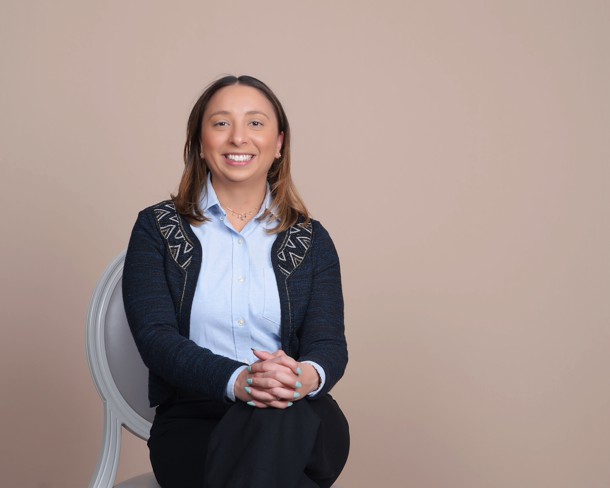
New Yorkers recognize National Grid as a major gas and electric supplier, but not everyone realizes the efforts of its external and government relations team to help communities the company serves.
Michelle Zarifis heads up National Grid’s government relations for Suffolk County, working on policy, responding to service requests that are routed through local government and educating the public on what the company does.
“I really, really enjoy my work at National Grid,” she says. “Being able to impact people’s day-to-day lives, to me, feels like being a public servant.”
Zarifis first entered public service at the Suffolk County District Attorney’s Office, holding multiple titles, including deputy chief of staff. She went on to serve as the director of intergovernmental relations for the Suffolk County Executive’s Office, before coming to National Grid.
One of her favorite parts of the job is helping local communities.
“What inspires me is just the direct and meaningful impact that we can have on people’s day-to-day lives,” Zarifis says. “There’s a strong sense of purpose that comes with that responsibility, and that’s impacted my career.”
For example, to compensate for the disruptions that heavy utility work can cause in neighborhoods, the company goes out of its way to support those communities in other ways: small-business grants, beautification projects, community events and volunteer service days.
“My role is just making sure that people’s concerns are heard,” she says. “We address them. We try and leave the community better than we found it.”
NEXT STORY: The 2026 Queens Power 100