

sponsor content What's this?
Sponsored Content
Albany Must Do More for Community Health Centers
Community health centers serve 2.5 million New Yorkers and need $300 million to protect care.
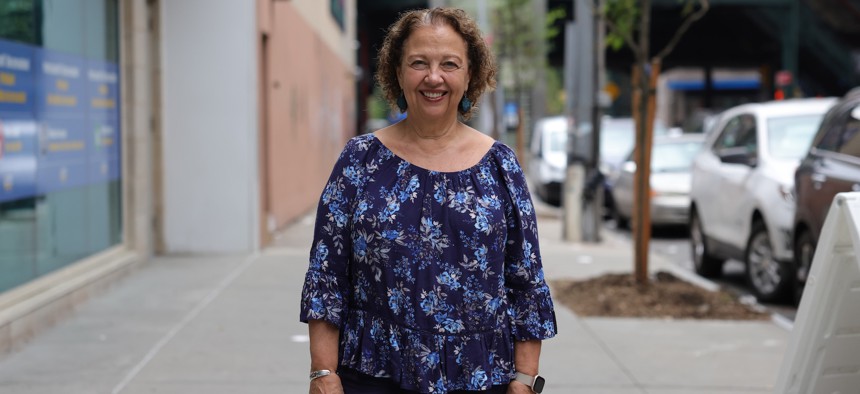
Paloma Hernandez Thomas Oh


.png)
Every day, I see what community health centers mean to New Yorkers. At Urban Health Plan, we serve more than 90,000 patients each year across the Bronx, Central Harlem and Corona, Queens. From the older adult who comes to us for primary care, behavioral health support and help understanding medications in her own language to the working mother balancing her job, her children and the demands of daily life, who relies on telehealth for follow-up visits because it is the only practical way to stay on top of her own care.
A community health center is not just another provider. We are a medical home. Community health centers are where 1 in 8 New Yorkers go for preventive care, chronic disease management, dental care, mental health services, prenatal care and help with the everyday barriers that affect health, from language access to care coordination. Across New York state, community health centers serve more than 2.5 million people. We serve those patients regardless of their insurance status or ability to pay. And for many families, we are the front door to the health care system.
Yet, community health centers are facing a dire moment. New York’s Medicaid reimbursement system for health centers is outdated and deeply inadequate. It is still based on costs from 1999 and 2000, even though the cost of providing care has changed dramatically. We are paying more for workforce, technology, supplies, compliance and facilities, while also caring for patients with increasingly complex medical and social needs. Think about it on a personal level. Back then, a gallon of gasoline cost $1.20. Today, it’s nearly four dollars. Moreover, health centers are paid less than every other provider for telehealth services that our patients so desperately need.
At the same time, federal policy changes threaten to make an already fragile situation much worse. More than 1.5 million New Yorkers could lose health insurance coverage. They will still need care, and many will turn to community health centers for it. We will continue to open our doors, because that is our mission. But mission alone does not pay nurses, physicians, front-desk staff, behavioral health counselors or the cost of keeping essential services available.
That is why I am grateful that the Legislature’s one-house budget proposals recognize the importance of community health centers and include investments in health centers. I want to sincerely thank members of the Assembly and Senate for stepping up in this moment and for showing that they understand what is at stake. But the proposed increases still do not meet the scale of the need.
If the state does not act, the consequences will be real. Health centers will lose hundreds of millions of dollars. Jobs will be cut. Services like school-based health centers, OB/GYN care, dental care and urgent care are at risk. Patients will wait longer, travel farther and too often end up in emergency rooms for care that should have been available in their communities.
That is why CHCANYS is asking the state to invest $300 million in community health centers. This is not a windfall. It is a practical, necessary investment that New York’s health centers need to survive.
Community health centers save money for the system by keeping people healthy, managing chronic conditions, reducing avoidable hospital visits and meeting patients where they are. We are also employers, training grounds and economic drivers in the communities we serve.
I thank the Legislature for the support proposed so far. But I am asking every Assembly member and every senator to raise that support to the full $300 million community health centers need coupled with a fix to health centers’ telehealth payment.
Our patients are counting on us. New York is counting on community health centers to keep people healthier and the health care system more affordable. Can we count on Albany to do the right thing and invest $300 million in community health centers?
Paloma Hernandez is the president and CEO of Urban Health Plan and chair of the National Association of Community Health Centers.
NEXT STORY: Why Sustained Funding for HealthySteps is New York’s Smartest Long-term Investment for Families