

Opinion
Opinion: Why New York’s nurses walked out, what we won and why it matters
NYSNA’s winter strike was an example of workers across industries refusing to accept degraded or dangerous working conditions.
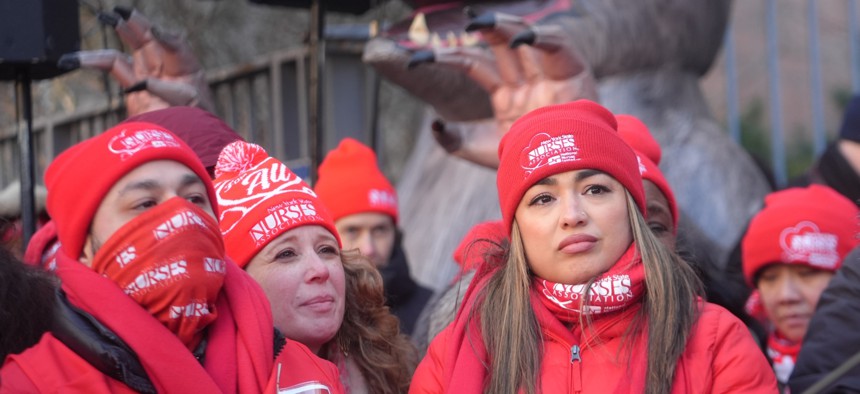
NYSNA members picked outside Mount Sinai West in Manhattan on January 20, 2026. Selcuk Acar/Anadolu via Getty Images


When 15,000 nurses across New York City went on strike this winter, through blizzard warnings, bone-deep cold and record snowfall, it was not an act of spite or spectacle. It was a reluctant, resolute act of civic duty. We members of the New York State Nurses Association struck to protect patients and nurses when hospitals had stopped protecting them.
These strikes rewrote the terms of care in a city whose health system has been strained by chronic understaffing, unstable public financing and a bottom-line approach to labor that treats bedside caregivers as interchangeable. The contracts won across multiple hospital systems put enforceable safe staffing standards and workplace violence protections where rhetoric and promises once stood.
The core of our fight was simple and urgent: safe staffing. For years, hospitals chose to spend millions on temporary travel nurses rather than invest in a permanent workforce. The result was, and is, a system that is fragile in crisis and dangerous in ordinary times. At one hospital, arbitration confirmed unsafe staffing and produced nearly $400,000 in remedies, a bitter victory that took a year and a half to secure. Our agreements now bake enforceable staffing language into contracts so patients won’t have to wait for justice while harm occurs.
We also pushed back against cuts to health benefits, won robust protections against workplace violence and secured explicit safeguards for immigrant and transgender patients and staff. Those gains matter at the bedside where dignity, privacy and safety should never be optional. And they addressed some of the most pressing issues facing nurses in New York and around the country: the epidemic of workplace violence in hospitals, the increasing presence of ICE in our hospitals and the federal attacks on our most vulnerable patients.
This round of bargaining confronted another urgent threat that is both ethical and existential: the rapid deployment of artificial intelligence in clinical settings. Hospitals and vendors promise efficiency and decision support, but without guardrails, these tools can erode clinical judgment, compromise patient privacy and amplify bias. Hospital executives openly muse about the day when AI will replace real nurses and lower their expenses. For the first time in our contracts, we secured explicit protections around AI, including safeguards on algorithms making clinical decisions.
Our strike unfolded amid looming cuts to federal healthcare funding, unpredictable public health demands and the aftereffects of pandemic-era policy shifts. That fiscal unpredictability pushes hospital administrators toward short-term calculations, to cut permanent staff, to lean on temporary labor. Those decisions put patients and workers at risk. Understaffing increases complications, readmissions, incidents of workplace violence and ultimately costs. What is needed is robust public funding for hospitals, particularly safety net hospitals that care for the most vulnerable patients and policies that incentivize hospital executives to put patients over profits.
This matters nationally. Nurses’ victories in New York come at a moment when workers across industries are discovering the leverage that collective action still holds. From teachers to transit workers to service employees, Americans are refusing to accept degraded or dangerous working conditions. Our contracts set a template with enforceable safe staffing, protection from workplace violence, AI protections, protections for our most vulnerable patients and strong wages and health benefits that can be replicated in hospitals and workplaces from coast to coast. When nurses insist on the conditions they need to provide safe, dignified care, the gains ripple outward: better care, less preventable harm and healthier communities.
Striking in this city in this cold, winter season was hard. Nurses endured scorn from hospitals, union-busting tactics and orchestrated delay. We also stood shoulder to shoulder with thousands of community allies, elected officials and labor siblings – evidence that the case for safe care resonates beyond hospital walls. When agreements were ratified and nurses returned to their posts, it was because we are clinicians first; our highest obligation remains the patients who depend on us.
What this moment demonstrated is not only the bargaining power of a single union but the power of frontline nurses who insist that health care be measured by outcomes and dignity, not quarterly margins. At a time when more workers are recognizing their collective strength, New York’s nurses have shown how that power can translate into protections that serve both workers and the public. The contracts we won set industry standards when standards are desperately needed. They show that collective action can translate moral urgency into concrete protections.
New Yorkers rely on hospitals to be anchors in good times and bad. If we are to meet that responsibility, we must invest in the people who do the work, regulate the technologies that enter the bedside and stabilize the public funding needed for quality care. That is what our nurses fought for this winter. That is what we won. And that is what patients across this city and across this country deserve.
Nancy Hagans is the president of the New York State Nurses Association whose members went on strike against three hospital systems on Jan. 12.
NEXT STORY: Despite Trump cuts to HIV programs, private funders stay determined to find cure