

sponsor content What's this?
Sponsored Content
Making the Case for Career-Centered Learning in Higher Education
City College’s Dee Dee Mozeleski explains how to support student success and regional economic growth.
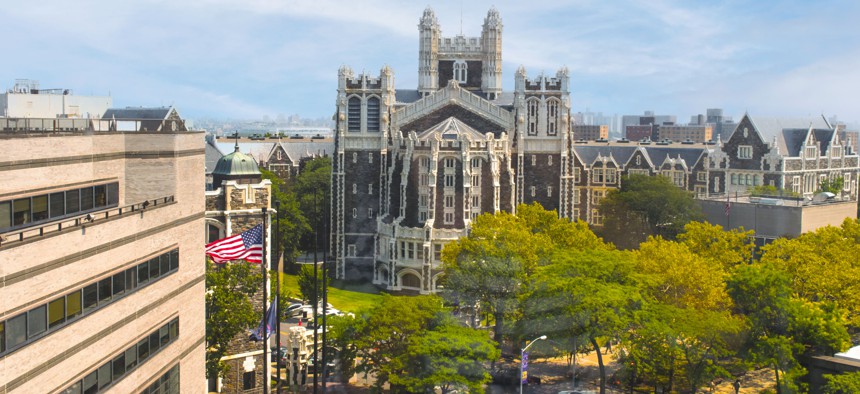
Shepard Hall, The City College of New York Joann Huang


At a moment when higher education institutions are being asked to demonstrate both economic impact and workforce relevance, career-connected pathways have become essential to the future of student success. Across New York state, colleges and universities are increasingly recognizing that education must be intentionally connected to opportunity – helping students move seamlessly from classrooms into meaningful careers while also responding to the evolving needs of employers, industries and communities. For public higher education institutions, in particular, this work carries particular urgency. Students attending public colleges and universities often include first-generation students, working students, transfer students, adult learners and students balancing significant family and financial responsibilities alongside their academic pursuits. These students bring tremendous talent and ambition to campus, but they do not always have equal access to the professional networks, mentorship opportunities or career exposure that can shape long-term economic mobility.
At The City College of New York, we have increasingly viewed career-connected learning as central to both student success and regional economic growth. The ability to look across New York state and think intentionally about the impact our students will have on the statewide labor market has been a strategic focus for nearly the past decade, beginning soon after our first major economic impact study was completed.
That work helped deepen our understanding of how public higher education contributes not only to individual student outcomes, but also to workforce development, economic competitiveness and long-term community vitality.
Today, that work continues through partnerships that help align academic experiences with emerging workforce needs. Collaborations with organizations such as Lightcast allow institutions to understand labor market trends better, identify evolving skills gaps and build more intentional pathways between education and employment. These data-informed strategies help colleges move beyond assumptions and instead develop workforce partnerships rooted in real-time economic need. At the same time, career-connected pathways must remain grounded in equity and accessibility. At City College, we approach traditional degree attainment with the same urgency and intentionality as programs serving non-traditional learners. Today’s workforce ecosystem requires institutions to support students pursuing undergraduate and graduate degrees alongside adult learners, workforce certification participants, transfer students and students navigating alternative educational pathways.
This work is strengthened through partnerships with organizations such as the Building and Construction Trades Council of Greater New York, which demonstrates how workforce development can support students across multiple stages of the educational continuum. These collaborations have the potential to impact students entering higher education from high school workforce programs while also supporting undergraduate and graduate students preparing for advanced careers in infrastructure, engineering, construction management, public service and related industries.
Importantly, institutions must also recognize that workforce recruitment challenges vary across regions and industries throughout New York state. Meeting employers where they are means understanding the realities facing healthcare systems, public agencies, nonprofit organizations, labor unions, technology firms and private industry alike. Some employers need highly technical talent pipelines, while others seek adaptable graduates with strong communication, leadership and problem-solving skills. This work is also deeply aligned with our role as a new campus participant in CUNY Beyond, a university-wide initiative focused on embedding career-connected learning throughout the student experience. We see this work as integral not only to student success, but also to the continued growth and long-term vitality of New York City and New York state.
The scale of this opportunity is especially significant within the City University of New York system, which welcomes more than 247,000 students in matriculated majors each year and graduates more than 50,000 students annually across 26 colleges throughout the city. These students represent one of the most important workforce and economic mobility pipelines in the nation. We know that graduates will move toward regions where strong career opportunities and competitive wages exist, but workforce development is about more than salary alone. Housing affordability, childcare access, transportation, healthcare and strong local schools all shape whether graduates are able to build sustainable lives within the communities they serve.
The future of higher education is not simply about degree attainment. It is about creating pathways to purpose, economic mobility and long-term community impact. By continuing to strengthen career-connected learning and statewide partnerships, New York has an opportunity to lead nationally in building a more equitable, responsive and future-focused workforce ecosystem.
Dee Dee Mozeleski is Senior Vice President at City College of New York.
NEXT STORY: What a Run We've Had! Now Let's Build New York's Next 20 Years