

NYN Media
Opinion: The hidden twin crises facing older New Yorkers
A local solution that pairs meal delivery with human connection is taking shape.
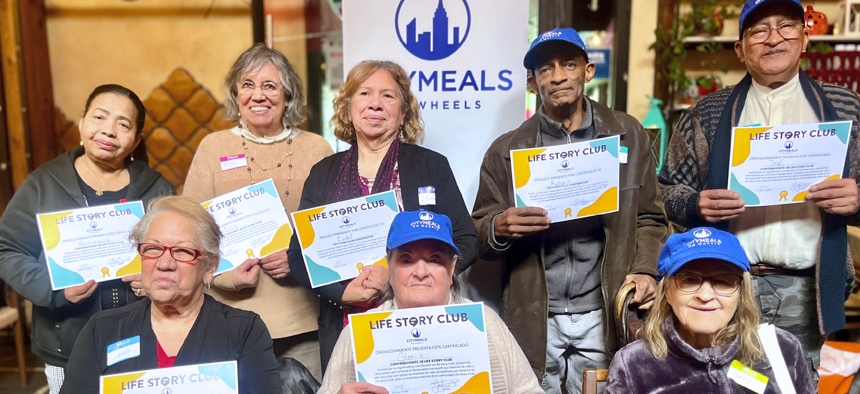
Citymeals on Wheels is partnering with Life Story Club to help older adults age in place while combating isolation. Nara Garber


The start of a new year brings reflection and resolve for many – but for thousands of older New Yorkers who are homebound, it can also bring heightened isolation and uncertainty. Limited mobility and fixed incomes make daily life harder year-round, and the lull after the holiday season often underscores how disconnected many older adults have become from consistent human support. But this year, that loneliness is compounded by new threats to their well-being. Vital food assistance programs have been slashed, just as the need reaches historic levels and our older adult population is rapidly increasing. And yet, we’re losing the basic support that allows people to survive, stay connected and live with dignity as they age.
When older adults lose access to people, they also lose access to food – and the health consequences of both are devastating. We cannot address one without addressing the other. Research indicates that social isolation accelerates cognitive decline. Paired with a lack of nutrition, it can push older adults into medical crises that strain hospitals, emergency services and families. Treating food and human connection as fundamental components of health care is not only compassionate but also a preventive public policy.
Fortunately, there is a proven model in New York City for combating both.
Citymeals on Wheels has been providing meals to homebound older New Yorkers for more than 40 years, and this work is more essential than ever. Today, the majority of Citymeals’ recipients live on less than $15,000 a year, and 30% receive support from the Supplemental Nutrition Assistance Program, which is facing significant cuts. Over the past decade, New York City has seen a 40% increase in older adults living in poverty, driven in part by chronic underinvestment in the social safety net for older adults.
To make matters worse, in December, the U.S. Department of Agriculture threatened to withhold support from states that don’t report personally identifiable information of SNAP recipients, including immigration status. Yet, half of older New Yorkers are immigrants. Meanwhile, food pantries aren’t always accessible to older adults, many of whom can’t stand in long lines or carry heavy bags back to their apartments.
Recognizing that hunger and isolation are interconnected, Citymeals and Life Story Club, a New York City nonprofit using virtual storytelling circles to reduce loneliness in older adults, launched a pilot program in 2024 that offered an integrated approach to support older adults.
The model is simple: Citymeals, in collaboration with case management partners, identifies and refers older New Yorkers who may be at risk of isolation and pairs its meal delivery network with Life Story Club’s virtual storytelling gatherings. Members join by phone or computer, led by trained facilitators who encourage members to share personal stories and develop genuine connections. Clubs are offered in all five boroughs and in English, Spanish, Mandarin and Cantonese, with more languages on the way.
The results have been remarkable. Members report improved mood, better overall health and deep, lasting relationships with fellow members. Many members are referred to Life Story Club because they were experiencing isolation. After a few months, they often report that the weekly meetings give them a renewed sense of purpose, meaning and belonging.
Combined with Citymeals’ ability to reach older adults who are often homebound, the model meets people exactly where they are: with food, connection and consistent human touchpoints. It’s a simple solution to a problem that will only grow more serious over the next decade and has already made a difference for the 270 older New Yorkers who have participated in its early stages.
New York state and New York City are home to one of the largest and fastest-growing older populations in the country. As Mayor Zohran Mamdani begins his first year in office, decisions made by his administration and the City Council will shape whether New York strengthens or erodes the systems that older adults rely on. Let this be a call to build the infrastructure required to support older New Yorkers, rather than shrink the programs that keep them afloat – especially as federal resources shrink and local budgets become more important.
We need action from elected leaders to protect SNAP, expand home-delivered meals and invest in modernized programs that bring food directly to homebound older adults. Healthy aging in New York will require a coordinated approach that treats nutrition and human connection as inseparable, and meeting that moment is less a question of policy complexity than one of political will.
The choice facing New York this year is not whether we can afford to invest in older adults, but whether we can afford not to. We must choose whether we allow a generation to age in hunger and isolation, or whether we build a future where older adults are nourished, connected and never left behind.
Beth Shapiro is the CEO of Citymeals on Wheels, and Jennifer Wong is the interim executive director of Life Story Club.
NEXT STORY: Procurement reform is Lincoln Restler’s problem now.