

NYN Media
Father’s Day could be every day in New York
A Q&A with Troy Grant, director of fatherhood engagement at the New York state Office of Children and Family Services
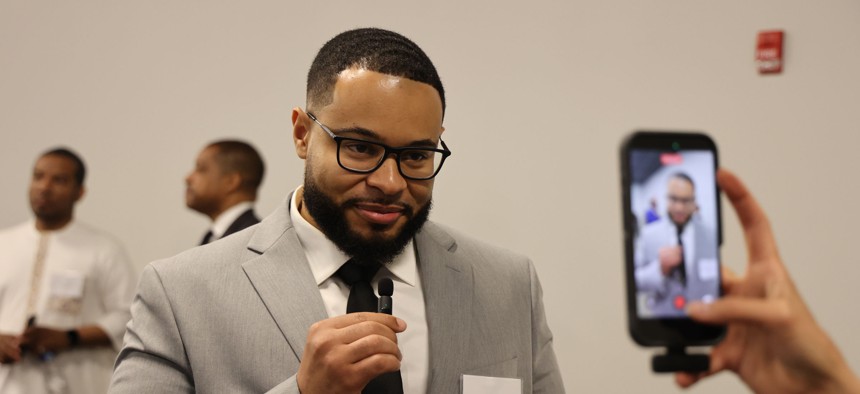
Troy Grant films a video at the New York State Fatherhood Convening Shay Gauthier/New York State Office of Children and Family Services

New York state is amping up its support for fathers navigating the child welfare system, aiming to reduce a longstanding gap in engagement by family-serving agencies. Research has shown that meaningful fatherhood engagement is linked to improved child mental health, reduced system involvement and stronger long-term outcomes, yet fathers have historically been underrepresented in support services, affecting Black and brown families in particular.
Troy Grant, inaugural fatherhood engagement lead at the Office of Children and Family Services and graduate of the foster care system himself, is helping drive the agency’s renewed focus on how systems engage fathers. Under the leadership of OCFS Commissioner DaMia Harris-Madden, the agency has launched a Fatherhood Steering Committee to fulfill that mission – engaging fathers in child welfare and promoting stronger families, particularly for those most vulnerable.
Grant discussed the initiative and its potential impact for father engagement with NYN Media. This interview has been edited for length and clarity.
What has your first year or so on the job looked like? What have you learned or reflected on?
This journey, as we're working to be more father-inclusive and support our dads across New York state, has really been healing for me in a lot of ways. Coming from somebody who's been in foster care and has had issues with his own dad, (it) also has helped me as a parent and as a dad.
What does Father’s Day mean to you, given your journey?
Being a dad to me really means showing up for my children. They have me in their corner – somebody who loves them, going to look after and care for them. Even if I didn't have the best relationship with my dad, I had the opportunity to break those cycles and give them a totally different experience, a totally different life.
What inspired you to go into policy?
I always knew, because of my lived experience, I wanted to give back to children and families, specifically those within marginalized communities. I ended up getting my Master's in Social Work to work specifically with youth and foster care. I realized in the work that I was doing, a lot of my peers were overlooking dads. Part of what we do as mental health professionals is reach out to birth dad or mom, foster mom or dad, and update them on how their child is (progressing). I got to see in real time that dads were being overlooked and under-engaged. That was part of the motivating factor – that's what brought me to OCFS.
What’s the biggest misconception about fathers in the child welfare system?
There's this overarching idea that dads are absent, don't want to be engaged, don't want to be included. Dads are “angry” – I hear that a lot. The child welfare system as a whole is female-dominant. And sometimes there's a disconnect where, as a dad or male, my emotions or concerns for my children are perceived differently – you're quickly labeled as angry or aggressive. Once you have that label, it's sent out to other providers and sent out to other people who are supposed to be working with the dad. And then, the walls go up and other people don't want to engage. Especially Black and Latino fathers, (there’s a preexisting view) that dads don't want to be involved. A lot of the services are historically geared towards mom, not that we want to take any of that away, but we need to up the support for our dads.
How do you build trust with fathers who may distrust government agencies or initiatives?
We do what we're currently doing under our commissioner, DaMia Harris-Madden, publicly announcing that (the child welfare system, including OCFS) has not supported (dads) the way we should and making a commitment to change that. On June 3, we started our statewide Fatherhood Steering Committee, a task force dedicated to helping us identify and address barriers to fatherhood engagement. We have different fatherhood leaders, child welfare leaders, dads with lived experiences (in the system), and dads from different backgrounds, all helping us understand barriers that fathers face.
What’s one message you’d want policymakers to hear about fathers in this context?
Our children and families do better when dads are positively and intentionally engaged. Across the board, all indicators, such as mental health, behavior in school, and academic performance, are better when dads are involved. How can we support in getting tools so they can be a positive dad? Children and families doing better is our goal. We also have a podcast on Spotify on the importance of fatherhood engagement. It's great for those who want to become more father-inclusive.
Are there any lessons/examples from other states or organizations that’ll influence your and the organization’s approach?
Ohio has a very robust fatherhood program. They have a statewide initiative dedicated towards fatherhood engagement, started in 2013 under the leadership of Kimberly Dent. They've made amazing strides, and they're able to document in real time that when you invest in dads, families do better.
For New Yorkers hearing about this initiative for the first time, why should they care about fatherhood as a policy issue?
Fatherhood has been a tough sell for some people, especially if you have personal experiences that are not great towards fatherhood. Even if you're somebody who says, “I'm not too big on fatherhood engagement, it's not my thing,” I know we all have a soft spot for kids. So think about how we can support them through supporting their fathers.