

NYN Media
Janos Marton is taking Dream.org into its AI advocacy era
After being promoted to CEO, Marton spoke to City & State about his priorities for the organization ahead of the midterm elections.
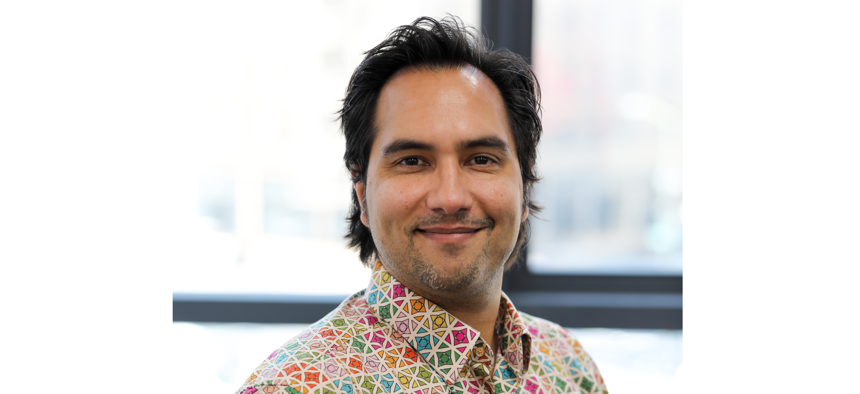
Dream.org CEO Janos Marton is now working to hold the AI industry accountable. Adrienne Ordilla


Civil rights lawyer Janos Marton was promoted to CEO of Dream.org late last month, after serving as the organization’s chief advocacy officer for more than five years. The organization, which is focused on criminal justice reform and green jobs advocacy, is launching a new chapter around artificial intelligence advocacy.
Marton spoke with City & State about his new role, the organization’s focus on bipartisanship and the state of criminal justice in New York City under Mayor Zohran Mamdani. This interview has been edited for length and clarity.
You were recently promoted to CEO. How has it been in the first week on the job? Has anything surprised you?
It’s been crazy. Being a CEO, the one experience it reminds me of the most is being a candidate for office. I ran for office once, six years ago, and at the time I said that was the busiest, craziest thing I’ve ever done. And part of the reason for that is when you’re a candidate, there is an endless amount to do, and you just have to make peace with the fact that you’ll go to bed every night, no matter how hard you work, not having achieved it. And every conversation matters. You can’t take off any individual conversations and just let someone else carry the load. And I think there are a lot of parallels to being a CEO: the responsibility that comes with speaking for the organization, being the top of the food chain as it relates to staff matters, and just the amount that has to get done. So that’s been a bit of a surprise, but I’m excited about it.
You’ve been at the organization for a while. What are you most proud of so far in your time there? What would you consider some of your biggest wins?
My goal is to establish Dream.org as the most effective criminal justice organization in the country, and we’re on our way there. ... We run a program called Dream Justice, which is the best advocacy training program in the criminal justice field, specifically training people who are formerly incarcerated to become advocates in their own local communities, so that we can expand the power and reach of the movement.
You’re overseeing a new chapter of Dream.org with a focus on AI accountability. How are you navigating that, given AI technology is developing so quickly?
AI is certainly the biggest issue in the country right now. But what’s been missing from the conversation, and what we hope to elevate, is the way that AI-supercharged surveillance will have on both the criminal justice system and the economic system as it relates to workers’ dignity. You can easily imagine a world where (surveillance) lands most harshly on people who are on supervision after prison, where people have very few legal rights to contest those kinds of conditions. It’s so important for us to elevate these issues as part of the broader AI conversation. The role I see Dream.org playing is making sure that the direct impact of AI policy on working-class people is not ignored.
Do you think the government, and the public sector in general, is prepared for the changes that come with a greater adoption of AI?
Definitely not. But we all have to start educating ourselves somewhere. I saw people giving (New York City Council Speaker Julie) Menin flak for holding a hearing, given that New York City Council virtually has no formal power over these big tech companies. But I disagree with those takes. I thought it was good that New Yorkers had a day where we were talking about AI in the political space. There is a lot to learn, and things are moving really fast. But too often, I hear that as an excuse for why the public sector can’t be involved. I think the onus is on organizations like ours who care to say, “No, we actually demand action.” We want the impact of AI and these technologies and data centers on the environment to be taken seriously.
We’re not in a very bipartisan political climate, but Dream.org seems to emphasize partnering across the aisle. Why is that a focus for the organization?
Common ground bipartisan work is the way to win durable change. I’m somebody who came up as a lefty. I still consider myself very progressive on issues, but during my time at the ACLU, I was at arguably the most well-resourced nonprofit advocacy organization in the United States, and we did excellent work. But it struck me that in a lot of states that we went into, conservative legislators would see us and run for the hills rather than engage with us on issues. And when I thought about the places in this country where mass incarceration rates were the highest, where the prison conditions were the worst, those are often places controlled by Republican governors and legislators. If we, as a criminal justice movement, didn’t have a plan for how we’re trying to pass criminal justice reform in places like that, then we’re really just condemning large swaths of the United States to have these horrific systems.
You worked on the Close Rikers campaign. Criminal justice reform is a big part of Dream.org’s work. And you also advised the Mamdani transition team on criminal justice. Have you seen Mamdani’s administration make any strides in that area?
I’m a big fan of Zohran Mamdani. … As far as his work over the last 10 months, it’s a low bar to clear because Eric Adams was not only hostile to the concept of criminal justice reform, he flagrantly broke the law around closing Rikers and refused to take statutorily mandated steps to move the island toward closure. So obviously, Mayor Mamdani is doing better than that, and there have been a few good steps that he’s taken in this area, but honestly, I’m going to have to see more. The downside to being the really high energy, charismatic leader that Mayor Mamdani is is that we’ve seen how effectively he moves on an issue when he really believes in it, and I have not seen that energy around closing Rikers. … I haven’t seen enough in terms of the administration working with prosecutors and judges to figure out how to responsibly lower the jail population. I recognize that dealing with jails and prisons is no political executive’s first choice. It’s often sort of pushed to the side. But eventually, (politicians) come to realize that they now own this jail and prison system. Rikers Island is now Mayor Mamdani’s problem, and I would encourage them to lean into it more, not less.
Outside of your day job, you are active as a Democratic organizer and volunteer on Staten Island. Do you think Democrats could unseat Rep. Nicole Malliotakis, and what would it take to do so in the future?
Nicole Malliotakis has been a foot soldier for the MAGA agenda and done virtually nothing to stand up to (President Donald Trump) over the last few years. She specializes in promoting bipartisan bills that she knows are going nowhere, so she could burnish her credentials as some kind of problem solved. But those of us who follow her closely on the island know that she’s basically a reliable Trump vote and has never voted against him on a consequential matter. … Staten Island gets this reputation, maybe sometimes fairly, as a MAGA stronghold. But I’ve got to be honest, I see a lot less of that energy now than I did in 2024. I think (Democratic challenger) Mike DeCillis is a good candidate. … He holds a lot of the strong principled positions that are in line with the party’s base. I wish the DCCC would take this race more seriously. I know it’s hard for them to do so based on some of the outcomes of the last few cycles, but you got to start somewhere. And I think this is as good a cycle to lean in as any.
NEXT STORY: Opinion: On food assistance, we’re flying blind