

Opinion
Opinion: Stop abusing the environmental review process to block housing
The Sustainable Affordable Housing and Sprawl Prevention Act will reform the process to promote more housing development in walkable, transit-friendly neighborhoods.
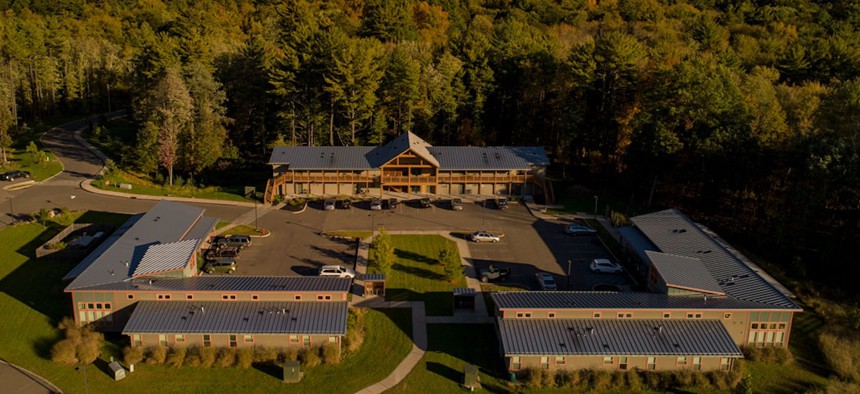
The Woodstock Commons housing development was delayed for nearly a decade due to misuse of the environmental review process. RUPCO


New York’s State Environmental Quality Review, known as SEQR, was created to ensure that government decisions fully consider environmental impacts in a transparent, evidence-based way. Its purpose is both simple and important: to require agencies to study and mitigate significant effects on natural resources, public health and community well-being before approving major projects. It was never intended to serve as a general referendum on whether a community prefers change, nor as a tool to block much needed housing or other public benefits based on concerns unrelated to environmental harm. Yet in practice, the SEQR process is often stretched beyond its core purpose, invoked to preserve “neighborhood character” or prevent shadows on adjacent buildings, rather than to safeguard the environment in a meaningful way.
When we imagine the communities we want, we often describe walkable places with coffee shops, corner stores and a strong local economy. To bring this vision to life, communities need enough people to support small businesses, to buy a daily coffee and to shop locally for food, crafts and clothing. That requires working-class families. Yet these very families can no longer afford to live in city centers, let alone town centers. Our bill, the Sustainable Affordable Housing and Sprawl Prevention Act (S3492/A6283), seeks to reform the SEQR process to promote more housing in walkable, transit-friendly, mixed-use neighborhoods, and to prevent its use for unintended purposes.
New York is in the midst of a severe housing shortage that has pushed rents and home prices beyond the reach of working families across the state. Communities need a range of new housing options, including affordable and mixed-income developments. However, local opposition and the misuse of SEQR have compounded delays and driven up costs, particularly in the locations where housing is most needed – close to population centers, public transportation, schools and jobs. When projects that meet real community needs are stalled or derailed by concerns outside the law’s environmental purpose, the result is fewer homes built, longer waitlists and deeper inequities in access to stable housing. These dynamics also contribute to the shuttering of small local businesses, while big box stores, chain restaurants and online retail fill the gap. This also carries a high environmental cost, as developers seek to avoid SEQR litigation by pursuing sprawling development far from population centers, a pattern that separates people, undermines community cohesion and accelerates the statewide housing and climate crises we now face.
For example, in the town of Woodstock, the nonprofit affordable housing developer RUPCO had a housing project delayed for roughly a decade. The site they were trying to build on was originally zoned for 250 units, yet due to years of delays and litigation related to the environmental review process, it was reduced to roughly 20% of what the zoning allowed.
In Sag Harbor, a desperately needed 100% affordable housing project supported by the village government was blocked by a court based on procedural violations. The village mayor James Larocca said of the people bringing the lawsuit, “It’s not representative of any broad base in this community. These are all people living in million-dollar or more homes. They don’t represent the grassroots segment of our community.”
A 2022 study by the Citizens Budget Commission found that it took an average of two years for projects to go through environmental review, which tended to “increase development costs by 11% to 16%.”
The housing that is incentivized by our current regulatory environment tends to be low-density sprawl, which pushes people into long commutes, demands enormous investments in water and sewer infrastructure and decreases the likelihood of successful public transportation systems, ultimately increasing taxes for everyone.
A single-family home on a two-acre lot requires no SEQR review, no justification for replacing woodland or meadows with mowed grass, no accounting for additional vehicle miles traveled or higher heating and cooling demands. In contrast, building a dozen apartments for working-class New Yorkers on less than one acre of land near a bus stop can face insurmountable regulatory hurdles.
The Sustainable Housing and Sprawl Prevention Act makes adjustments to SEQR for housing in “infill,” or already developed, areas. It emphasizes core environmental concerns, like identifying and isolating any contaminants in existing soils, ensuring sewer capacity and ensuring maintained or improved stormwater performance, and it also adds sustainable building standards for energy efficiency. If these infill projects hit these thresholds, they are inoculated from exclusionary lawsuits based on some of the more subjective concerns that can derail good projects. It passed the state Senate for the first time in the 2025 session.
By passing this bill, we can bring down the cost of development and reduce financial risks for affordable housing development. We can also make sure we are building the type of smart, pedestrian- and transit-friendly communities that are in high demand and good for the environment. We urge Gov. Kathy Hochul and our colleagues in the state Legislature to support this policy as a way to improve our housing stock during next year's session.
Rachel May is a member of the state Senate representing the 48th Senate District, which includes Syracuse. Anna Kelles is a member of the Assembly representing the 125th Assembly District, which includes Ithaca.
NEXT STORY: Opinion: Lower LIRR and Metro-North fares for families make for a more affordable ride