

Editor's Note
Editor’s note: Will Waymo go the way of the Segway?
Reminiscing on some surreal San Francisco trips in autonomous vehicles.
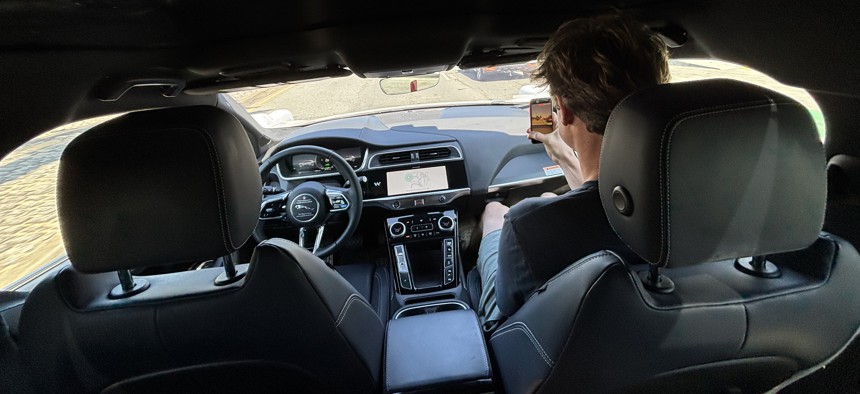
Dude, where’s my driver? Jeff Coltin



The first time I rode in a Waymo, I was hooting and hollering like I was riding a roller coaster. The second time, I was back to chatting comfortably with friends.
It was shocking how quickly the mind acclimates to the driverless taxi service – the front seat empty, but the wheel still turning as the phantom artificial intelligence system pilots the car.
My wife and I were in Oakland, California, for a wedding last summer, so one free day we joined two friends and took the ferry (a service dating back to 1851) to San Francisco where we called a Waymo (a service dating back to 2024).
I felt the way former New York City Mayor Eric Adams did about new technology – wildly curious and giddy with expectation. Our first ride was short, and surreal – an amusement park ride, but on public streets, surrounded by buses, pedestrians and cars being driven by human beings. A few hours later, we tried again for a longer trip, and the process felt weirdly routine. Like any other cab ride.
The adoption of autonomous vehicles in New York will not be anywhere near as smooth as it was in my brain, Annie McDonough writes in this week’s cover story. And if you have any doubts, just consider the ongoing political battle over horse carriages in Central Park. A couple hundred jobs are at stake there. But AVs are seen as a threat to more than 150,000 taxi and for-hire vehicle drivers.
It’s coming at the perfect time, as New York politicians weigh whether to continue to allow testing, or keep these vehicles off our streets. And I look forward to re-reading it in 10 years, after seeing what came to be. Will Waymos be as common as Ubers, or will they be Segways – a revolutionary transportation technology now considered an outdated gimmick.