

Opinion
Opinion: How New York (and Maryland) can make dining out safe
With Washington’s hands tied, we’re advancing legislation to require clear, visible icons for high-sodium and high-added sugar items on chain restaurant menus.
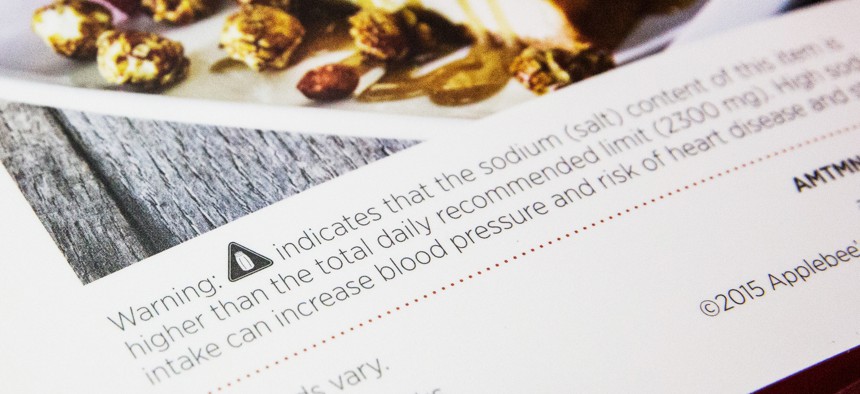
New York City already requires high-sodium warning icons on restaurant menus, and new legislation would require them across New York state and Maryland. Andrew Burton/Getty Images


Sharing a meal with family or friends is one of life’s simplest pleasures. Restaurants are part of the fabric of our communities, bringing people together to celebrate milestones and create memories. But as millions of Americans dine out each day, most have no idea that a single meal may contain more sodium or added sugar than is recommended for an entire day. At a time when heart disease and stroke account for one in four deaths nationwide, the information gap has real consequences for families’ health.
As the chair of New York’s Senate Health Committee, and a member of the Maryland House of Delegates, we believe that when federal action stalls, states have both the authority and the responsibility to protect public health. The FDA’s voluntary sodium reduction targets have yielded limited progress across the restaurant industry, and the agency is now pursuing a similar voluntary strategy for added sugars. While voluntary efforts have value, they have not delivered the meaningful change needed to reduce diet-related disease at scale. Even HHS Secretary Kennedy Jr. has publicly questioned how Starbucks and Dunkin’ can justify selling iced coffees loaded with double, and even quadruple, the FDA’s daily recommended added sugar limit. Even a broken clock is right twice a day.
We are advancing legislation in our states to require clear, visible icons for high-sodium and high-added sugar items on chain restaurant menus. These policies are not about restricting choice. They are about ensuring transparency, so families can make informed decisions when they order a meal.
The need is urgent. Across New York and Maryland, roughly 1 in 10 adults live with diabetes – more than 1.7 million New Yorkers and 481,290 Marylanders – while nearly 1 in 3 adults in each state has high blood pressure. For working families, the cost of managing chronic disease compounds the stress of the affordability crisis. Obesity, hypertension and diabetes cost New York and Maryland a combined $60 billion or more in health care costs annually, and that number keeps climbing.
Federal dietary guidelines confirm that reducing sodium and added sugar intake can lower a person’s risk of chronic disease. Yet, 90% of Americans consume too much sodium, much of it from food prepared outside the home. Even menu items marketed as healthier options often exceed recommended daily limits for sodium or added sugars, without any visible notice to the consumer. Take Subway, for example, where a single footlong can contain 4,160 mg of sodium – nearly double the daily recommended limit of 2,300 mg – without a single warning in sight. Meanwhile, most “small” regular sodas sold at the top 20 fast-food chains exceed a full day’s worth of added sugars, including some “kids” sizes.
These figures are a consequence of a food environment that prioritizes convenience over consumer safety.
Calorie labeling, while important, does not provide the full picture. Two items with similar calorie counts can differ dramatically in sodium or sugar content. Without nutrient-specific icons, consumers are left without critical information. Studies show that most adults significantly underestimate sodium content in restaurant meals, and many fail to recognize when a menu item exceeds recommended limits for added sugars. Transparency is essential to informed choice.
The evidence shows that menu disclosure policies are effective. After Philadelphia implemented sodium icons, restaurants reduced the number of high-sodium menu items. New York City has adopted sodium icons and, more recently, high-added sugars disclosures through the Sweet Truth Act. Our legislation builds on these proven approaches to extend consistent, evidence-based protections statewide.
Public health policy works best when it empowers people. Families deserve straightforward information about the food they are purchasing and consuming. By requiring clear menu icons for high-sodium and added sugar items, we support informed decision-making and encourage healthier reformulation across the industry.
Our communities cannot afford to wait. We urge our colleagues to support this legislation and take a commonsense step toward protecting the health of New Yorkers and Marylanders.
Gustavo Rivera is a New York state senator who represents the 33rd Senate District in the Bronx. He is the chair of the Senate Health Committee. Emily Shetty is a Maryland House delegate who represents the 18th District in Montgomery County. She is the chair of the Maryland House Democratic Caucus and the chair of the Appropriations committee’s Health and Social Services subcommittee.
NEXT STORY: Opinion: Corporate America needs to come clean about AI’s impact on jobs