

Editor's Note
Editor’s note: How a heatwave brought me to the mosque
And led to a great story, much like this week’s cover story.
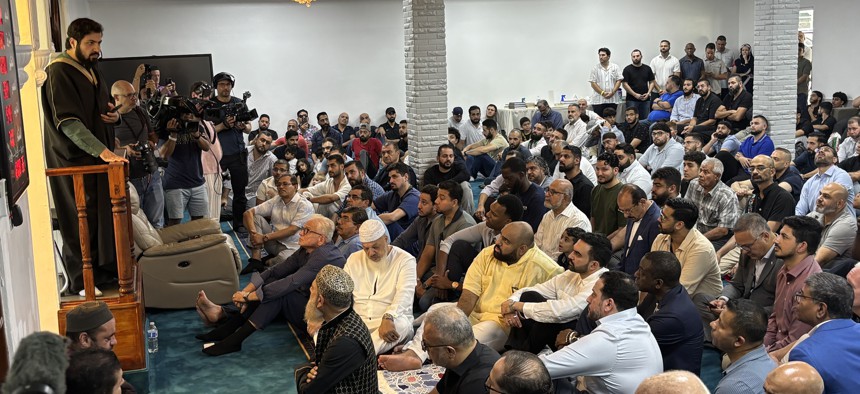
Zohran Mamdani, seated in the foreground in a white shirt, attends Friday prayers at the Centro Islamico de Puerto Rico on Nov. 7, 2025. Jeff Coltin


Growing up Catholic, and usually not eating meat except fish on a few Fridays a year during Lent, I was always in awe of Muslims who committed to fasting for Ramadan, going without any food or drink during daylight hours for a whole month.
And that self-control is even more impressive during a summer heatwave, like the muggy one that rolled into New York in July 2013, when I was reporting for WFUV public radio. I thought it would make for great audio to talk to Muslims in the Bronx about not drinking water when it’s 95 degrees outside. So I looked up my nearest Halal market and walked in – incredibly hot and sweaty from the trip. The guys there made a suggestion: don’t talk now. Come to our mosque, just before sundown.
That night was my first iftar, at Musa Mosque just down the road from Fordham University. They welcomed a college kid with a big microphone. I talked to the men as we ate dates and I put together a great story.
Since then, my reporting has brought me to mosques several more times, not to mention temples and churches of every denomination. And instead of covering Muslims fasting in the heat, I was covering one specific Muslim who was fasting while campaigning long hours during an unlikely mayoral run.
Political journalist Yashica Dutt was there too, and I loved reading her dispatches from the campaign trail, which examined details that other reporters didn’t have. She’s an award-winning writer on South Asian identity, and I’m so glad she could revisit the story of Zohran Mamdani and add much-needed nuance to our understanding of this Muslim, Hindu, African, South Asian New Yorker.