

Opinion
Opinion: New York needs an EDC leader with an eye on the water
This summer offers a rare chance to unlock the economic potential of our waterfront.
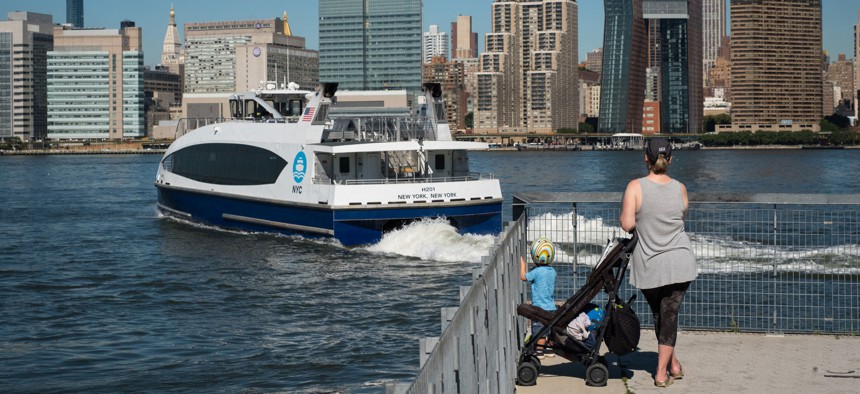
Paying more attention to the waterfront could be a ferry good idea. Edwin J. Torres/ Mayoral Photography Office


Editor’s note: After this article was initially published, City & State learned that this op-ed was partially written with the use of generative artificial intelligence, which violates our guidelines.
This summer, New York is poised for a “Summer of Water” – with the FIFA World Cup, Sail 250, City of Water Day, and major harbor activations. The city will have renewed attention on waterfront access and mobility. But we need permanent leadership at the New York City Economic Development Corporation to realize the full potential of this moment.
NYCEDC plays a central role in shaping New York’s economic future. It advances major infrastructure, waterfront, industrial, and neighborhood projects. While it does not regulate the open water itself, it exerts vast operational and economic control over the city’s maritime infrastructure, as their facilities include marine cargo terminals, cruise terminals, maritime piers and wharfs, ferry landings and offshore wind staging ports across the city. Through this portfolio, spread along New York’s 520-mile coastline, EDC helps guide how the waterfront is used, developed, and connected to economic opportunity.
Leadership transitions deserve care, especially for organizations with such important mandates. With NYCEDC now aligned under the deputy mayor for economic justice, we have an exciting opportunity to rethink how the city defines growth and who benefits from it. Yet six months into a new administration, we still don’t have a leader to define that vision.
This matters especially now because New York’s waterways are reemerging as major drivers of economic growth, tourism, transportation, climate resilience and industrial opportunity. Yet, too often, the city still treats its waterfront as a backdrop rather than as essential infrastructure.
This summer presents a rare opportunity to change that. The World Cup is bringing millions of visitors and unprecedented pressure on the city’s transportation systems. Sail 250 will draw international attention to New York’s harbor and its maritime identity. Together, these events should be a catalyst for major investments in ferries, public waterfront activation, maritime infrastructure, blue highways and the economic potential of reconnecting New Yorkers to their waterways.
The city’s Blue Highways initiative has the potential to demonstrate what is possible when economic development is aligned with economic justice. Shifting freight onto waterways can reduce emissions, ease truck traffic in overburdened communities, strengthen maritime infrastructure and create thousands of accessible jobs across the city.
But progress at this scale does not happen on vision alone. It requires sustained coordination across agencies, alignment of public and private investment and the ability to build trust with communities, while ensuring benefits reach neighborhoods that have long borne the burdens of disinvestment and pollution.
The same applies to ferry expansion and waterfront mobility. Too often viewed as amenities, these are in fact economic infrastructure – connecting residents to jobs, activating underused assets and strengthening local economies.
New York helped pioneer the modern urban ferry system, yet we continue to underutilize our waterways compared to other global waterfront cities. A strong NYCEDC leader should recognize that the harbor is not peripheral to New York’s future economy, it is central to it.
This is what economic justice should look like in practice: investing in the systems that sustain neighborhood economies, from resilient infrastructure and industrial job retention to small business ecosystems and genuine community partnership.
For too long, economic development has leaned toward marquee projects while overlooking the fundamentals. The next president of NYCEDC should bring a broader mandate – treating growth and equity as inseparable, prioritizing investment in underserved communities and engaging neighborhoods as partners in shaping decisions that will define their futures.
Deputy Mayor Julie Su’s remarks at the Waterfront Conference on May 19 shared her belief that economic justice is intrinsically tied to economic development on our waterways. Economic justice cannot just be a title within City Hall. It must be reflected in leadership appointments and carried through in decision-making.
The administration has an opportunity to appoint a leader who can modernize NYCEDC’s mission and help build a more equitable and resilient economic model for New York. But that opportunity is time-sensitive. Each month without permanent leadership means delayed investment and missed opportunity.
As the city prepares to welcome the world to its shores this summer, it should not simply showcase its waterfront but articulate a vision for how its waterways will power the city’s future economy for decades to come. We look forward to working with the new president (as soon as possible!) to set a new standard for what New York City’s waterways can achieve.
Virginia Maloney is the New York City Council representing District 4 in Manhattan, chair of the Economic Development Committee and a former NYCEDC employee. Julie Raskin is president and CEO of Waterfront Alliance, a regional nonprofit advancing resilient, accessible, and economically vibrant waterfronts.
NEXT STORY: Opinion: DSA’s championship performance