

Opinion
Opinion: Gloria Steinem, undercover journalist
Before becoming an international icon, the celebrated feminist thinker started her career practicing a unique form of journalism that’s become a lost art.
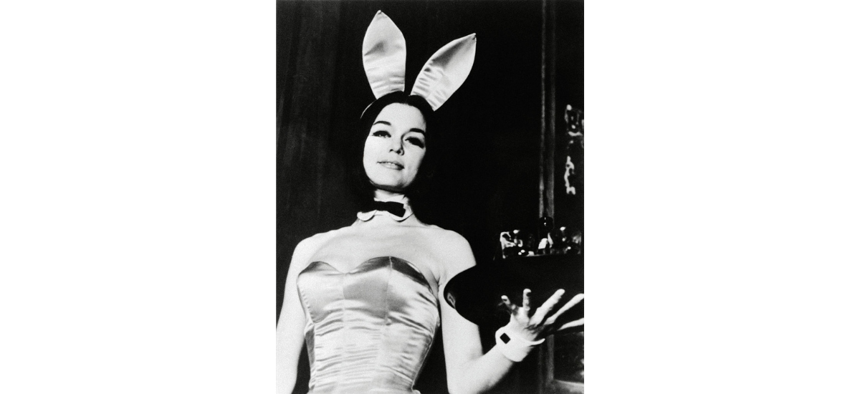
Gloria Steinem dressed as a Playboy bunny for an exposé on the New York City men’s club. Bettman via Getty Images


She was a trailblazing crusader for feminism, activism and equality.
But what many of the obituaries, tributes and analyses of Gloria Steinem’s wonderful life have missed is that she was one of the finest practitioners of a dying art: “participatory journalism,” or as it’s sometimes called, “immersion journalism.”
George Plimpton coined the term “participatory journalism” in 1966 when he wrote “Paper Lion” about his experience as a third-string quarterback in the NFL for the Detroit Lions – but three years before that, a young female journalist put on a skimpy uniform and went undercover as a “Bunny” at the Playboy Club in Manhattan to chronicle the poor conditions women working there endured.
“A Bunny’s Tale,” which Steinem wrote for Show magazine in 1963, exposed the sexist and misogynistic world inside Hugh Hefner’s new men’s club, where waitresses wore tails and the male patrons who ordered food and drinks from them felt it was their right to pull on them:
A girl with jet black hair, chalky makeup and a green costume stopped at the door. “My tail droops,’ she said, pushing it into position with one finger, “those damn customers always yank on it.” The wardrobe mistress handed her a safety pin. “You better get a cleaner tail, too, baby. You get demerits running around with a scruffy tail like that.”
Probably the earliest recorded example of this immersive journalism happened in 1961, when John Howard Griffin wrote the book “Black Like Me.” Griffin, a white journalist, blackened his skin and traveled through the racist South, describing how he was treated and what it was like to be a black man in that racist region.
The legendary Hunter Thompson practiced an even more radical version of this style of journalism. He rode with the outlaw motorcycle gang the Hell’s Angels for a year to write the book “Hell’s Angels: A Strange and Terrible Saga” in 1966. He then covered the 1972 presidential campaign in “Fear and Loathing on the Campaign Trail.” His style of “gonzo journalism” allowed him to both make himself the center of the story and blend in social criticism – normally a big “no-no” in typical objective journalism.
When I was the editor of a weekly community newspaper in Manhattan during the late 1980s, I employed “participatory journalism” in a number of freelance assignments I doled out.
In one story, which received national headlines, I encouraged our reporter not to bathe or shave for a week and then put on some ragged clothes and travel with a beat-up duffel bag to the Hamptons. I wanted to see how a wealthy resort town would react to an apparently homeless person sleeping on the sidewalk in their chicest commercial strip.
The assignment called for him to park himself in front of a jewelry shop on Main Street in Southampton and to lie in front of the store, posing as a sleeping homeless person. I had a freelance photographer perched across the street ready to record any interaction with the faux homeless resident.
Within an hour, the Southampton police chief showed up and aggressively asked the reporter what he was doing. “I’m homeless, so I’m going to sleep here on this street,” he replied. “It’s my constitutional right.”
“Not in my town you’re not. I’m the law,” said the sheriff. “If you’re not out of town by sundown, I’m going to have you arrested.”
Our photographer got some great shots of the menacing-looking Sheriff hovering over our frail “homeless” reporter. A few days later, the New York Post picked up our story under the headline: “Homeless in the Hamptons.” It sparked a national debate about how different municipalities deal with homelessness on their streets.
I was so emboldened by this journalistic coup that I assigned a few more “participatory journalism” assignments: one female reporter became a receptionist at an upper East Side brothel. “The Call Girl’s Call Girl,” was the headline of her first-person piece describing in detail what happens overnight at a high-end illegal prostitution business.
Another story I assigned involved one of our writers joining a “Sexaholics Anonymous” group and reporting about what those group conversations were like (of course, without divulging any identities or info that could be traceable).
Participatory journalism’s heyday was during the New Journalism movement of the 1960s and 1970s when literary journalists like Norman Mailer, Truman Capote and Tom Wolfe used techniques from fiction to set scenes and use interior monologue to lure readers into a different journalistic experience. Plimpton, Steinem and other intrepid journalists benefited from this era of experimental journalism.
In recent decades, unfortunately, the use of participatory journalism has waned. I miss this innovative technique that allowed a 28-year-old unknown young woman with a passion for feminism and social justice to break through to a worldwide audience and expose the inner workings of an exploitative and sexist workplace.
We need more young Gloria Steinems today to embed themselves in places that rarely come into view for ordinary Americans. There is so much to expose, and by going undercover, reporters can really get the “fly on the wall” story of how people truly behave in private settings.
Wouldn’t it be great if Natalie Harp or Karoline Leavitt or Susie Wiles was really an undercover journalist who was actually taking detailed notes to expose the seamy underbelly of the Trump administration?
An editor can dream.
Tom Allon is the founder and publisher of City & State.
NEXT STORY: Commentary: The political arrival of Muslim New York