

New York City
Opinion: The World Cup was a test for city government. How did we do?
The World Cup added $2 billion to our local economy, supported more than 12,000 jobs and increased foot traffic to our sports bars by 16%.
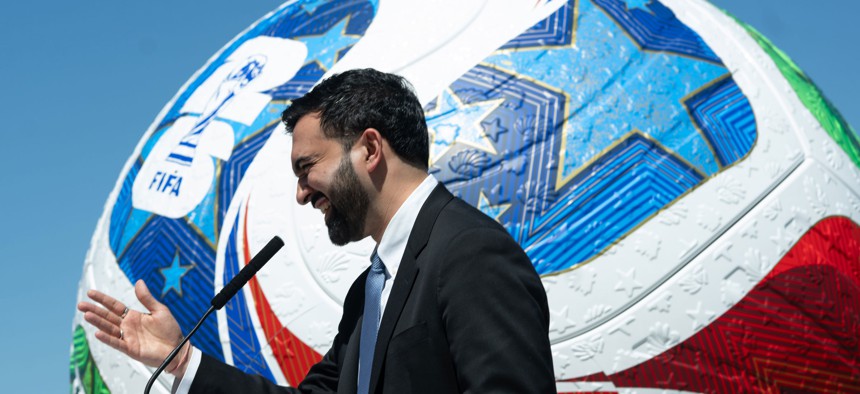
New York City Mayor Zohran Mamdani announces a series of free events tied to the FIFA World Cup on April 27, 2026. Michael Appleton/Mayoral Photography Office

This summer, more than one million people descended onto the New York/New Jersey region to watch the world’s best soccer players compete in the 2026 FIFA World Cup.
Visitors from Switzerland, South Africa, Spain and dozens of other countries packed into our city’s restaurants, bars and parks. For 39 days, they stood shoulder to shoulder with millions of New Yorkers as the tournament unfolded right here in our backyard.
But beyond the images of cheering fans was a major test for our new mayor, just six months into his first term.
Could the nascent administration coordinate effectively across the city government to keep the city safe and moving? Could Mayor Zohran Mamdani bring his relentless focus on affordability to one of the world’s most expensive – and corporate – events? Could we make sure the tournament benefited small businesses throughout all five boroughs?
These were not idle questions. They spoke directly to the priorities of public excellence, affordability, economic growth and joy that Mamdani had championed during his campaign and in his administration.
As World Cup czar, my job was to find the answers to those questions and work across agencies to deliver a successful tournament.
The first priority was clear: keep the city safe and moving amidst a historic influx of visitors. Thanks to the dedication of our public servants and the intricate planning of the city government, we succeeded on both fronts. Dozens of agencies – from New York City Emergency Management to NYC Parks to Citywide Event Coordination and Management – spent years preparing traffic plans, contingency plans and informational campaigns.
Police officers protected New York every single day of the tournament, balancing the complex demands of the World Cup with high-profile events like watch parties and Fan Fests all over the five boroughs. Thanks to their efforts, the tournament not only went off without a hitch, but New York City posted one of its safest summers on record.
Alongside our public servants, nearly 500 New Yorkers enlisted in our Summer Welcome Corps, helping provide direction and guidance on the street to people visiting New York.
Meanwhile, the Department of Transportation launched a comprehensive Midtown transportation plan, creating dedicated corridors for World Cup buses and shuttles that streamlined transportation to the games while keeping the rest of the city moving. The plan worked. Even as more than one million people came into the city, Midtown travel times were actually faster than historical averages for match days. This was not a coincidence. It was the result of smart planning and sensible leadership.
But the World Cup was about more than government excellence. The tournament tested whether Mamdani, fresh off a campaign centered on affordability, could open up the world’s most expensive tournaments to working-class New Yorkers.
We started by working with the NYNJ Host Committee to secure 1,000 affordable tickets for New Yorkers to attend the games. Mamdani not only raised the issue publicly – pushing FIFA to find concrete ways to make the tournament more affordable – he did so privately as well, using a meeting with FIFA President Gianni Infantino to make his case. Ultimately, we succeeded, becoming the only host city to offer affordable tickets to its residents.
But in New York City, you didn’t need a ticket to enjoy the games. The mayor pushed our team to think creatively about how to transform city assets into places for New Yorkers to gather and celebrate the games. We stood up more than 100 free watch parties across the city, with our parks, plazas and public markets hosting tens of thousands of people.
From Soccer Streets that gave kids a free place to hone their Cruyff turn during the day, to 24/7 fields that let people play throughout the night, this World Cup proved that affordability is more than just a buzzword but a real commitment from the Mamdani administration.
Finally, we knew that the tournament was a test of the mayor’s economic agenda. In the run up, some wondered whether the World Cup would be a bust. Others speculated that the outer boroughs would once again be left out to dry. Neither turned out to be true.
Instead, we built a suite of initiatives to drive foot traffic all over the city. We enlisted hundreds of bars and restaurants in our “$26 for 2026” meal deal; brought more than 60 museums, theaters and festivals together for a cultural passport program; worked with the Host Committee to create an interactive event map; and distributed our World Cup business toolkit to more than 56,000 New Yorkers.
People rode World Cup ferries decorated with the flags of each borough to collect World Cup commemorative cups branded for each borough. They took a 7 train wrapped in the Ecuadorian flag to Jackson Heights to eat ceviche and watch the games at our Paseo Park watch party.
These efforts worked. The World Cup added $2 billion to our local economy, supported more than 12,000 jobs and increased foot traffic to our sports bars by 16%.
These benefits flowed not only to Manhattan but to all five boroughs. In Brooklyn, international Visa card spending shot up by nearly 20%. In Queens, nearly 180,000 people attended the Queens World Cup Fan Festival. Across Staten Island and the Bronx, hotel occupancy jumped by 6%.
At a moment when many wondered how Mamdani would approach economic growth, the World Cup made it clear that the new administration would use every tool to uplift the city’s businesses.
The World Cup may be over, but the priorities of an effective government, an affordable city and a thriving economy continue. These priorities are bigger than any single season or event. They stretch beyond quick fixes and simple solutions.
But the World Cup proved that this administration is up for the challenge. If this summer was the first major test of the Mamdani administration, I am proud to say we passed.
Maya Handa was City Hall’s World Cup czar.
NEXT STORY: Opinion: New York still needs more AI regulation