

Personality
2025 Winners & Losers of the Year
Hello Zohran Mamdani and Julie Menin. Goodbye Andrew Cuomo and Eric Adams.
New York City Mayor-elect Zohran Mamdani was one of the biggest winners of the year. Illustration by Justin Metz


When Peter Sterne broke the news in July 2024 for City & State that an Assembly member from Queens, Zohran Mamdani, was considering running for New York City mayor, no one could’ve foreseen what happened next. “Mamdani is a rising star on the left,” Sterne noted 18 months ago, and now Mamdani’s a rising star nationally – for democratic socialism and for young Democrats eager for change. The groundswell of support expanded the Democratic primary electorate in a way that only one poll even came close to predicting. Mamdani’s shocking primary victory over Andrew Cuomo changed the course of the year. It led to Cuomo’s desperation in the general election, indulging some of the most toxic parts of this political moment, and Eric Adams’ pivot to the right amid collapsing support among voters. The question looking back at 2025’s storyline: Are we at the start of the story of New York’s next great mayor, or was this the climax of a story about winning the second-hardest job in America?
WINNERS
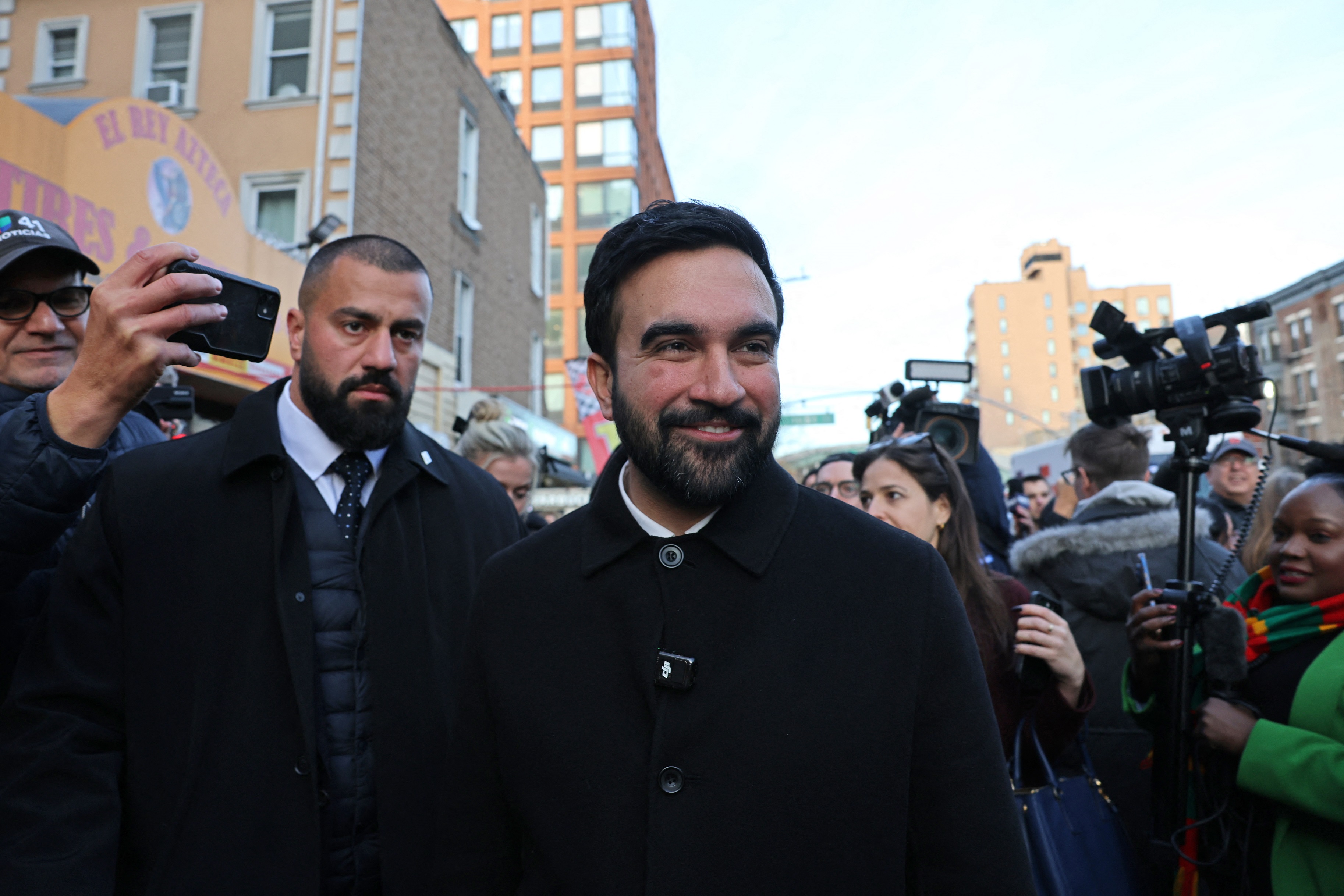
Zohran Mamdani
This was the best year of Zohran Mamdani’s life, he said, particularly June, “the month where everything we had been working towards started to come into fruition, and a month where people gave themselves permission to believe in a different kind of politics.”
Back in January, aside from being a mayoral candidate, his day to day was still relatively normal. He was able to walk down the street and take the subway without being noticed, but there were signs of his coming success. That month, he qualified for matching funds with more campaign donations than any of his opponents. In February, he polled at 1% in the first independent survey of the race (and he got married). In March, he confronted Trump’s border czar Tom Homan in the state Capitol and maxed out on fundraising earlier than anyone else. By April, he was consistently in second place in the polls behind the man everyone assumed would easily win: Andrew Cuomo. In May, he held his first rally and got his first endorsement from a non-Democratic Socialists of America-endorsed elected official: state Sen. Gustavo Rivera. In June, his campaign surpassed 1 million doors knocked, and he sparred with nine candidates on the primary debate stage. He won the Democratic primary for mayor, shocked the city and became a global star overnight. He learned he’d have to beat Cuomo again in July, and he went to Uganda that month to celebrate his wedding. In August, he was on the cover of Time and held a scavenger hunt for his supporters. In September, Gov. Kathy Hochul endorsed him, and a Texas man was arrested for making threats against him. In October, he gave a landmark address on Islamophobia, and he was finally endorsed by Rep. Hakeem Jeffries. By November, his campaign reported knocking on 3 million doors. He won the general election decisively, and he promptly announced his transition co-chairs. He flew to Washington, D.C., to meet with President Donald Trump and held a friendly press conference so surreal it prompted our intern to say we had “jumped timelines.” In December, he announced his transition had raised $3 million, and confirmed he would move into Gracie Mansion.
It must all be a little dizzying. Mamdani said he recently went to an AT&T to get his phone fixed, and the employee said he looked very familiar and asked if he had come into the store before. Mamdani explained he might look familiar because he’s about to be mayor. The man apologized and said he doesn’t have time to focus on much beyond work. “That is the reality for so many New Yorkers, and it’s one that we need to address by addressing the cost of living crisis in the city,” Mamdani said, exhibiting his now-legendary message discipline. He said he’s determined to keep talking to regular people.
“Because if the only New Yorker you see is the reflection of yourself in the tinted glass window in your detail car, then you will start to lose sight of the issues and the struggles that New Yorkers are facing.”
– Holly Pretsky
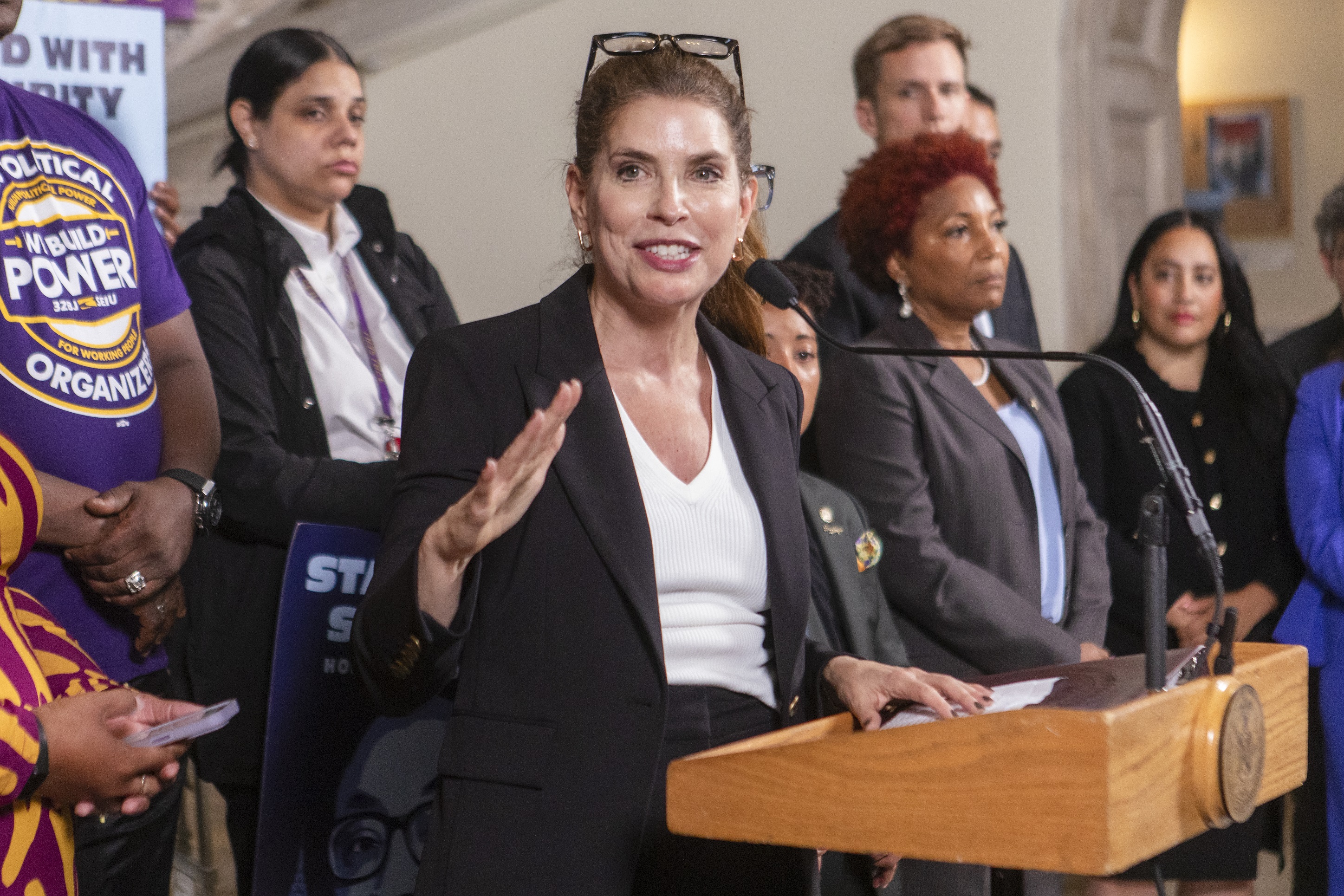
Julie Menin
There was some last-minute rearranging to put Julie Menin on this list. The New York City Council doesn’t vote on its speaker until early January, which means most presumptive winners are crowned in mid-December at the earliest. None of the five candidates, we were sure, would have anything locked up by now.
Menin defied expectations.
The Upper East Side council member closed out the speaker race on the eve of Thanksgiving, going public with a supermajority of council members pledging their support on the record. Her closest competitor, progressive Council Member Crystal Hudson, effectively conceded, and Menin has spent the past couple weeks meeting with all the members who weren’t in her coalition – mainly holdouts in the council’s Progressive Caucus. And though there are still a few weeks to go until the body votes to elect the next speaker, there’s no indication that Menin’s commanding coalition will falter.
That’s thanks to the relentless course that Menin has charted over the past year, and even for years before that. Menin’s work on key legislation left a few powerful labor unions glued to her side. Her outreach to current and incoming members was exhaustive. Alignment with Democratic leaders in Queens and the Bronx – and, in the end, Brooklyn – delivered Menin blocs that tore into Hudson’s support among progressives and nullified any notion that Republicans would go with another candidate.
In a city that has become somewhat accustomed to unexpected victories – whether it’s Adrienne Adams’ compromise speaker candidacy in 2021, or Zohran Mamdani’s establishment-shaking mayoral win this year – Menin delivered a front-runner’s victory. Early, aggressive and irrefutable.
To quote Eric Adams, when does the hard part start? Well, probably quite soon. Menin stayed conspicuously neutral in both the Democratic mayoral primary and the general election for mayor, in which nearly all of her speaker opponents endorsed Mamdani. She has made the case to Mamdani skeptics that she will hold the new administration accountable and not be a rubber stamp – and has reportedly floated reviving the council’s little-used subpoena power – while signaling to Mamdani supporters that she will work on shared goals like universal child care. How she navigates that balance will come into clearer public view – and under more scrutiny – when she takes office.
– Annie McDonough
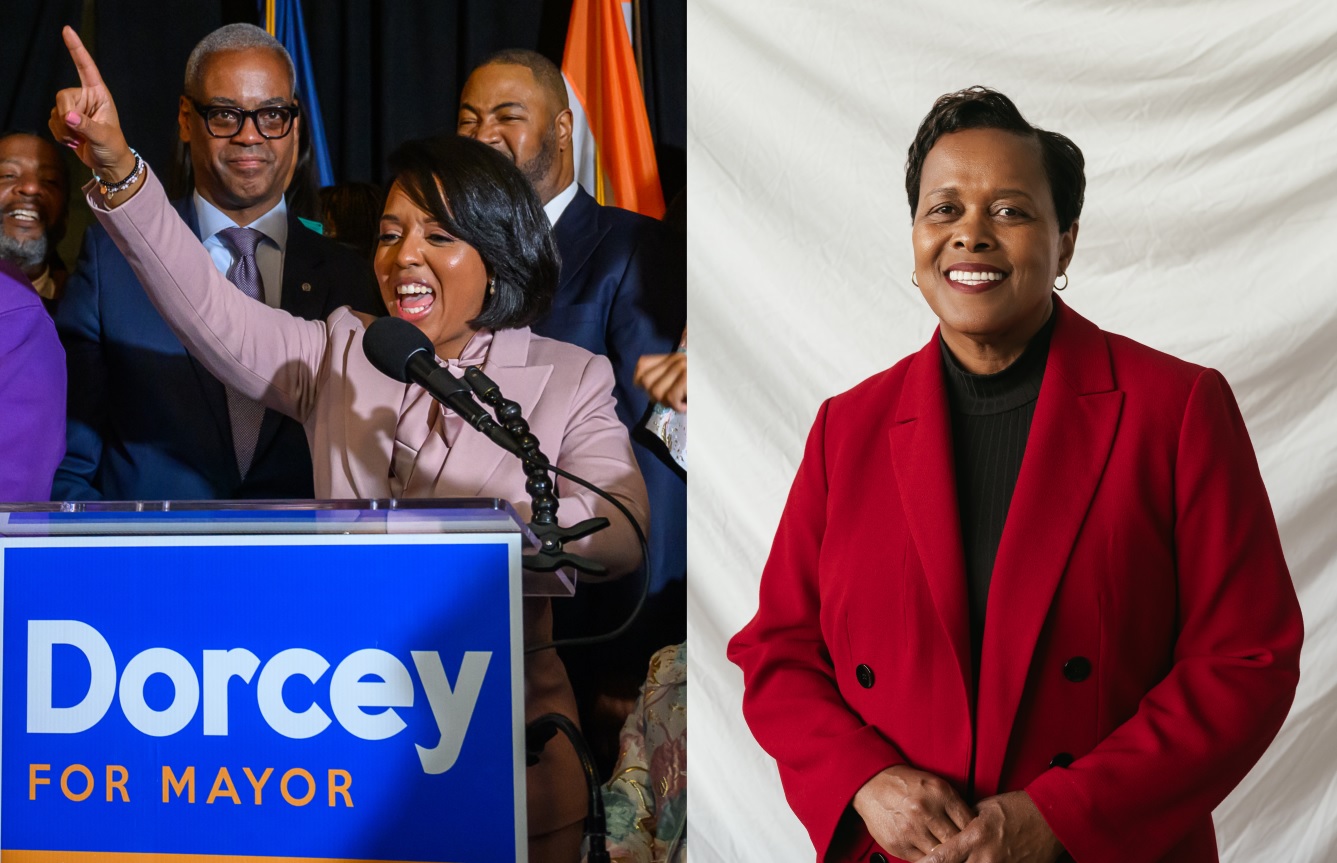
Dorcey Applyrs & Sharon Owens
On their way to breaking the glass ceiling, Dorcey Applyrs and Sharon Owens took the same path – just in different cities. The first Black mayor of Albany, Applyrs captured City Hall after assembling a campaign that stressed her progressive roots. The chief city auditor, Applyrs leaned into an endorsement from the Working Families Party, along with support from Assembly Speaker Carl Heastie to win the Democratic nomination in a landslide, tantamount to election in the capital city.
In Syracuse, Owens is stepping into City Hall after years as deputy mayor to term-limited Mayor Ben Walsh. Owens had to overcome a Democratic primary opponent endorsed by Syracuse Democrats on her way to becoming the first Black mayor in Syracuse.
Applyrs and Owens are the second women to be elected mayors of their respective cities.
Once both become mayor on Jan. 1, Applyrs and Owens will find their paths diverging a bit, but in some ways there are a lot of similarities in issues they will inherit, namely the attention of another glass ceiling shatterer – Gov. Kathy Hochul – in the interests of their cities. Applyrs is stepping into City Hall as Hochul is working to remake the capital city, including a $400 million state investment in the redevelopment of Albany’s downtown, including improvements to Empire State Plaza. In addition, there is a growing interest in improving access to the Hudson River waterfront, currently abutted by an interstate highway, a project being looked at by state officials as part of Hochul’s reconnecting communities initiative.
Owens inherits a city in the middle of the signature reconnecting communities project of dismantling the Interstate 81 viaduct that runs through the middle of the city and turning it into a grand boulevard, diverting highway traffic around the city’s core. At the same time Central New York is in the middle of the planned $100 billion Micron project, which will place the semiconductor company’s new plants in the suburb of Clay. This game-changing economic development project – a key Hochul priority that will impact a vast part of upstate – will dominate the agenda of any Central New York elected official for the foreseeable future.
– John Celock
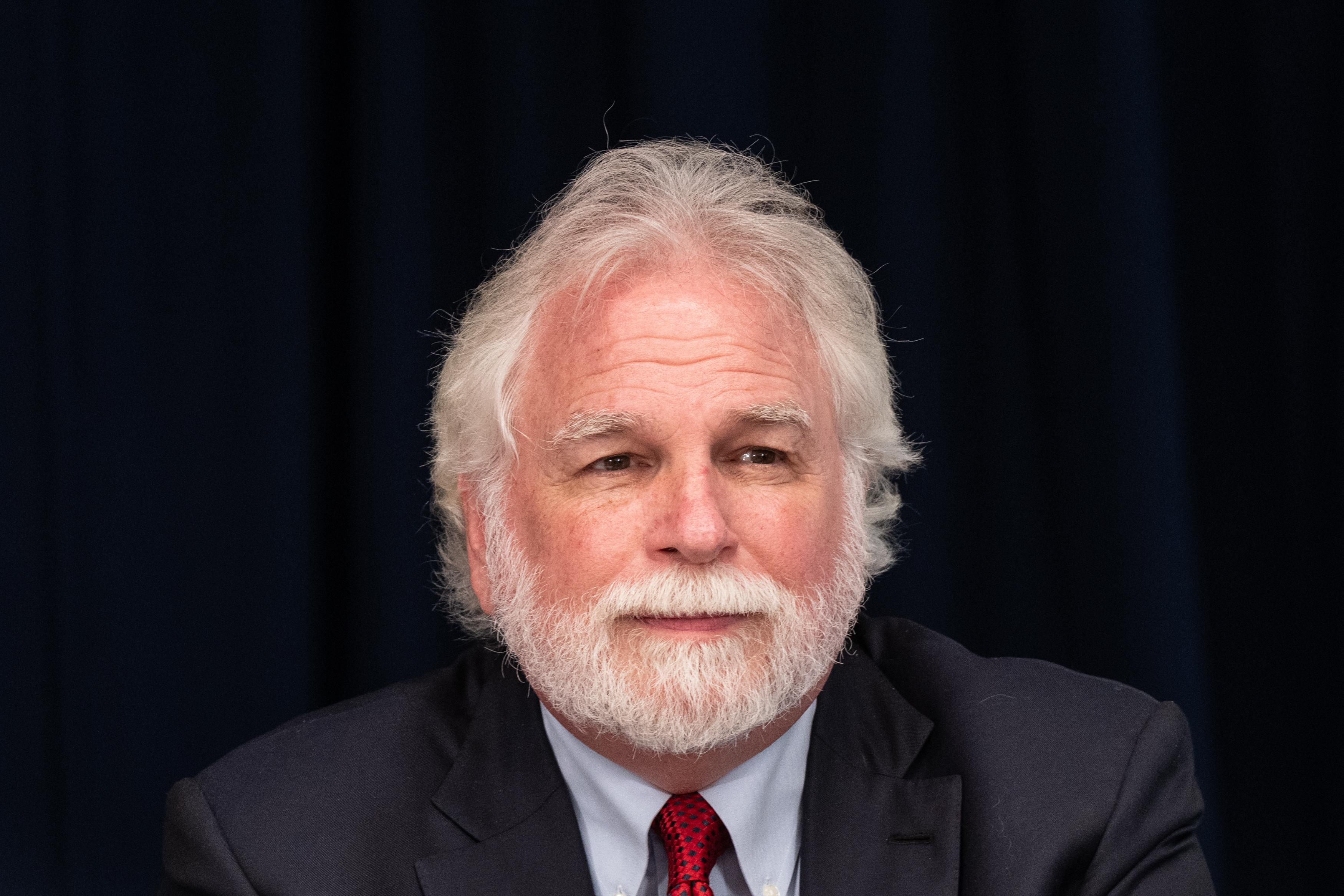
Randy Mastro
He might be a long way from childhood, but he’s been one of 2025’s biggest comeback kids. After the New York City Council torpedoed his chances in 2024 of becoming the city’s corporation counsel, it was Randy Mastro who got the last laugh, sauntering back to City Hall just six months later flexing a far more powerful role.
Mayor Eric Adams chose the well-known lawyer in March to serve as his first deputy mayor in wake of several well-respected top officials’ departures. For Mastro, who’d served as deputy mayor for operations and chief of staff under then-Mayor Rudy Giuliani 30 years ago, stepping into city government’s No. 2 position was part homecoming, part opportunity.
Not only has he clearly been having a blast, he has wielded an unusual degree of power too. Government insiders have billed Mastro as running the show at City Hall – first, as Adams mounted his long-shot reelection bid, and then as the mayor has traveled and contemplated what comes next in the waning days of his tenure. While Mastro’s decisions have drawn both ire and acclamation, nobody can deny his impact. He played a big role in budget negotiations, a deal approved unanimously by the City Council for the first time in years. He reversed the administration’s course on long-standing initiatives like the enforcement of mandatory residential composting, lowered speed limits for e-bikes and blocked a project to build senior housing at the Elizabeth Street Garden site. He pushed for a new office to combat antisemitism. The list could go on and on.
Oh, don’t forget Mastro’s adorable dog Kato, who often accompanies him to City Hall. And despite his rocky start with City Council members, he has even managed to charm some of his most skeptical critics. Mastro’s reign at City Hall will soon come to a close, though the fingerprints he leaves behind – like helping appoint new members to the Rent Guidelines Board – are likely to linger into the Mamdani administration. But Mastro knew going in that his days in the role would be numbered. “I consider this role to be a blessing, and I intend to make every day I’m here count,” he told Hell Gate. “I can sleep in January.”
– Sahalie Donaldson
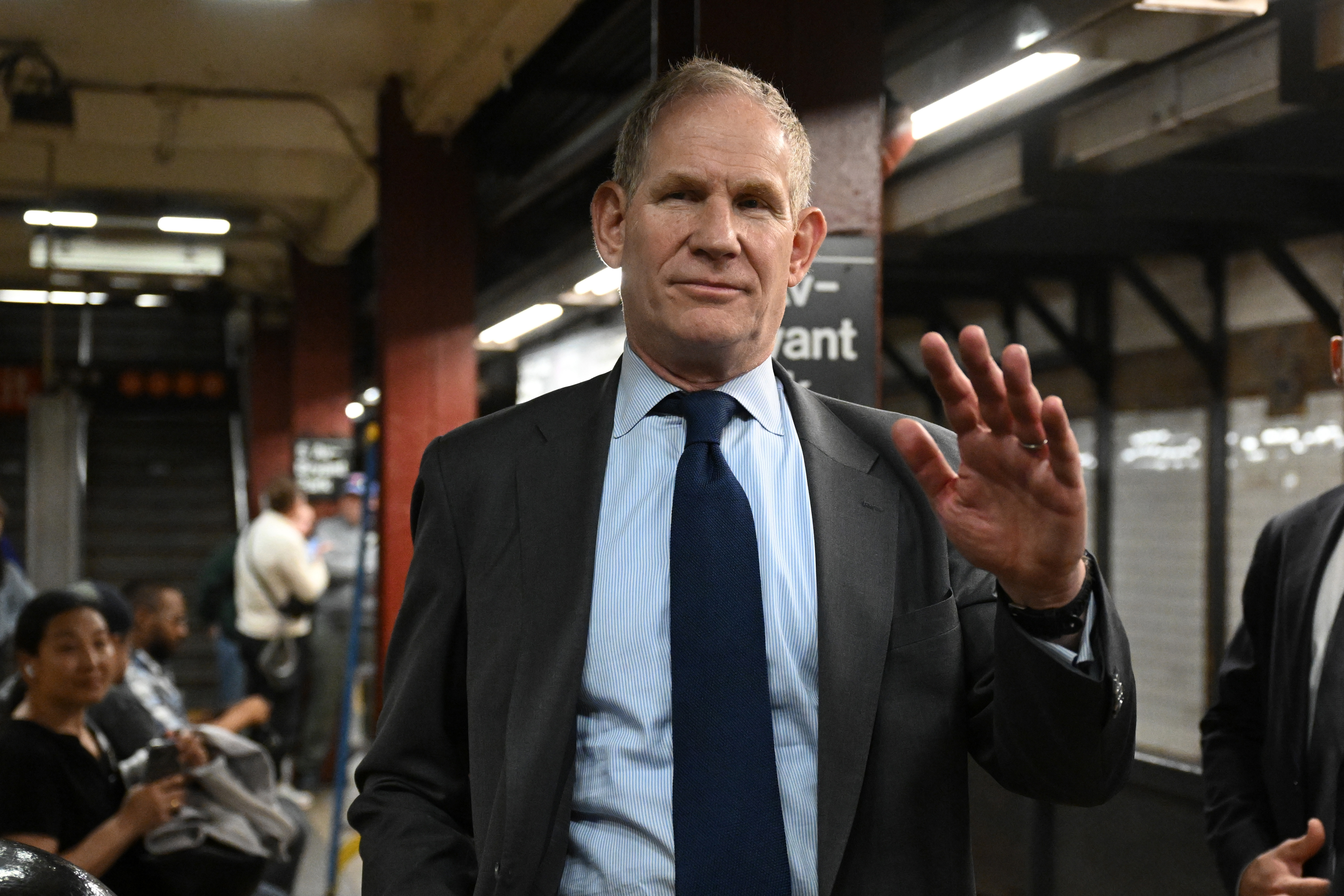
Janno Lieber
The job of leading the largest public transit network in the country is one that provides few opportunities for outright victories. For the Metropolitan Transportation Authority, the return of President Donald Trump to the White House has led to manufactured funding crises for major infrastructure projects. The nation’s bombastic transportation secretary has made a personal enemy of the New York City subway system – he prefers using the term “shithole” – and even sidestepped the MTA for a subway photo op. Every day, the subway will inevitably disappoint – a 30-minute delay here, a planned line shutdown there, a still incomplete systemwide buildout of station elevators – leaving New Yorkers cursing the MTA on one commute or another.
Despite it all, allow us to make the case that MTA Chair and CEO Janno Lieber was triumphant on New York’s biggest transportation transformation in years. That is, of course, congestion pricing.
Some observers thought Lieber – a vocal champion as well as logistical manager of the first-in-the-nation tolling program – was bound to quit over Gov. Kathy Hochul’s last-minute indefinite “pause” of the program’s rollout last summer. Some questioned just how long that pause might be, or whether it would become a permanent pause. And even once Hochul gave the go-ahead to switch on the program starting Jan. 5, questions remained among the program’s supporters as to just how prepared the MTA was to make it a success.
The first sign of success? Well, it’s still happening. Between Hochul’s pause and a series of legal challenges, that wasn’t always a sure thing. But the program also appears to be making headway in its dual objectives: raising money for critical transit projects and reducing traffic in Manhattan’s central business district. According to the MTA, the zone has seen a decrease of more than 10 million vehicles since last year, while traffic delays have decreased not just in Manhattan but in the broader region. The program is on track to bring in $500 million in its first year. There were even some signs earlier this year that public opinion on the program was improving.
It’s clear Lieber’s job will never be easy. The Trump administration is still fighting congestion pricing. A potential Long Island Rail Road strike looms. Fare hikes taking effect next year will draw more of New Yorkers’ ire.
But the self-described “patron saint of challenging projects” has proved doubters wrong on congestion pricing. Let’s see if it continues in 2026.
– Annie McDonough
LOSERS
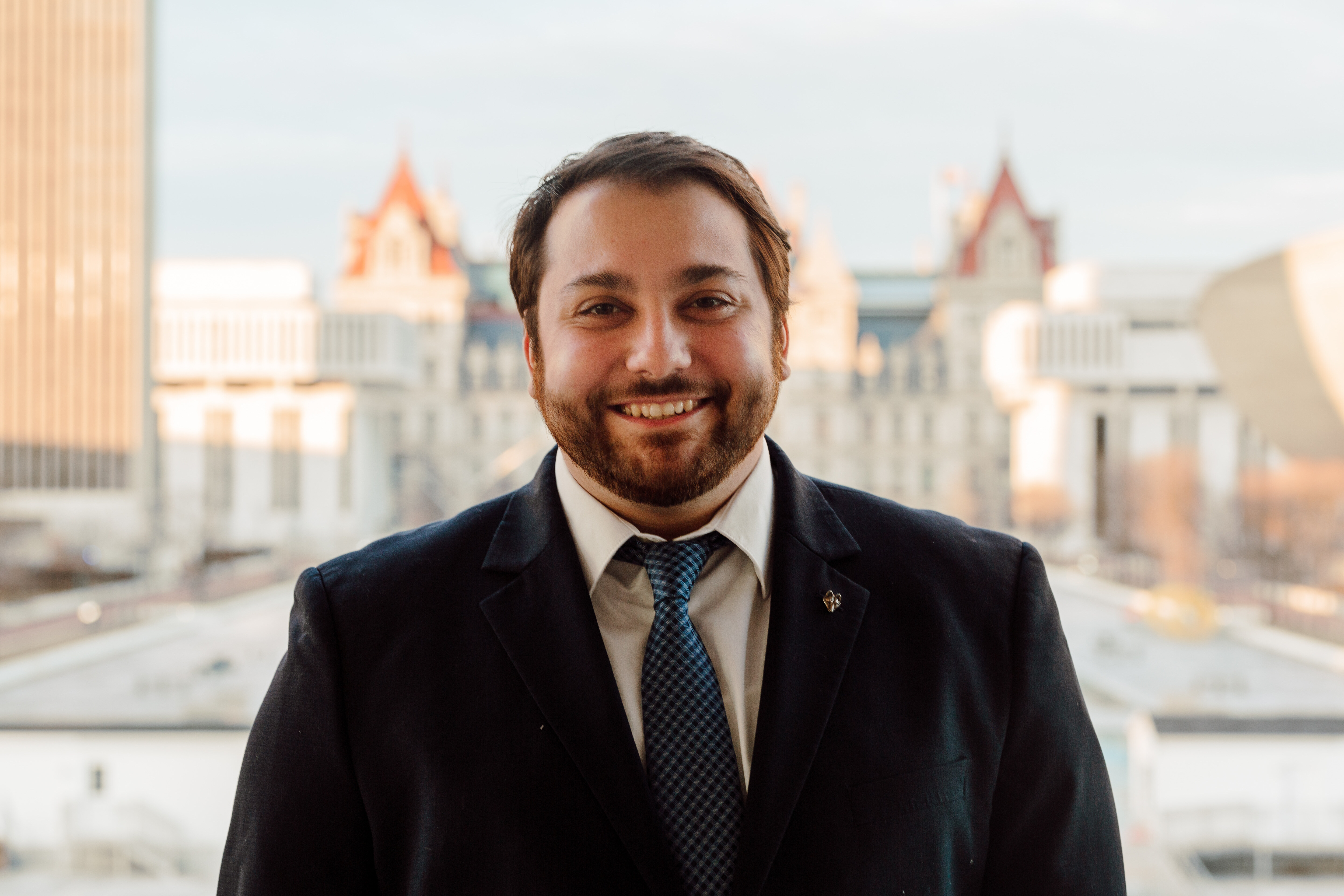
Peter Giunta
They got cooked, fr fr.
A group of Young Republicans’ racist and antisemitic messages, uncovered by Politico, had vast repercussions for the party, its affiliated organizations and the group chat participants.
Former New York State Young Republicans Chair Peter Giunta, who was also Assembly Member Michael Reilly’s chief of staff, played a central role in the group, sending some of the worst messages.
He made comments about sending campaign opponents to gas chambers and not trusting female pilots of color, used racial and sexual slurs, referred to Black people as monkeys and “watermelon people” and proclaimed his love for Adolf Hitler.
And he wasn’t the only one sending objectionable messages.
Five chat members were tied to the New York State Young Republicans, including Giunta’s Vice Chair Bobby Walker, who was a staffer for state Senate Minority Leader Rob Ortt, and General Counsel Joseph Maligno, who worked for the New York State Unified Court System.
After Politico broke the news in October that a group of Young Republican leaders from New York, Kansas, Arizona and Vermont exchanged more than 28,000 messages, there was bipartisan outrage.
Giunta, Walker and Maligno lost their jobs. The New York State Young Republicans and the Kansas Young Republicans dissolved entirely because of the group chat fallout.
Chat members from other states were also fired from their jobs, including one from Kansas and two from Vermont.
New York Republicans denounced the messages, including Rep. Elise Stefanik and state Republican Party Chair Ed Cox.
Giunta accused Gavin Wax – a staffer in the Department of State and the former chair of the New York Young Republican Club – of being the one to leak the group chat. The drama led to Wax’s resignation from the New York City-based political club shortly after the news broke.
All in all, Young Republicans across the country took a big hit this year and that can be traced back to New York members who were central to the offensive group chat, like Giunta.
– Amanda Salazar
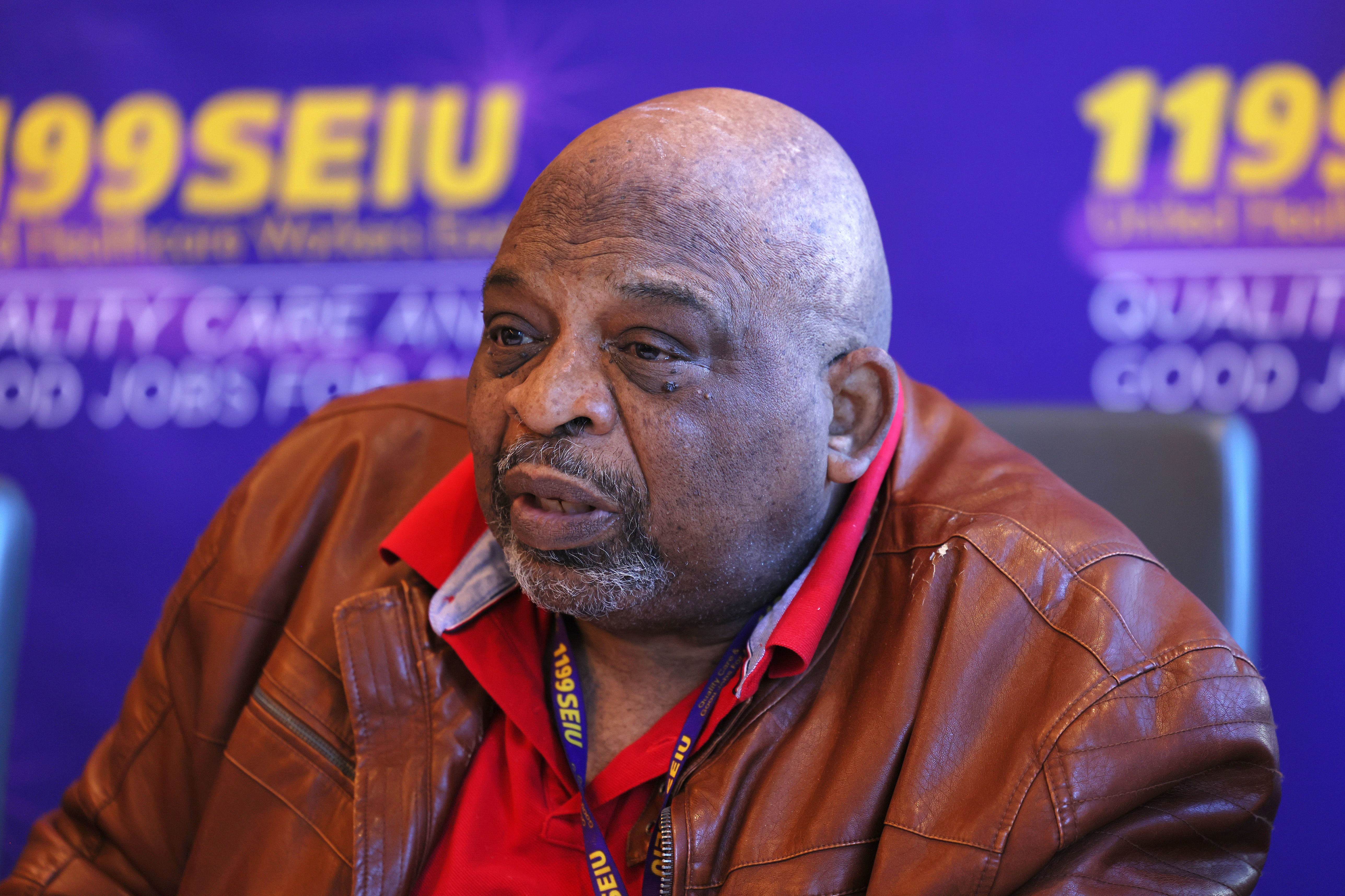
George Gresham
If you come at the king, you best not miss – and they certainly didn’t. After 18 years leading the powerful health care union 1199SEIU, George Gresham lost reelection to Yvonne Armstrong, previously one of his top lieutenants.
Gresham’s loss followed a Politico exposé into the union’s questionable expenses, which included $60,000 for Gresham’s daughter to accompany him on business trips and $50,000 to his friend Jesse Jackson. A spokesperson for 1199SEIU tried to defend the spending as necessary to fulfill the union’s goals – though it was hard to see how paying tens of thousands of dollars for musicians to play in the small Virginia town where Gresham hosts his annual family reunions helped the union.
Gresham’s loss comes at a strange time for organized labor in New York City. The young progressive activists energized by Mayor-elect Zohran Mamdani’s mayoral campaign are deeply supportive of unions – but not necessarily longtime union leaders like Gresham, who have worked closely with the Democratic establishment for years. After all, Gresham pushed the union to endorse former Gov. Andrew Cuomo in the Democratic mayoral primary.
The erstwhile leader of 1199SEIU was not the only New York City union leader to face a tough reelection fight this year. United Federation of Teachers President Michael Mulgrew faced his own internal rebellion from union members upset about his support for City Hall’s controversial plan to switch retirees to a privately managed Medicare Advantage plan. But Mulgrew was able to quickly pivot, dropping his support for Medicare Advantage to appease retired teachers, and he kept the UFT out of the contentious Democratic mayoral primary. It was just enough to stave off defeat by a reform slate. Gresham, though, wasn’t so fortunate.
– Peter Sterne
Andrew Cuomo
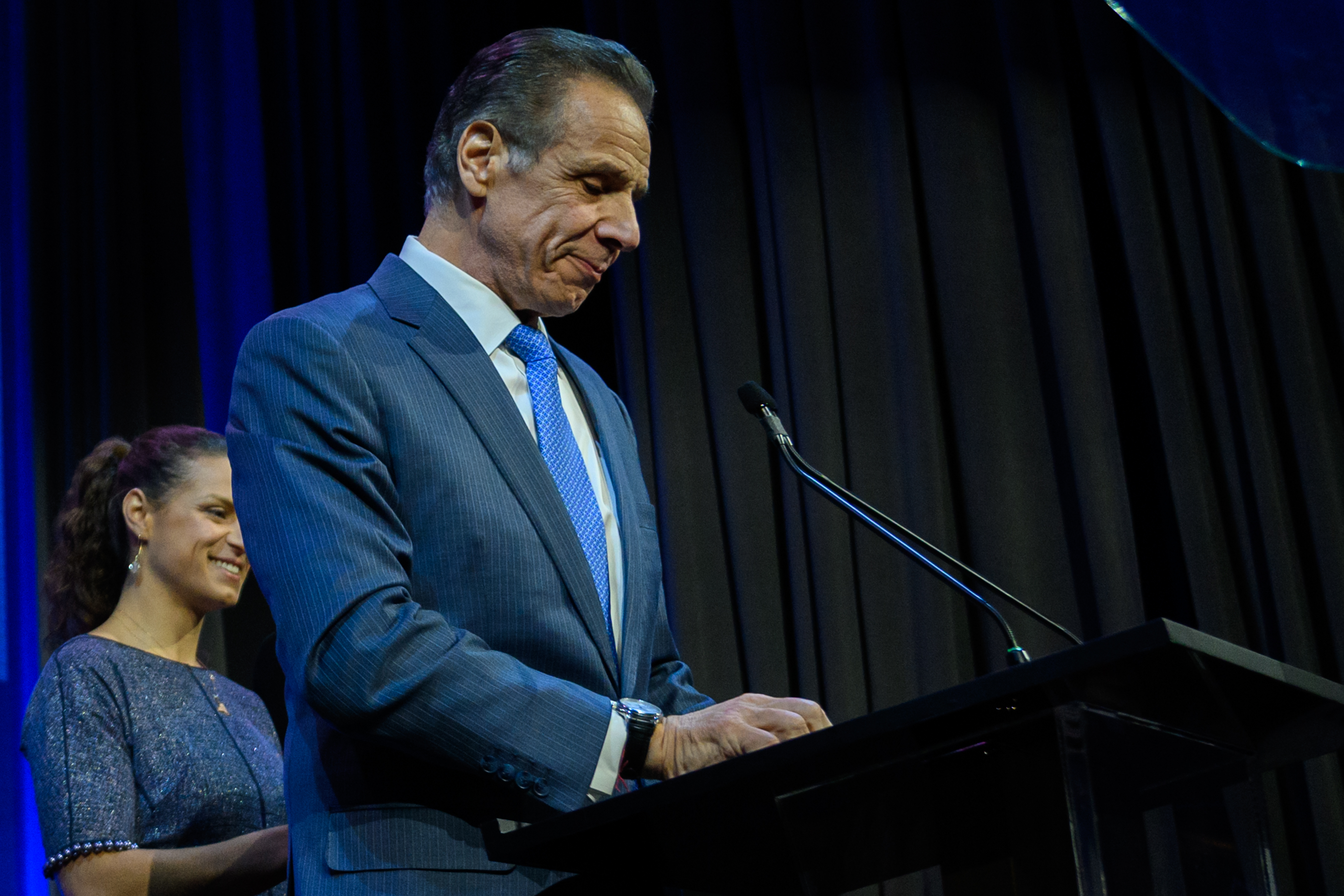
Don’t call it a comeback … because it wasn’t. Former Gov. Andrew Cuomo may have been here for years, but it ultimately didn’t amount to much after New York City Mayor-elect Zohran Mamdani pummeled him in the Democratic primary and gutted him in the general. Back in January, 2025 seemed like it would be The Year of the Cuomo. He had clearly begun laying the groundwork for a run for mayor after years of – at times – not-so-quiet plotting. In March, Cuomo officially launched his campaign as the early favorite, his universal name recognition quickly skyrocketed him to the top of the polls. He had little reason to overly concern himself with the other Democrats in the race, as institutional powers and many lawmakers who had formerly condemned him began to coalesce around him. And Cuomo certainly had no reason to think that Mamdani, a then-33-year-old socialist Assembly member polling in the low single digits, would ever pose a threat.
The former governor hates being wrong, and Cuomo has perhaps never been more wrong than he was in his original assessment of and approach to the Democratic primary for mayor. While he largely stagnated, relying on a tired playbook, his storied name and past achievements, Mamdani’s support surged. Come election night in June, the man whom Democrats once considered presidential candidate material suffered a humiliating trouncing.
After the primary, Cuomo graciously stepped aside for the man chosen by the people of his party and wished him – just kidding! Can you imagine? No, Cuomo decided to run in the general election as an independent, even as most of his previous backers abandoned him. He went into full attack mode, which has historically served him well but in this instance rather highlighted all of his worst instincts for the public. The race got uglier and Cuomo found himself aligning with people spouting Islamophobic rhetoric or laughing away offensive comments about Mamdani that were made in his presence. He tried to court Republican voters away from the GOP nominee Curtis Sliwa. In the end, even President Donald Trump, the very same boogeyman Cuomo vowed to oppose, told his supporters that Cuomo was the best option of the bunch. All to still lose.
– Rebecca C. Lewis
Eric Adams
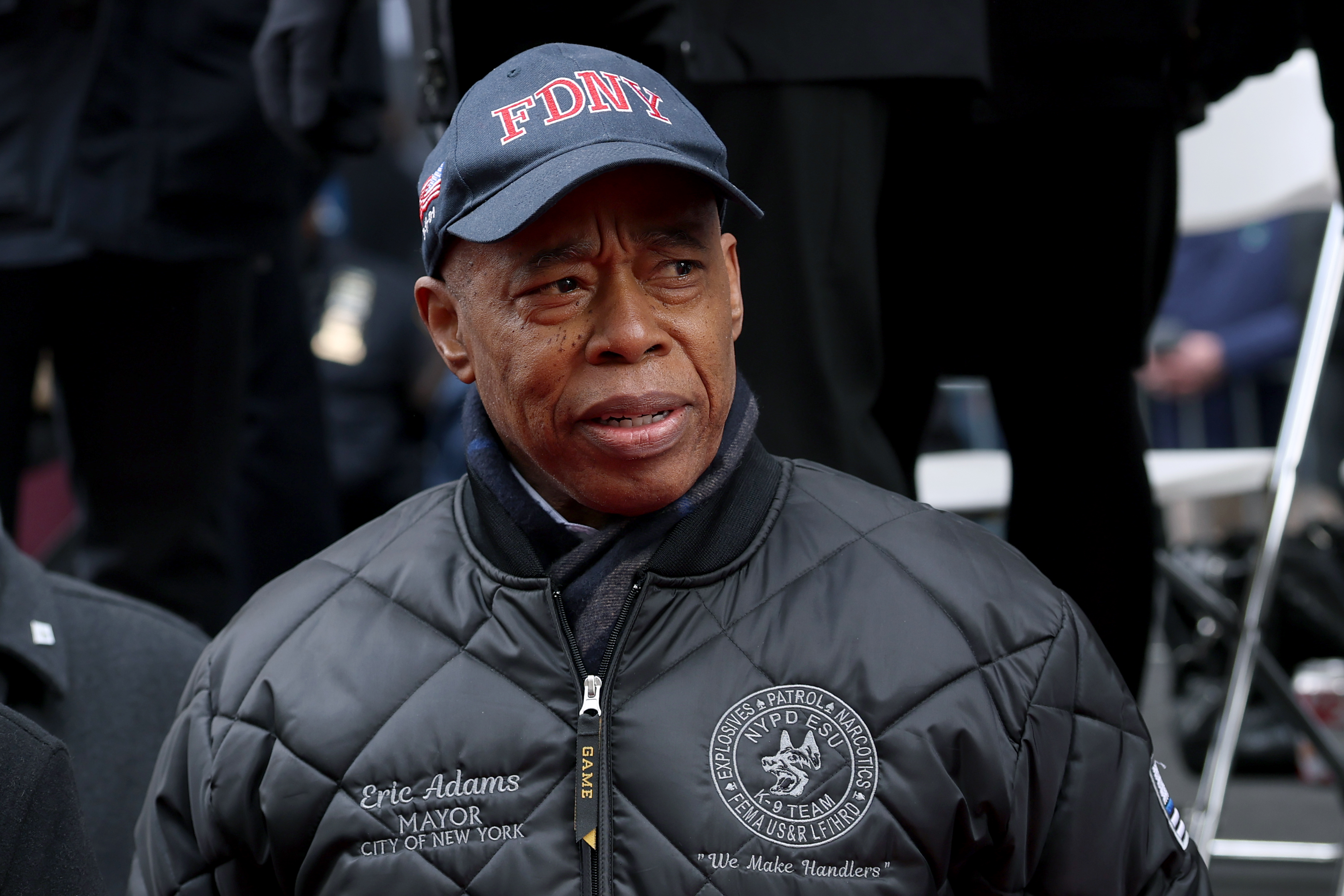
It was like something out of a movie: Fresh off his indictment charges being dropped, in early April, New York City Mayor Eric Adams turned back from the porch of Gracie Mansion to face a crowd of reporters as one asked if he was still planning to run for reelection. “I’m running for reelection,” he said. “And you know what? I’m going to win.” Famous last words, Mr. Mayor. Even at that point in the year, things looked pretty bleak for Adams – though to be fair, how promising can a year that began with a mystery colonoscopy really be? Adams’ remaining credibility came into question in February as Trump’s Department of Justice pushed to have his federal indictment dismissed in a way that the case could be refiled. That concern led several of his deputy mayors, who helped instill a sense of stability within the administration in fall 2024, to leave City Hall early in the year. There was at one point serious discussion that Gov. Kathy Hochul might remove him from office. The case was ultimately dismissed so it could not be refiled, but as far as Adams’ reputation goes, the damage was already done.
He decided to run for reelection as an independent, making sure to take plenty of jabs at Zohran Mamdani and Andrew Cuomo along the way. Who can forget that time he gaslit the entire press corps into thinking that, as he called a last-minute press conference at Gracie Mansion and reporters were corralled all over the grounds, he was going to drop his reelection bid? Only to then tell everyone he had no intention of doing so and call Cuomo “a snake and a liar”? Good times! But those good times didn’t last – Adams dropped out just weeks later. Also a good time: Cuomo put the pedal to the metal to catch the second half of the Knicks season opener after the second mayoral debate and hang out with Adams. They must have had fun, because Adams endorsed Cuomo the next day.
All of this was happening, of course, as Adams moved further out of the public eye – except for more frequent appearances on Fox News. Long gone are the days of the mayor’s Off-Topic Tuesdays, and when he has had a press conference recently, he has used part of that time to lash out at his least favorite reporters. Of course, all this assumes he’s in New York – or the United States – which is a big if these days. It’s been real.
– Sophie Krichevsky
Daniel Martuscello III
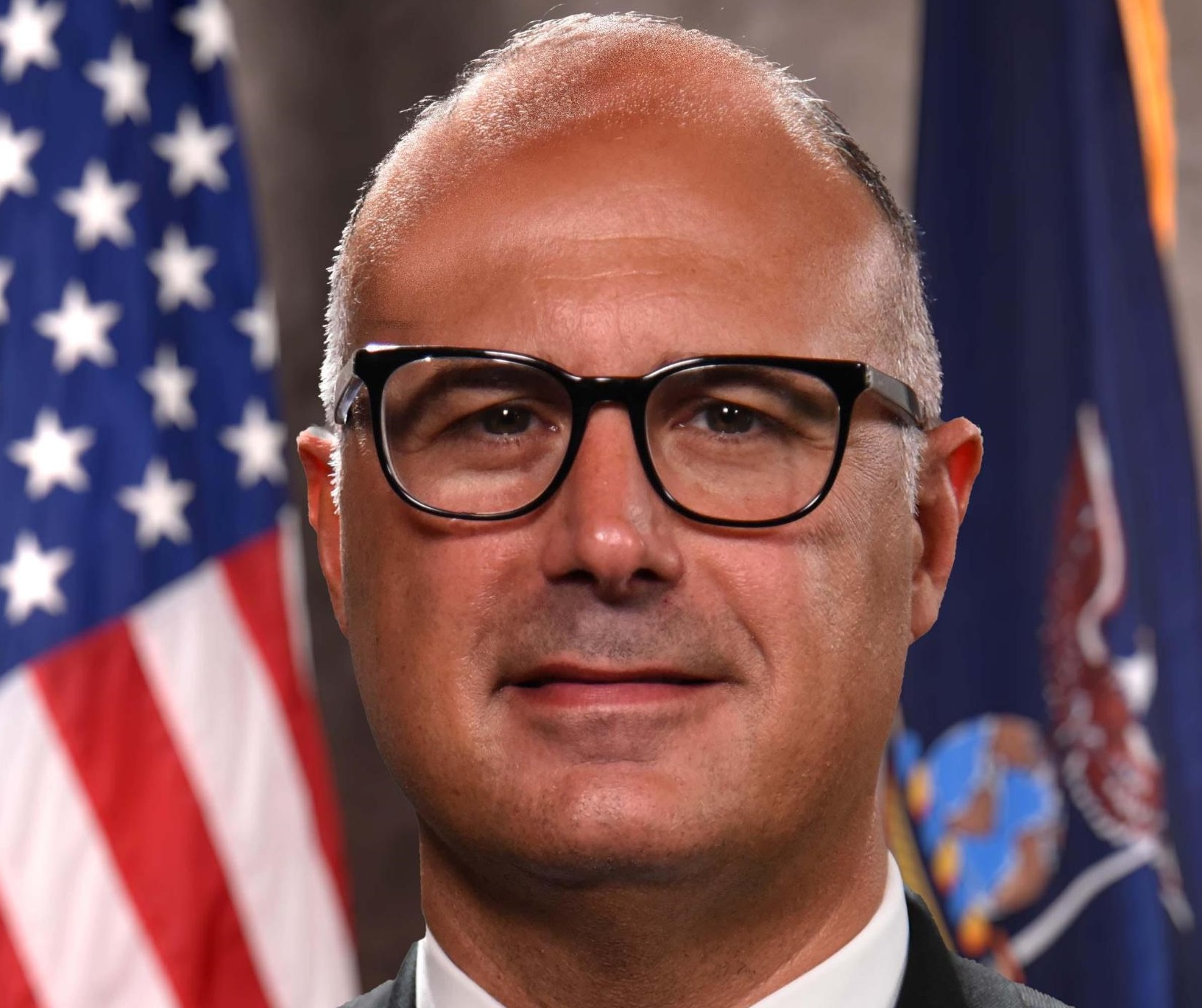
“Not forced to resign” is a pretty low bar to clear for any official, but that’s probably the best thing that happened to state Department of Corrections and Community Supervision Commissioner Daniel Martuscello III this year. It all started Dec. 27, 2024, upon the release of gut-wrenching body camera footage showing over a dozen guards beating Robert Brooks to death at Marcy Correctional Facility. The violent killing drew widespread condemnation and calls for prison reforms.
High-profile inmate deaths at the hands of guards are never what a corrections commission wants to happen, but the fallout from those incidents alone probably wouldn’t have landed Martuscello on this list. Then came the multiweek wildcat strike by corrections officers across the state that began right around when the Marcy guards were charged. Thousands of guards walked off the job, leaving the prison system in shambles at a time tensions were already running high. As criminal justice advocates called for more oversight, striking guards demanded rollbacks to a landmark law that largely banned solitary confinement. With so many corrections officers refusing to work, Gov. Kathy Hochul needed to call in the National Guard to staff prisons. And it wasn’t until after several negotiating false starts and unsuccessful agreements to end the strike that it finally concluded. But even then, a couple thousand officers refused the terms and wouldn’t return to work, resulting in their firing. That left the already short-staffed system in even more dire straits as the National Guard continued to maintain a presence to fill the holes.
That New York Focus published a massive investigation into the Martuscello family and its longtime influence over the state’s prison system at the same time all this was going on served as the icing on the cake. That Martuscello managed to keep his job through all the turmoil seems like nothing short of a miracle.
– Rebecca C. Lewis
Correction: An earlier version of this story incorrectly stated that Dorcey Applyrs won the Democratic primary for Albany mayor despite the Albany Democratic Party endorsing another candidate. The party did not endorse a candidate in the primary.
NEXT STORY: This week’s biggest Winners & Losers