

Budget
Council: Mamdani doesn’t need to tap rainy day reserve to close FY26 budget gap
The New York City Council’s preliminary budget hearings will start Wednesday.
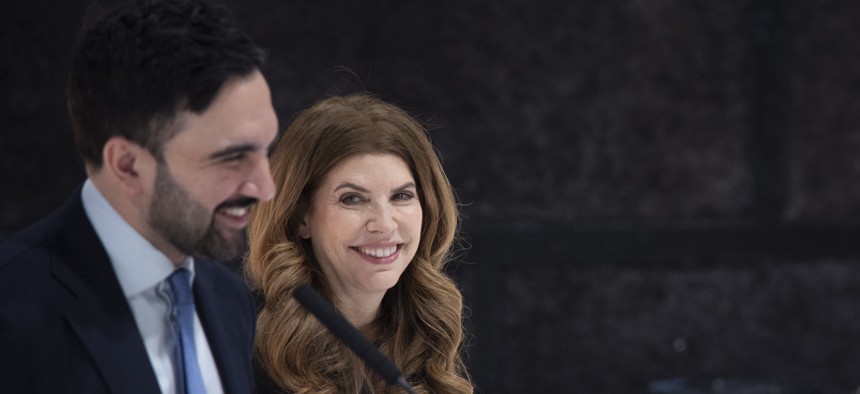
City Council Speaker Julie Menin and Mayor Zohran Mamdani aren't seeing eye to eye on the city budget. John McCarten/NYC Council Media Unit



That Rainy Day Fund may not have to drain after all.
The New York City Council will release its latest Economic and Tax Revenue Forecast on Tuesday and said in a statement that it has identified almost $1.7 billion in additional revenue and possible savings this fiscal year.
Speaker Julie Menin said the council’s analysis shows that the city does not need to tap the city’s reserves in the Revenue Stabilization Fund, known as the Rainy Day Fund. Potential savings include debt service adjustments, reductions in “long-standing” vacant city positions and unrecognized interest earnings, a statement from the speaker’s office said – however the council did not provide a detailed breakdown of those identified savings.
In presenting his preliminary budget, Mayor Zohran Mamdani proposed drawing down nearly $1 billion from the Rainy Day Fund to balance the budget for this current fiscal year, which runs through June 30. (Mamdani said the city would later replenish the fund.) That plan drew criticism from some budget watchdogs who are eager to see the city’s financial cushion remain as puffy as possible. (The Rainy Day Fund is just part of the city’s overall budget reserves.)
Drawing that amount down from the Rainy Day Fund would also require approval by the City Council, the council said in a press release. Such a headache could now be avoided, Menin said.
“The Rainy Day Fund was created to help protect New Yorkers during a true fiscal emergency, and has never been tapped,” Menin said in a statement about the fund, which only dates back to 2021. “Our analysis suggests we are not in such an emergency position today.”
The council’s plan doesn’t detail how many vacancies would need to be removed to find that level of savings, however. Mamdani’s side of City Hall has also discussed reducing some of the more than 13,000 vacant positions from city agencies. City budget officials said last month that while they would lift some old restrictions on agencies’ hiring, they would also take a look at removing vacant positions that the agencies don’t need. Exact plans for reducing vacant positions weren’t detailed in the mayor’s preliminary budget either. Reports from each city agency on how to achieve savings are due March 20.
The council’s analysis does not propose a fix for the $5.4 billion gap identified by the mayor’s office for fiscal year 2027. Mamdani has said that the state needs to raise taxes on the wealthy and corporations, and kick in additional funding, or else the city will have to raise property taxes. The latter is politically unpopular across the board, but Gov. Kathy Hochul has been firm in opposing tax hikes.
The preliminary budget is just the first step in a long series ahead of the city’s deadline to pass a balanced budget before July 1.
The council’s new forecast reflects updated tax revenue projections, differing from the February projections by the Mayor’s Office of Management and Budget. The council projected $176 million less in revenue in the current fiscal year than OMB, but $562 million more than OMB in fiscal year 2027.
“Since the beginning, the Council has advocated for a holistic approach to identifying revenues and finding savings to close our spending gap,” Council Finance Chair Linda Lee said in a statement. “With the release of today’s findings, we are optimistic that the City will be able to preserve the services New Yorkers rely on most, while navigating our ongoing budget process, and we look forward to collaborating with the Administration.”
Council leaders, including Menin and Lee, will have the chance to expand further on their report – and question agencies about their resources and needs – at preliminary budget hearings kicking off on Wednesday. The council will then release its preliminary budget response by April 1.