

New York City
NYC Council’s preliminary budget response doesn’t include CityFHEPS expansion in its priorities
The eligibility expansion would cost the city billions of dollars and is currently tied up in court.
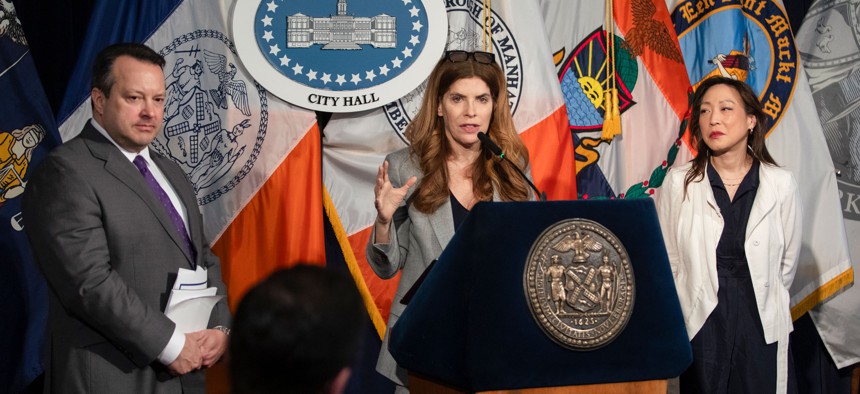
From left, council budget director Nathan Toth, Speaker Julie Menin and Finance Committee Chair Linda Lee Emil Cohen/NYC Council Media Unit


The City Council unveiled its response to the mayor’s fiscal 2027 preliminary budget on Wednesday, but a major line item was absent from the core priorities list.
CityFHEPS, the rental assistance voucher program expected to cost $1.8 billion in this fiscal year, was supposed to be expanded under 2023 City Council mandates. But the speaker’s budget response did not include that expansion in its list of priority items that need appropriate budgeting.
The program offers vouchers for New Yorkers living in a shelter or at a high risk of homelessness, and is currently used by 66,000 families across the city. The expansion, as passed by the City Council, would raise income eligibility and make it easier for those at risk of eviction to qualify.
But former Mayor Eric Adams fought the expansion in court, arguing it would cost the city billions that it couldn’t afford. Mayor Zohran Mamdani, who was a staunch proponent of expansion during his campaign, reversed course last week by appealing a court order that would force the city to implement the program, though a spokesperson said that doesn’t mean that negotiations have ended. Mamdani’s budget plan covers CityFHEPS without expanding it; expansion would cost an additional $3 billion over four years.
Base projections by the Adams administration chronically lowballed the program’s cost. CityFHEPS and other major historically underbudgeted areas, such as due process cases at the Department of Education, will get an additional $7.54 billion in the mayor’s preliminary budget over the next two years.
Instead of prioritizing broader CityFHEPS rollout, the council’s response details smaller funding needs, like $30 million for cultural operations and $17 million for legal services related to housing and domestic violence.
Council spokesperson Henry Robins said the council is waiting to see what happens with the legal challenge before addressing budgeting for a CityFHEPS expansion. “It’s a priority for us to resolve the lawsuit so we can serve New Yorkers who need housing and support,” he said.
In its budget response document, the council asked for the state to work with the city to improve rental assistance support more broadly. An appendix in the report also asked the mayor’s office to release more metrics on the program, such as the average cost for active CityFHEPS vouchers, broken down by apartment size. The council would use this data to assess program success, as public reporting has been limited since the program’s launch in the fall of 2018.
At a press conference on Wednesday, Speaker Julie Menin stressed compromise over a strict implementation. “We are ready, willing and able to settle the issue around FHEPS, both for the current court case as well as for future expansion,” she said, also stating that options are on the table for the mayoral administration.
The speaker said she wants to protect vulnerable New Yorkers while remaining fiscally responsible, rhetoric that the mayor has mirrored around affordability. The council’s response said the mayor’s plan should address income inequality, pitching an expansion of the Fair Fares public transit program and starting college savings funds for public-school kindergarteners who have the greatest need.