

Policy
Lawmakers, health advocates prepare to spar over bill to enforce flavored vape ban
The governor must decide to sign or veto the measure by the end of the year.
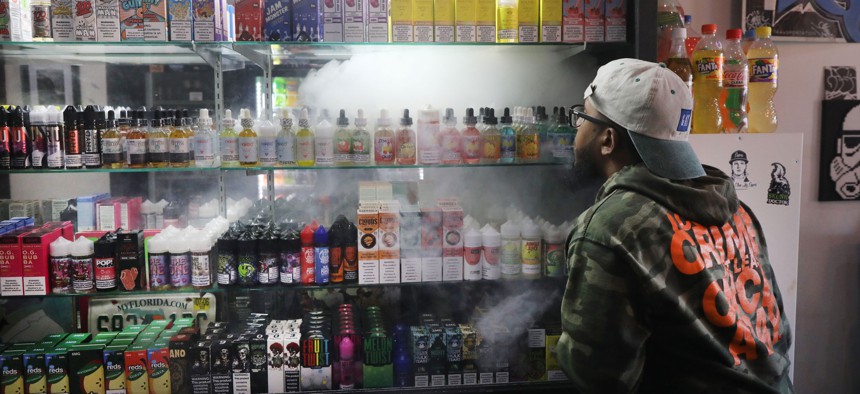
State lawmakers are looking for new solutions to enforce New York’s flavored vape ban. Spencer Platt / Getty Images

After enforcement measures for a ban on flavored vapes fell out of state budget talks this spring, lawmakers opted to pass another solution in their abbreviated time post-budget they hope will ensure the 2020 ban is properly enforced and put an end to the regulatory grey area. And its sponsors hope Gov. Kathy Hochul will approve the legislative remedy.
If Hochul signs the proposal, state tax officials will have new, sweeping authority to inspect distributor supply chains and revoke licenses. State health inspectors faced persistent legal hurdles and staffing shortages when auditing storefronts – making it exceedingly difficult to seize illegal and flavored vapor products before they hit store shelves and collect millions of dollars in state revenue.
Assembly Member Michaelle Solages sponsors the bill that, if signed, would require every vapor product distributor to obtain a license from the state Department of Tax and Finance. It would also create a public directory to track product movement and hold high-level suppliers accountable to comply, and is backed by law enforcement.
“It’s just become the wild, wild west, and unfortunately, our kids are falling victim to this illegal product, and also adults,” said Solages, who chairs the state’s Black, Puerto Rican, Hispanic & Asian Legislative Caucus.
She also said her bill shifts the crackdown away from local corner stores and bodegas onto wholesale bulk distributors to combat the rise of illicit, foreign-made vapes. “Going after the distributors, the bad actors on a mass level will help us curtail this issue,” the Assembly member said. “I don’t forgive these distributors. They’re making tons of money, and if they can’t comply with the law, then that's their fault.”
And time is of the essence, Solages said: The FDA has authorized over 40 e-cigarette products, and started to include flavors outside tobacco and menthol earlier this spring.
But several nonprofit health groups aren’t convinced the proposal will fix the greater issue: curbing youth access. Vapor products in New York are currently subject to a 20% retail sales tax, that's imposed at the store counter, or paid by the consumer.
And the legislation would shift that 20% tax to the wholesale price sold by a distributor to a dealer in the state.
The legislation would restructure the flat 20% retail tax and make the state collect the tax earlier, when the distributor sells the product to the store. Pre-filled vapes or pods would be taxed at $0.32 per milliliter of liquid while refillable vapes would be taxed at $8 of the wholesale price.
That makes it easier for tax inspectors to enforce at the source, but the change is one some health advocates worry will lower the tax burden on each product.
Several health organizations signed a joint memo opposing the bill, including the American Cancer Society Cancer Action Network, American Heart Association, American Lung Association and others, arguing that the change would reduce the tax rate on vapor products and make them more affordable and accessible to youth. “It would also significantly reduce tax revenues collected by New York state by approximately $20 million annually, and New York state would subsequently have one of the lowest taxable rates in the country compared to other states that levy wholesale taxes on e-cigarettes,” they wrote June 3.
Solages dismissed the memo’s pushback and questioned whether nonprofit leaders with high salaries genuinely want to stop the spread of illicit tobacco or vapor products. A handful of Democratic lawmakers, including state Sens. Liz Krueger, Pat Fahy and Rachel May, also voted against the measure.
But advocates are hopeful that Hochul will sign the measure into law, even if there’s some tweaks. The New York Association of Convenience Stores is pushing Hochul to sign the bill, and has called on state leaders to enforce its flavored vapor product ban for years to squelch the growing illicit market.
“NYACS has long expressed concern that prohibition can push sales away from responsible, regulated retailers,” President Alison Ritchie said in a statement to City & State. “More recent policies, including the 75% tax on nicotine pouches, risk contributing to that same problem. New York should avoid policies that create opportunities for illegal sellers, while ensuring that existing laws are enforced fairly and effectively against those who violate them.”
The governor included a similar proposal in her executive budget at the beginning of the year that had different tax rates, product definitions and enforcement mechanisms. Asked for comment on the legislation, a spokesperson for Hochul said the governor would review it.