

News & Politics
Judge rules that Rafael Rubio, council staffer detained by ICE, should be sent to Venezuela
The outcome was unwelcome news for Rubio’s many powerful allies and advocates. It came as others were released from federal immigration custody.
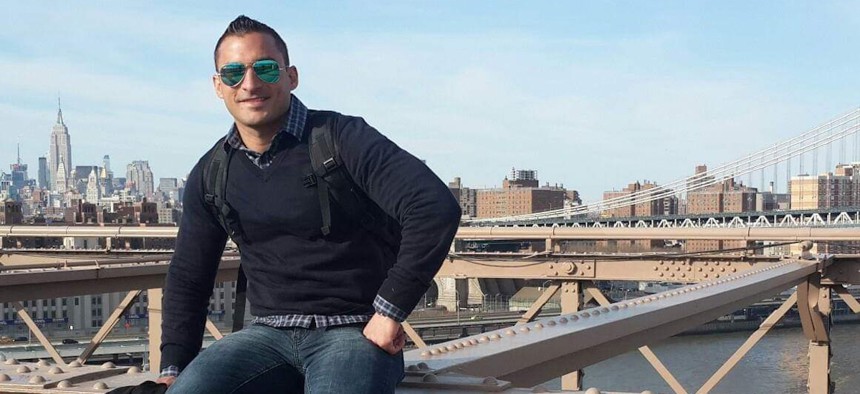
Council staffer Rafael Rubio was detained by federal immigration authorities in January. Courtesy of Rubio’s cousin


A brief touch of relief spread among New York City immigration advocates this week. A Bronx high school student was released from ICE custody, as was a Columbia protester who Mayor Zohran Mamdani had directly mentioned to President Donald Trump. Left with little to celebrate, however, was Rafael Rubio, the City Council staffer detained at a Long Island asylum appointment in January. On Wednesday, he was ordered removed to Venezuela.
It was the culmination of two months of heated legal battles, as prominent New York politicians from City Council Speaker Julie Menin all the way up to the governor pleaded for his release. It also showed the inconsistency experienced by immigrants in the second Trump administration, as the enforcement dragnet widens and relief comes sporadically and randomly.
Rubio’s supporters thought he had a lot going for him as they sought his release. The 45-year-old Venezuelan native had been granted Temporary Protected Status, a form of humanitarian relief for nationals of troubled countries. He had no criminal history in New York City, even as the Department of Homeland Security dug up a dismissed and sealed arrest stemming from an altercation with his roommate. Friends, family and colleagues described him as a cautious and committed public servant, a former lawyer in his native country who once worked as a waiter as he tried to climb the ladder here. At the office he was known to keep his documentation on his person and to maintain a neat and clean workspace. As the Trump administration moved to end immigration protections for Venezuelans, Rubio also applied for asylum, with his lawyer pointing to “threats from the government” when he worked for his native country’s state-owned oil company.
But all that came to naught this week, when his asylum application was denied and he was found deportable, according to a summary of the oral decision of Judge Charles Conroy, who happens to have a higher denial rate than many other immigration judges in the city.
Rubio’s fate may have included factors even more random than judge selection. “Today’s ruling appears to hinge on a procedural issue related to his asylum application,” Menin said in a statement, later suggesting a signature was missing, something that is routinely fixed. “Let me be clear,” Menin continued, “Rafael should not continue to be detained while this is sorted out.”
Rubio had also been pursuing his freedom through a habeas appeal, a claim of wrongful detention that has become a favored strategy for detained immigrants to at least pursue their immigration cases at home, not behind bars. This has worked for many petitioners around the country, including for a Venezuelan client of Rubio’s own lawyer. But not yet for Rubio, who has worked to convince a Southern District of New York judge that he remains covered by TPS protections thanks to timely re-registering last year.
He’s now left with even slimmer hopes: an appeal in his immigration case, due April 17.
For weeks now, he has been held at Brooklyn’s Metropolitan Detention Center, a much-criticized federal jail that is typically home to those like Luigi Mangione and Joaquín “El Chapo” Guzmán who are accused of serious crimes. It now also holds about 120 people detained by ICE, most of whom have “no or small criminal records,” according to Rep. Grace Meng, who recently visited the facility. “This is something that still doesn’t make sense to me,” observed Meng, who said she also met with Rubio during her visit.
Meng added in a statement to City & State that she wanted “to make sure that he was safe and being treated humanely.” Rubio seems to have struggled in this weeks-long detention. He has been “depressed,” according to his cousin Jennifer, who feared giving her full name.
He remains caught on the losing end of the current moment of immigration enforcement, when relief seems to hinge on exceptional circumstances, like Gov. Kathy Hochul raising a case with border czar Tom Homan or the literally personal intervention of a mayor speaking to a president. (Mamdani put out a statement Wednesday calling for Rubio’s immediate release, but when asked if the mayor mentioned the case to Trump, a spokeswoman said Mamdani brought up a list of individuals related to activism at Columbia.)
Murad Awawdeh, president of the New York Immigration Coalition, noted advocacy and aid from elected officials “has been primarily the tool that has worked the best for individual cases, but that's really not the way this should be.”
“Historically,” said Awawdeh, “you would rely on a justice system to deliver justice.”