

New York City
Eric Adams’ Charter Revision Commission sues to get open primaries on the ballot
And joining forces with the ragtag group of Adamsites are the likes of Vickie Paladino, David Paterson and Vito Fossella!
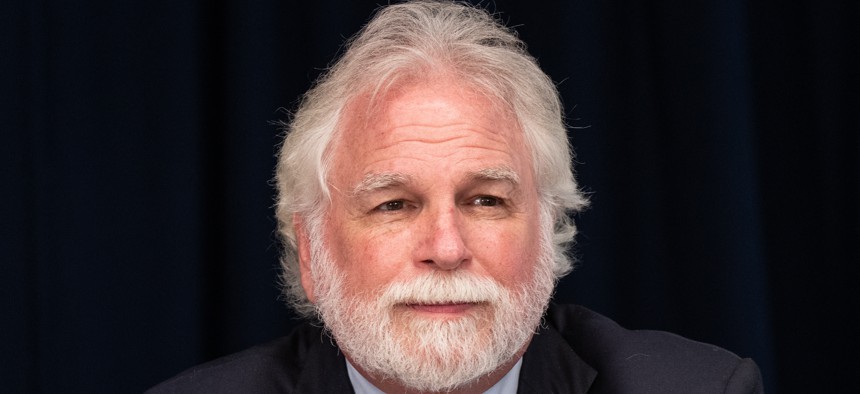
Randy Mastro, a guy who won’t give up on this Charter Revision Commission Pacific Press/Getty Images



The zombie Charter Revision Commission convened by former New York City Mayor Eric Adams on his final day in office is suing the governor, mayor, the Board of Elections and the city clerk in hopes of getting a proposal to open up city primaries on the ballot this fall. They aren’t alone. Republican firebrand City Council Member Vickie Paladino, former Gov. David Paterson, Staten Island Borough President Vito Fossella have also joined the fray as plaintiffs.
The lawsuit, which was shared with City & State before it was officially filed in Richmond County Supreme Court Tuesday, comes roughly a month after Mayor Zohran Mamdani disbanded the commission using a new provision passed by lawmakers in the state budget. That’s essentially the basis of the commission’s lawsuit – that the mayor illegally directed Gov. Kathy Hochul and lawmakers to immediately enact the provision so he could retroactively dismantle the group and kill its proposal to open up primary elections.
“New York City voters have the right to decide what kind of local election system they want,” said former first deputy mayor Randy Mastro, who is representing the commission and plaintiffs pro bono. “New York City voters should make that decision, not politicians making backroom deals.”
It’s complicated. The lawsuit contends that this was unlawful because the state Legislature needed formal permission from the mayor and City Council to pass the provision as it was a “special law targeting only the affairs of New York City government.” It also argues that the provision qualifies as a special law that diminishes the power of local government, meaning it needed to have been passed twice in two different calendar years before it could go into effect.
Lastly, the lawsuit takes aim at the fact that Mamdani disbanded the commission after it had been formed, thus depriving its members of the right to serve their terms and to have their open primaries proposal considered by voters this fall.
Dora Pekec, a spokesperson for the mayor, said in a statement that “the city is prepared to defend the state law authorizing the termination of the commission.”
A spokesperson for the governor did not respond to a request for comment prior to publication.
The commission, which has been slowly bleeding members, has kicked up a bevy of legal questions from the start. For one, there is little if any precedent of a charter revision commission established by a former mayor operating without approval from the new administration. Mamdani was never supportive, but the group, composed of many of Adams' close allies, barreled forward regardless, a thorn in the new mayor’s side. As it geared up to meet for public hearings, it put out a report expressing interest in pursuing multiple policies that in addition to the open primaries proposal, seemed aimed at stymying the mayor – such as initiatives to “address anti-semitism, hate crimes, and protester interference with houses of worship.”
Fearing that Mamdani would soon move to disband the commission after the passing of the state provision, the commission rushed to approve their priority – the open primaries proposal – doing so unanimously. Mamdani signed the provision to kill the group that same evening, before the group met, though this is also something the commission contests.
It’s unclear whether the group’s lawsuit will be successful – let alone whether it’ll be heard in time for the proposal to appear on the November ballot even if a judge were to rule in the group’s favor. Mastro, who is seeking an expedited schedule, however was bullish on its chances.
“It’s about as blatant as an example of a special law targeting a particular municipality and a particular commission retroactively that it cannot possibility withstand legal scrutiny,” Mastro said. “So yes, we’re extremely confident that we will get heard by court in time to get on the ballot and that we will ultimately prevail."
Further complicating things is the fact that less than 24 hours after killing the commission, Mamdani announced the formation of his own panel, which he tasked with crafting a series of government efficiency proposals. Public hearings are currently underway. Despite the very different mission it had been tasked around, there’s no escaping the elephant in the room. Sure enough, talk of open primaries dominated its first hearing in lower Manhattan too.