

LGBTQ+
State lawmakers eye LGBTQ+ caucus in Albany
The state Legislature is set to welcome the most out LGBTQ+ lawmakers in its history.
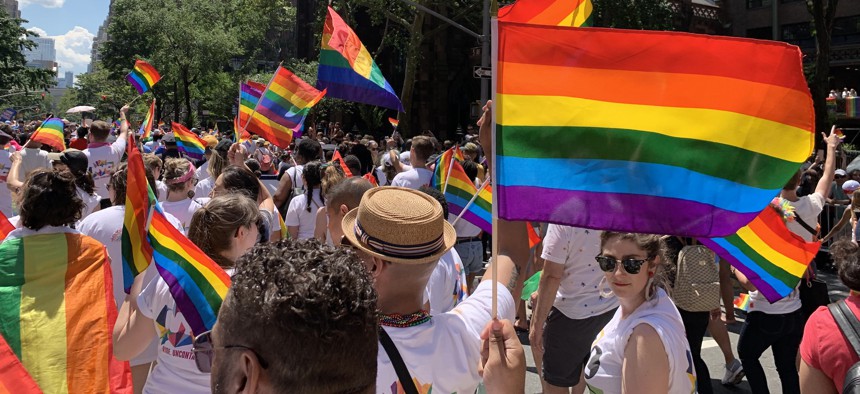
The state Legislature is poised to have at least 10 out LGBTQ+ elected officials next year. Kirkikis

The state Legislature is poised to have the most out-LGBTQ+ members in its history at the start of the next year. Now, both current and likely incoming lawmakers are saying it’s time the body formed an LGBTQ+ caucus to formally advocate for issues important to the community.
After last month’s Democratic primary elections, the state Senate is set to have at least three out-LGBTQ+ members: state Sens. Jabari Brisport and Erik Bottcher, and likely incoming state Sen. Jessica Gonzalez-Rojas. The Assembly is set to have at least seven out members: Assembly Members Tony Simone, Diana Moreno and Harry Bronson, and likely incoming Assembly Members Brian Romero, David Orkin, Christian Celeste Tate and Illapa Saritupac. That number could go up to eight if David Siffert, who is nonbinary, wins their recount in a lower Manhattan race, set to take place Monday.
All told, that’s at least 10 members between both chambers in the Legislature next year. Romero, who won a primary in western Queens last month, said he’s already had some conversations with members about creating a caucus for the first time. “There is a lot of excitement and appetite for such a space,” Romero told City & State. He cited both the historic numbers and ongoing attacks from the federal administration against especially transgender people as reasons the time has come to formally organize the Legislature’s LGBTQ+ voices.
Among those members that Romero has spoken to about the prospect is Simone, who said he too has reached out to some of his colleagues in both chambers. “I think we can’t just be on the defensive as an LGBTQ, queer community,” he told City & State. “We have to be on offense, and representation matters.”
The state Legislature has a number of different formal caucuses, including well known bodies like the Black, Puerto Rican, Hispanic and Asian Caucus, which regularly puts out policy agendas and advocate for the joint priorities of members. Both Romero and Simone envision something similar, with an executive director and with shared policy goals the caucus would push for. “I think we'll have a fierce force in Albany when it comes to issues affecting our community, from hate crimes to funding to make sure gay homeless youth are not ignored in the budget,” Simone said.
In addition to advocating for specific policies, Romero said an organized, formal caucus could provide out LGBTQ+ members an opportunity to better educate their colleagues on the issues affecting their communities. “I think what we’ve been seeing across the country is unfortunately, a lot of Democrats scapegoat trans communities and throw them under the bus out of fear that they will cost us seats or whatever the reason is,” he said. “And I think that's absolutely the wrong take on this.”
Although the New York City Council has had an LGBTQIA+ Caucus for years, this would be a first for the state Legislature. And advocates are ready to see it happen. “New York is the birthplace of the modern LGBTQ+ rights movement, and we have built a reputation as a safe haven for queer people across the country and around the world,” Kei Williams, executive director of the New Pride Agenda, said in a statement. “This is a sign of renewed statewide momentum, particularly in light of the NYC Mayor’s creation of the Office of LGBTQIA+ Affairs.”
Current and incoming out LGBTQ+ members of the Legislature are still only in preliminary conversations about forming a caucus. Eventually, they’ll need to speak with leadership to move forward with formal recognition and to receive funding for their efforts.