

sponsor content What's this?
Sponsored Content
New York’s Next Transit Upgrade is the Whole Trip
Why New York must manage mobility as an end‑to‑end experience, not a collection of projects.
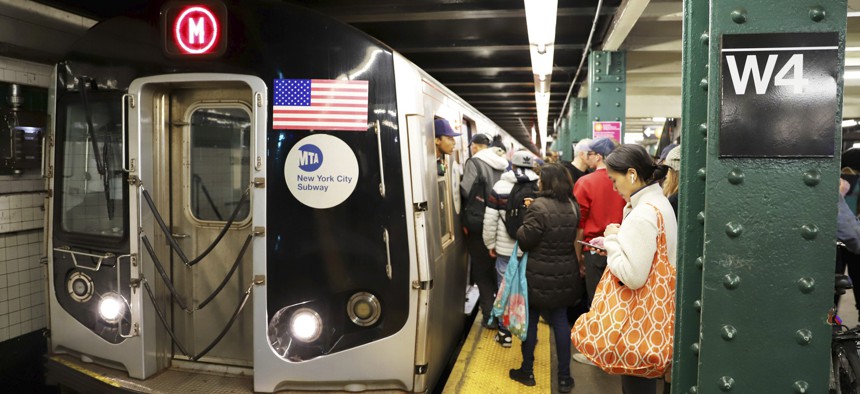
Riders board an M subway train in Manhattan, navigating just one part of a larger end‑to‑end journey. VHB



New Yorkers don’t experience transportation the way agencies are organized. Riders experience a trip: home to station, concourse to platform, platform to train, train to platform, platform to sidewalk – and the final blocks that determine whether transit truly gets you where you need to be, when you expect to arrive.
If we want more people to choose transit over driving, we need to stop treating mobility as a set of disconnected assets and start managing it as a single, human journey. As many of our wise transit leaders say, our system moves people. Our trains and buses are simply their vessels.
That idea becomes especially clear during the moments when the system is under the most pressure.
Across the region, major infrastructure upgrades and state-of-good-repair work are modernizing critical parts of the network. These projects are essential, but they often require temporary service changes, reroutes or outages that test riders’ patience. I know weekend service reductions certainly test mine.
During those moments, riders aren’t thinking about engineering “milestones” or capital programs. They are asking a much simpler question: Can I still get where I need to go?
That question, whether the trip still works, reveals whether we are truly managing transit as an end-to-end, human-centered journey.
A journey-first approach begins by measuring what riders actually experience. We’re good at tracking individual system metrics – train on-time performance, roadway level of service or whether a project is on schedule.
But riders feel the sum of the trip: the transfer that doesn’t connect, the confusing detour signage, the platform announcement you can’t hear, the bus that arrives but is too full to board.
Transit agencies should align around end-to-end “journey” metrics. This includes door-to-door travel time, transfer reliability, accessibility barriers and the quality of real-time information. The immediate rider feedback the Metropolitan Transportation Authority receives through social media, for example, is valuable and actionable.
These measures help agencies prioritize investments where they matter most. When you measure the whole trip, you uncover the small fixes that can unlock big wins.
Information is another critical piece of the journey. Riders will tolerate change when they understand it and can plan around it. Modern passenger information displays, consistent wayfinding and timely communication through the channels people actually use are essential.
We’re already seeing transit agencies pilot smarter, more visible tools – like NJ Transit’s digital bus stop signs that provide real-time arrivals and service alerts, paired with data that helps agencies understand crowding and unmet demand. Coordination and communication during the Portal North Bridge cutover on the Northeast Corridor confirmed riders knew what to expect and when. This showed true partnership between the railroads, municipalities and the riders themselves.
That’s the direction New York should lean into. Make information reliable, accessible and immediate. We want it before, during and after our trip.
Technology also offers opportunities to improve everyday operations. On city streets, we increasingly use intelligent transportation systems to adapt signal timing to real-time conditions. Transit deserves the same operational mindset.
We are seeing this with modern train control and signaling, real-time visualization of train location, automated route settings where appropriate, remote monitoring of safety-critical equipment and smart ticketing that reduces friction at the farebox.
These aren’t “nice to haves.” They’re how we increase throughput, reduce delay propagation and improve the rider experience without waiting a decade for the next megaproject ribbon-cutting. These simple joys make or break our days.
Delays and disruptions will happen; the difference is whether we use those moments to build trust between our riders and our transit providers. If we do it right, we emerge with a system that feels measurably better to the people who depend on it, and they see themselves as part of the improvements.
When transit is understandable, connected and dependable from end to end, more people will make it their mode of choice. They won’t do it because they were told to, but because transit matches the way their lives move.
Sharon Tepper is the Northeast Region Transportation Planning Lead for VHB.
NEXT STORY: How the affordable housing industry is tackling the housing crisis