

sponsor content What's this?
Sponsored Content
What a Run We've Had! Now Let's Build New York's Next 20 Years
NYC is about to see another construction boom that will build the Big Apple forward.
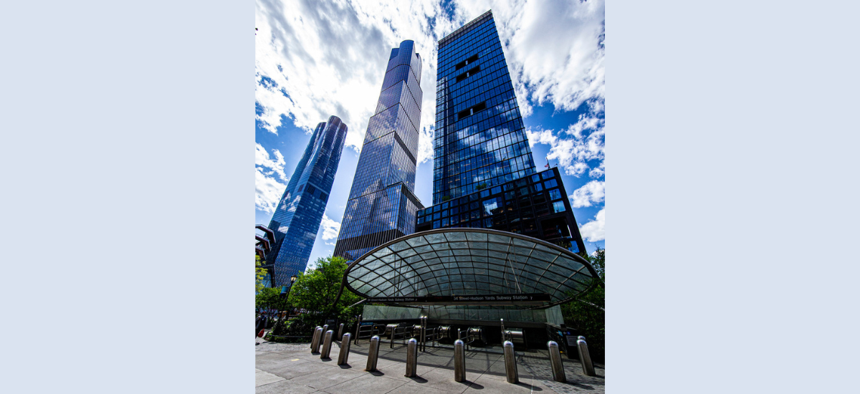
Gordon Donovan / Shutterstock.com


Twenty years ago, if you had told someone you were taking the 7 train to Hudson Yards, or thought LaGuardia was the best airport in the country, you might have been met with the same look you’d give someone for calling New York’s signature breakfast sandwich a “cheese, egg and bacon!”
In May 2006, the foundations for One World Trade Center were only just beginning to be placed. Hudson Yards was little more than rail yards and empty lots. There was no Second Avenue Subway, no Grand Central Madison and our airports were better known for delays and leaky ceilings than anything resembling “world-class.”
Across much of the state, reliable internet (never mind “high-speed”) was far from guaranteed. And the kind of climate threats we now plan for, superstorms (a word we didn’t even know yet) like Sandy, had not yet reshaped how we build.
The advances we’ve made since then are remarkable. Lower Manhattan is once again a center of commerce and daily life, with the World Trade Center campus largely complete and open for business – including major employers like American Express recently committing to its future headquarters there. Hudson Yards is a city within a city. The Second Avenue Subway moves hundreds of thousands of riders every day, and expansion is on the way. LIRR service into Grand Central has changed how the region moves. And our airports, once the subject of jokes, are winning award after award.
We’ve also started to make meaningful progress on housing, even if the need still far outpaces supply. Efforts like City of Yes for Housing Opportunity are beginning to remove long-standing barriers to building. Projects like the much-discussed Sunnyside Yards plan represent the kind of scale we will need to meet demand in the years ahead.
Let’s take a moment to celebrate how much progress New York has made over the last 20 years! And now we stand on the precipice of yet another boom, with pieces already in motion.
On the horizon, we have: three fully modernized downstate airports; a rebuilt Penn Station at the center of a revitalized Midtown; the Gateway Program completed, unlocking rail capacity up and down the Northeast Corridor; the Interborough Express connecting neighborhoods in need; a new modern, efficient Port Authority Bus Terminal; and a more resilient, safer BQE – yes, that’s still on the list!
We’re on the right track, but if we want to ensure that New York remains a place where people thrive, we must address what’s holding us back. Across the state, the ability to build is too often slowed by processes designed for an antiquated era. The State Environmental Quality Review Act (SEQRA) plays an important role, but today it can mean years of delay. Smart, targeted reforms can help deliver housing at the speed we need, while still protecting our environment.
At the same time, building at this scale requires a workforce to match. That means investing in training, reducing barriers to entry and creating clearer pathways. There is a strong foundation to build on: Today’s construction workforce is more diverse, younger and earning more than ever before, enabling hundreds of thousands of New Yorkers to support their families.
The next decades will be shaped by whether we can continue to deliver the growth that has always defined New York at its best. Doing so will require close collaboration across government, industry and communities, along with a willingness to embrace new ideas and technologies. We didn’t have iPhones 20 years ago – what gadgets can’t we imagine today that will shape tomorrow?
Twenty years from now, New Yorkers should see this moment the way we view the early 2000s now: with awe at how far we’ve come. Progress in New York has always been driven by what we create – and if we want to remain at the forefront of the nation and the world, we have to continue that tradition and keep building.
That’s how, in 2046, New Yorkers will be able to take the IBX from my neighborhood of Bay Ridge, Brooklyn, all the way to Jackson Heights, Queens – and eventually the Bronx! Keep dreaming big, New York!

Carlo Scissura is the president and CEO of the New York Building Congress.
NEXT STORY: Climate Law Rollbacks Would Delay Pollution Protections & Cheap Energy Options New Yorkers Need Now