

NYN Media
Opinion: New York needs to require recess
At least 30 minutes of play per day for elementary school students would boost kids’ health and help Hochul hit her budget goals.
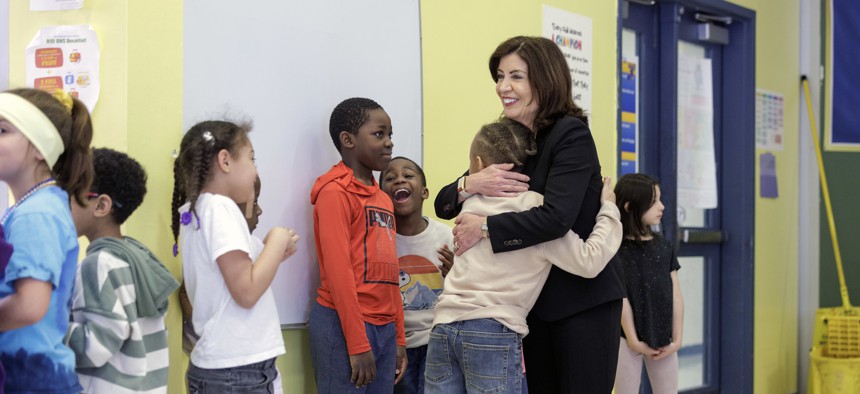
Gov. Kathy Hochul stood visited Eagle Point Elementary School in the Albany City School District on March 20, 2025. Mike Groll/Office of Governor Kathy Hochul


With her $260 billion executive budget, Gov. Kathy Hochul is admirably walking a fiscal tightrope: honoring her pledge not to raise income taxes while investing in priorities that reflect concern for vulnerable groups including students, individuals facing poor health and parents struggling to afford life with children.
A new bill sponsored by Assembly Member Carrie Woerner and state Sen. Rachel May offers a surprisingly simple way to support all three of those priorities at once.
Assembly Bill 6939 and Senate Bill 6858 would establish a statewide standard requiring at least 30 minutes of daily recess for students in kindergarten through fifth grade (and for sixth graders in elementary schools) on any school day longer than five hours. This may sound modest, but it’s not. For children, play is not a luxury. It’s a biological, physiological and developmental necessity.
Research shows that sedentariness beginning in childhood is a major driver of the chronic disease crisis now straining Medicaid – which, with a $6.4 billion proposed increase in state expenditures this year, is one of the largest items in Hochul’s budget. Obesity, Type 2 diabetes, cardiovascular disease, and other chronic illnesses all track strongly from childhood into adulthood. When children sit still for most of the day, stress hormones rise, insulin sensitivity worsens and emotional regulation suffers. The downstream medical, educational and economic costs are enormous.
More than 40% of U.S. children now live with at least one chronic condition, such as asthma, obesity, diabetes, autoimmune disease or a serious mental health disorder. At the same time, more than 80% of adolescents fail to meet recommended daily physical activity levels. Physical inactivity in childhood is a major biological driver of insulin resistance, systemic inflammation, anxiety, and depression – conditions that persist into adulthood and increase long-term health care spending.
Woerner and May’s bill addresses this problem by restoring recess to its intended role. The bill would require that recess be supervised but student-directed, protected from being used for test prep or punishment and centered on real physical play rather than screens.
As I shared in budget testimony last month, a recent policy review from Johns Hopkins identified daily recess as a key, evidence-based strategy for reducing sedentary behavior and chronic disease risk among school-age children. States with protected recess are significantly more likely to have children meet daily activity guidelines, and schools with daily recess report better attendance, fewer behavioral incidents and improved classroom environments.
From a purely financial perspective, the bill directly addresses the fiscal pressures reflected in Hochul’s budget. The proposed increase in Medicaid spending is driven in part by growing rates of chronic disease. Treatment alone, however, cannot solve a problem that begins in childhood. Modeling studies consistently show that increasing physical activity early in life produces downstream savings by reducing incidences of diabetes, cardiovascular disease, depression, and musculoskeletal disorders, conditions that drain Medicaid dollars and, once they begin, typically last a lifetime.
While only 10 states currently mandate recess, those that do have not seen meaningful increases in per-pupil spending. Recess requires no new buildings, specialized equipment or additional specialized personnel. Protecting it is therefore not a sentimental educational add-on, but a fiscally disciplined public health strategy.
When the budget is due on April 1, Hochul will face hard choices about allocating limited resources. Protecting recess should not be one of these hard choices. After all, a national poll that my organization, End Chronic Disease, published in August of last year found that 88% of voters across the political spectrum support increasing the amount of recess and physical activity in K-12 schools. Building a recess requirement into the budget therefore aligns with voter sentiment, while offering New York an inexpensive, practical opportunity to improve children’s health, classroom environments and long-term fiscal stability all at the same time.
Kelly McKenna is CEO of End Chronic Disease, a nonprofit organization focused on preventing disease through diet, lifestyle and access to care.
NEXT STORY: A charter school leader says Trump administration policies are putting pressure on Black students