

NYN Media
Opinion: The real crisis in youth justice is underfunding
“Raise the Age is a proven, effective approach, and it must not be undermined,” a former children’s services commissioner writes.
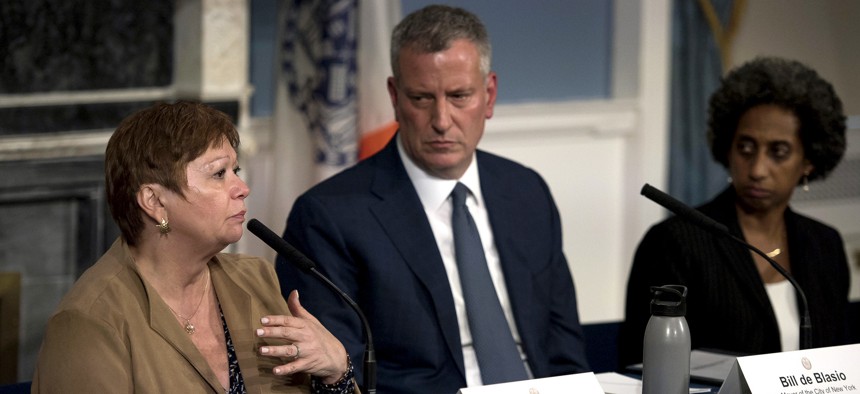
Gladys Carrión was commissioner of the Administration for Children's Services under New York City Mayor Bill de Blasio Ed Reed/Mayoral Photography Office


For more than a decade, New York has been a national leader in youth justice reform. The Close to Home program and Raise the Age law transformed the state’s approach by keeping young people connected to their families and communities, expanding access to age-appropriate programming, and reducing unnecessary incarceration. As former commissioner of both the New York State Office of Children and Family Services and the New York City Administration for Children’s Services, I helped design and implement these reforms and saw firsthand how investment when it existed translated into better outcomes for young people and stronger public safety.
Gov. Kathy Hochul has stated that she is not proposing changes to Raise the Age, despite calls for reform from allies such as NYPD Commissioner Jessica Tisch. That clarity from the governor is welcome. It affirms that New York is not retreating from a law grounded in decades of research and experience. But preserving the statute alone will not sustain reform. The real crisis in youth justice is not the law itself – it is the state’s persistent failure to fund and implement it equitably.
Raise the Age was built on a simple premise, accountability works best when it is developmentally appropriate and supported by community-based alternatives, reentry services, and prevention programs. The law envisioned a system with sufficient infrastructure to divert young people from deeper system involvement and help them succeed. Yet much of that infrastructure was never built.
New York City illustrates this failure most starkly. Unlike every other county in the state, New York City is ineligible for Raise the Age funding. This exclusion has denied the city, home to the largest share of New York’s young people, the resources necessary to sustain community-based responses and meet the law’s goals. The expectation that the city can deliver reform without access to the same funding as every other county is both unrealistic and unjust.
Compounding this inequity, there is no state funding for Close to Home in New York City, despite its proven success. When Close to Home was reauthorized, the city was deliberately excluded, eliminating roughly $40 million for programs that reduced youth confinement, kept young people close to family, and improved long-term outcomes. That exclusion has persisted for more than a decade, weakening one of the state’s most effective youth justice models.
These challenges extend beyond New York City. Across the state, both counties and nonprofit providers face significant obstacles to accessing Raise the Age funds. Complex procurement requirements, rigid contracting rules, reimbursement delays, and administrative burdens make it difficult for local governments and community-based organizations alike to participate. Smaller nonprofits often the groups with the strongest ties to the youth and families they serve are particularly disadvantaged. As a result, millions of dollars appropriated for Raise the Age remain unspent, and the community-based infrastructure the law envisioned has yet to be fully developed.
Raise the Age is a proven, effective approach, and it must not be undermined. The governor has recognized that the law works, yet its full potential continues to be limited by chronic underfunding and barriers to implementation. This moment underscores the urgent need for stronger investment in prevention, intervention, and reentry services – the very programs that have long been under-resourced and are critical to sustaining success.
This is not a failure of Raise the Age. It is a failure of implementation and political will.
Hochul’s decision not to reopen the statute creates an opportunity to correct longstanding inequities. The state should make New York City eligible for Raise the Age funding, restore Close to Home funding, and reform funding mechanisms so counties and nonprofit providers can actually access the resources intended for them.
A Youth Justice Innovation Fund, administered through the youth bureau or a dedicated grant-making entity, could cut through bureaucracy and ensure investments reach community based organizations with deep local roots and proven effectiveness.
As the next budget season approaches, New York faces a choice. It can preserve reform in name only while starving it of the resources required to function. Or it can fully fund and faithfully implement the laws it already passed recognizing that public safety is built through sustained investment.
The money exists. The inequities are fixable. The evidence is clear. And the promise made to New York’s young people is long overdue. It is time for the state to deliver.
Gladys Carrión is founding advisor of Catalyze Justice. She was previously commissioner of the New York City Administration for Children's Services and commissioner of the New York State Office of Children and Family Services.
NEXT STORY: Opinion: The hidden twin crises facing older New Yorkers